Gadkari Reaffirms India's Net Zero Pledge on World Environment Day
Synopsis
On World Environment Day 2026, Union Minister Nitin Gadkari reaffirmed India's Net Zero emissions target for 2070, calling for sustainable choices and collective action to conserve nature and reduce pollution, anchoring the message in India's broader transport and climate policy agenda.
Key Takeaways
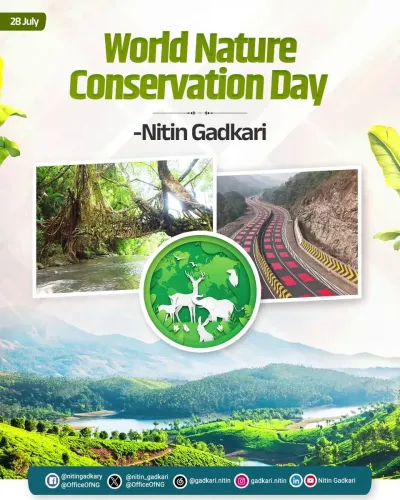
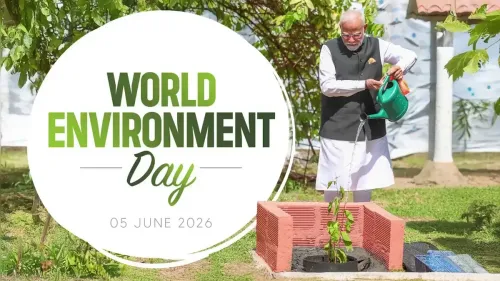
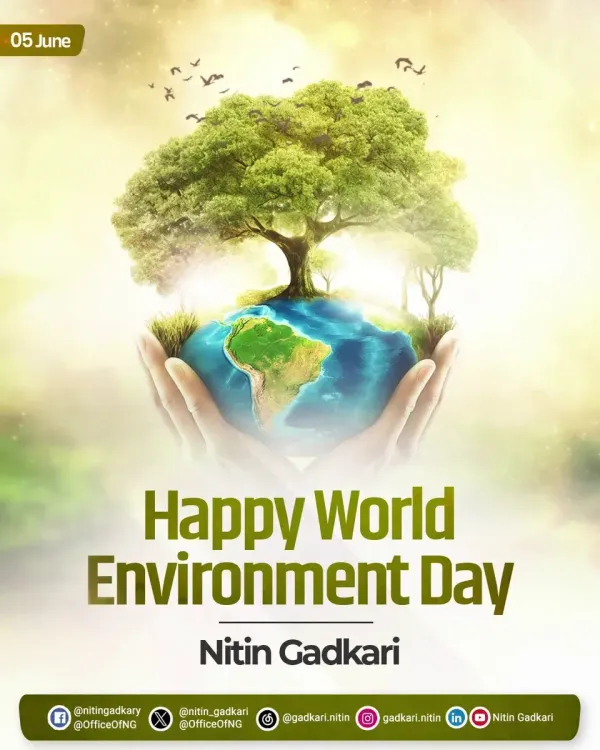
Union Minister Nitin Gadkari posted on World Environment Day, 5 June 2026 , calling for renewed resolve to protect the planet.
He reaffirmed India's Net Zero emissions target , which is set for 2070 and was announced at COP26 in Glasgow in 2021 .
India's climate commitments are backed by the Panchamrit strategy submitted under the Paris Agreement .
The National Policy on Biofuels (revised 2018) and the FAME-II scheme (2019) are key policy instruments linking transport with emission reduction.
Progress on ethanol blending and green corridor expressways will be critical markers ahead of India's 2030 interim climate milestones.
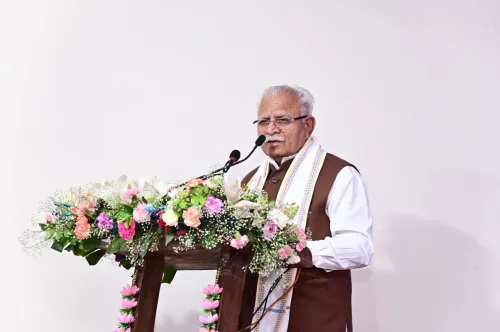
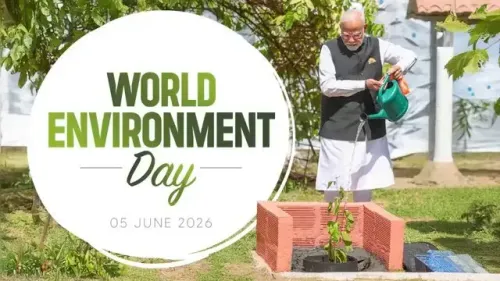
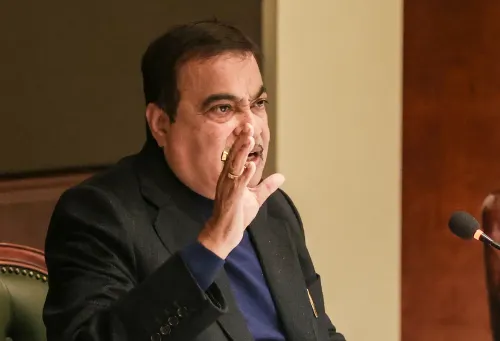
Union Road Transport and Highways Minister Nitin Gadkari on Friday, 5 June 2026 — World Environment Day — called on citizens to renew their commitment to protecting the planet, reaffirming that India remains on course to achieve its Net Zero emissions target. The minister linked sustainable individual choices to a broader national climate agenda, urging collective awareness and action to conserve nature and reduce pollution.
Context
World Environment Day, observed every year on 5 June, was established by the United Nations to encourage global awareness and action for the protection of the environment. Gadkari's post, shared on the occasion, stated: 'Sustainable choices today will shape a greener, healthier tomorrow. Together, through awareness and action, we can conserve nature and reduce pollution.'
The message underlines a consistent theme from the Road Transport Ministry, which has increasingly framed highway expansion and transport policy within a climate-conscious framework — linking road infrastructure growth with alternative fuels and electric mobility.
Policy Backdrop
India's Net Zero emissions target of 2070 was formally announced by Prime Minister Narendra Modi at the COP26 climate summit in Glasgow in 2021, as part of the country's five-point Panchamrit (five nectar commitments) climate strategy. The pledge was submitted under the Paris Agreement framework as part of India's Nationally Determined Contributions.
The transport sector sits at the heart of this agenda. The National Policy on Biofuels, revised in 2018, raised ethanol blending targets to cut fossil fuel dependence in the transport sector. The FAME-II scheme, launched in 2019, has channelled public funds toward accelerating the adoption of electric and hybrid vehicles across public and private fleets.
Gadkari has been a prominent advocate for green fuels — including ethanol, methanol, compressed biogas, and hydrogen — as practical near-term tools to reduce vehicular emissions even as highway construction continues at scale.
Stakeholders and Impact
The transport and highway development industry, one of the largest contributors to carbon emissions through construction activity and vehicular traffic, is directly implicated in India's climate commitments. Green corridor features — including tree plantation drives along national highways and the use of recycled materials in road construction — have been integrated into several flagship expressway projects.
For ordinary citizens, the minister's call for 'sustainable choices' points toward everyday decisions around fuel use, vehicle selection, and public transport — areas where policy incentives such as EV subsidies and ethanol-blended fuel mandates are already operative.
What's Next
Attention will turn to the rollout status of greenfield expressways incorporating sustainability features and to progress reports on ethanol blending targets ahead of India's 2030 interim climate milestones. The Ministry's twin mandate — building roads at record pace while reducing the sector's carbon footprint — will face increasing scrutiny as the decade's midpoint approaches and India's international climate commitments come due for review.
Point of View
He positions highway expansion not as a climate liability but as part of a managed transition toward sustainable infrastructure. The post also reflects the BJP government's broader communications strategy of anchoring ministerial messaging within India's international climate diplomacy, particularly the COP26 Panchamrit pledge. Observers will watch whether this rhetorical commitment translates into measurable progress on ethanol blending and EV adoption benchmarks before the decade's end.
NationPress
20 Oct 2026
Frequently Asked Questions
What is India's Net Zero emissions target?
India has pledged to achieve Net Zero carbon emissions by 2070 , a commitment announced by Prime Minister Modi at the COP26 summit in Glasgow in 2021 as part of the country's Panchamrit climate strategy under the Paris Agreement.
What did Nitin Gadkari say on World Environment Day 2026?
Minister Gadkari called on citizens to 'renew their resolve to protect and preserve the planet,' stating that 'sustainable choices today will shape a greener, healthier tomorrow,' and reaffirmed India's commitment to its Net Zero emissions target.
What is World Environment Day and when is it observed?
World Environment Day is an annual observance on 5 June established by the United Nations to encourage global awareness and action for environmental protection. In 2026 it falls on a Friday.
What is India doing to reduce emissions in the transport sector?
India has implemented the National Policy on Biofuels (revised 2018) to raise ethanol blending targets and the FAME-II scheme (2019) to promote electric and hybrid vehicles, while integrating green corridor features into national highway projects.
What is India's Panchamrit climate strategy?
The Panchamrit strategy, announced at COP26 in 2021, comprises five climate commitments including reaching 500 GW of non-fossil energy capacity, meeting 50 per cent of energy needs from renewables, reducing projected carbon emissions by 1 billion tonnes , cutting the carbon intensity of the economy by 45 per cent , and achieving Net Zero by 2070 .