India's eMigrate platform reshapes emigration governance, says MoS Kirti Vardhan Singh at UN
Synopsis
At the UN's Second International Migration Review Forum, India showcased its eMigrate platform — covering nearly 3 lakh registered foreign employers and over 2,400 recruiting agents — as a free, open-source model for global labour migration governance. The IOM called its scale 'amazing', and Ecuador is already looking to adapt it, signalling India's quiet emergence as a digital governance exporter.
Key Takeaways
MoS Kirti Vardhan Singh presented India's eMigrate platform at the Second International Migration Review Forum at the United Nations on 8 May 2025 . eMigrate has 2,98,000 registered foreign employers and 2,457 active recruiting agents on its portal.
India has made eMigrate available free of cost in open-source format as part of its South-South cooperation commitment.
IOM Senior Director Kim Eling called the scale of eMigrate operations "amazing" and praised its worker-protection focus.
Ecuador has put 100% of consular services online and plans to learn from India's interoperability model.
Saudi Arabia highlighted its Qiwa platform , noting it hosts over 10 million foreign workers.
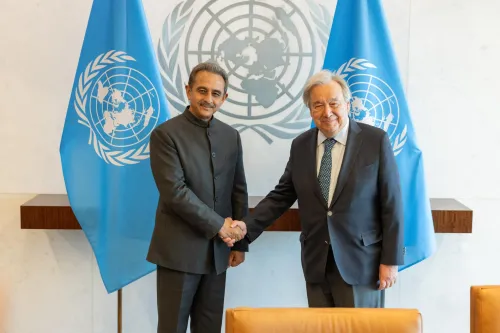
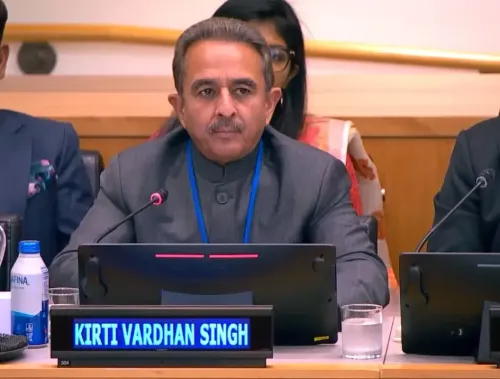
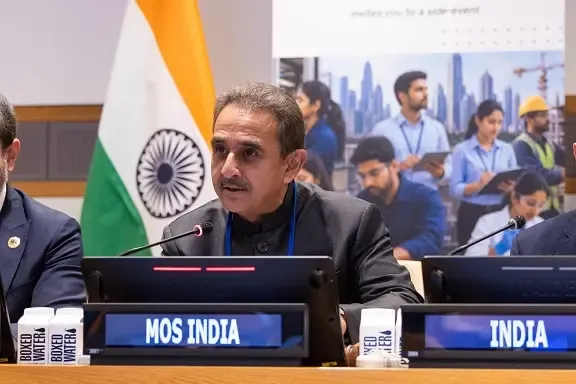
India's Minister of State for External Affairs Kirti Vardhan Singh on 8 May 2025 highlighted how India's holistic approach to emigration, backed by digital innovation, covers every stage of overseas employment — from hiring and pre-departure preparation to safe transit, dignified employment, and eventual return and reintegration. Speaking at a side event of the Second International Migration Review Forum at the United Nations, Singh said digital technologies are no longer mere enablers but are "reshaping governance itself".
What the eMigrate Platform Does
The event, organised by India's UN Mission on the theme "Leveraging Digital Innovation in Migration Governance", spotlighted India's eMigrate system as a comprehensive digital governance tool. Singh explained that the platform begins by vetting employers and recruiters, bringing transparency to the hiring process and allowing prospective workers to verify credentials and avoid fraud.
"Currently, we have around 2,98,000 registered foreign employers and 2,457 active recruiting agents registered on the eMigrate portal," Singh said. Beyond employer verification, the platform integrates with skilling, employment, documentation, and service delivery systems, offering multilingual interfaces, online grievance redressal, and payment transfers — all at no cost to workers.
India's Open-Source Commitment to the Global South
India's Permanent Representative P. Harish underscored the country's commitment to South-South cooperation, noting that India has deliberately kept its digital public platforms free and open-source. "We have not patented these digital public platforms. We have made it available for free, put it on the net in an open source format, made available to our friends and partners so that they can adapt it according to their needs and requirements," he said.
Harish added that sharing these tools is "very much a part not only of our bilateral but also of our UN-mediated South-South cooperation frameworks" for assisting partners in the Global South. He also stressed that the distinction between refugees and migrants must be maintained in international discourse.
International Response and Endorsements
The event drew strong praise from multilateral and bilateral partners. International Organisation for Migration (IOM) Senior Director Kim Eling said India is "demonstrating how technology can be used, not simply to modernise systems, but to better protect people", calling the scale of eMigrate operations "amazing".
Ecuador's Vice Minister of Human Mobility, Saul Pacurucu, noted that Ecuador has moved 100 per cent of its consular services online and expressed intent to learn from India's experience in coordinating interoperability of digital platforms across the labour migration cycle.
Saudi Arabia's Permanent Representative Abdulaziz Alwasil highlighted that the Kingdom hosts over 10 million foreign workers and has undertaken wide-ranging reforms under its national transformation agenda. He pointed to Saudi Arabia's Qiwa platform — which handles contract authentication, job mobility, visa issuance, and compliance monitoring — as a comparable effort linking workers, employers, and regulators through a unified digital ecosystem.
Broader Significance for Labour Migration Governance
The event comes at a time when global migration governance frameworks are under renewed scrutiny, with the Second International Migration Review Forum serving as a key multilateral checkpoint. India's eMigrate model is increasingly being cited as a replicable template for developing nations grappling with informal recruitment channels, worker exploitation, and fragmented documentation systems.
With India being one of the world's largest sources of overseas labour, the governance architecture underpinning emigration has direct consequences for millions of workers in the Gulf Cooperation Council (GCC) countries, Southeast Asia, and beyond. As more nations express interest in adapting the platform, the coming months will test whether eMigrate's open-source model can achieve meaningful multilateral uptake.
Point of View
India is positioning itself not just as a labour-sending country but as a governance-exporting nation. The real question is whether adoption by partners in the Global South will be substantive or ceremonial. Past South-South digital cooperation frameworks have often stalled at the MoU stage. The IOM's enthusiasm and Ecuador's concrete interest are encouraging signals, but the test will be whether any country actually deploys a localised version of eMigrate at scale within the next two years.
NationPress
21 Sept 2026
Frequently Asked Questions
What is India's eMigrate platform?
India's eMigrate platform is a comprehensive digital system that governs overseas labour migration, covering employer and recruiter vetting, documentation, skilling integration, grievance redressal, and payment transfers at no cost to workers. It currently has around 2,98,000 registered foreign employers and 2,457 active recruiting agents.
What did MoS Kirti Vardhan Singh say at the UN Migration Review Forum?
Minister of State for External Affairs Kirti Vardhan Singh said India's holistic approach to emigration recognises migration as a continuum spanning pre-departure preparation, safe transit, dignified employment, and return and reintegration, all backed by digital innovation through the eMigrate platform.
Why has India made eMigrate open-source and free?
India has made eMigrate available free of charge in an open-source format as part of its commitment to South-South cooperation, allowing partner countries in the Global South to adapt the platform to their own needs without licensing costs.
Which countries expressed interest in India's eMigrate model?
Ecuador's Vice Minister of Human Mobility said his country, which has already moved 100% of consular services online, intends to learn from India's experience in coordinating digital platform interoperability across the labour migration cycle.
What is Saudi Arabia's Qiwa platform?
Saudi Arabia's Qiwa platform is a centralised digital interface for labour-related services including contract authentication, job mobility, visa issuance, and compliance monitoring, linking workers, employers, and regulators in a unified ecosystem. Saudi Arabia hosts over 10 million foreign workers.