Is India Making Optimal Investments with Ayushman Bharat and Future Health Districts Programs?
Synopsis
Explore how India is transforming its health sector through the Ayushman Bharat Digital Mission and Future Health Districts initiatives. Discover expert opinions on the impact of these programs on digital health infrastructure and their potential to enhance health outcomes across the country.
Key Takeaways
Strengthening digital health infrastructure is crucial for improving health outcomes.
The Ayushman Bharat Digital Mission is a landmark initiative for India's health sector.
Future Health Districts will serve as a model for testing and implementing effective health strategies.
Investing in interoperable systems can lead to significant cost savings.
Collaboration with state governments is vital for the success of health initiatives.
Davos, Jan 19 (NationPress) India is making significant strides in the health sector by enhancing the Ayushman Bharat Digital Mission (ABDM) and launching the Future Health Districts initiatives, as highlighted by experts during the World Economic Forum’s (WEF) Annual Meeting.
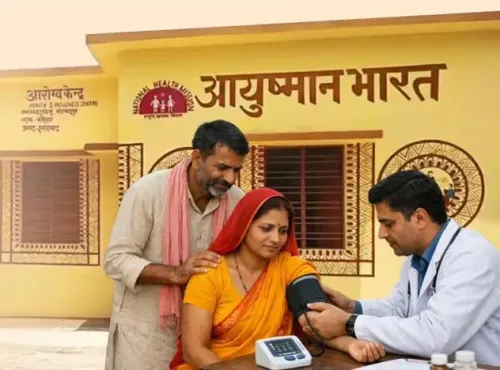
Launched in September 2021, the ABDM stands as the government's premier initiative aimed at establishing a cohesive national digital health ecosystem. The Future Health Districts project, a collaborative effort between WEF and India, serves as an experimental platform for ABDM.
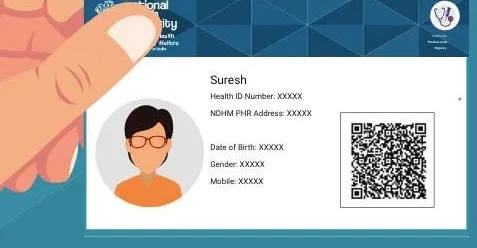
Currently, over 850 million citizens in India possess ABHA digital IDs, with around 454,000 health facilities and 767,000 professionals registered so far. Additionally, more than 842 million digital health records have been interconnected.
Experts Suneeta Reddy, Managing Director of Apollo Hospitals Enterprise, and Shyam Bishen, Head of the Centre for Health and Healthcare and Executive Committee Member at WEF, noted, "ABDM’s sandbox model permits any health facility, insurer, laboratory, or digital provider to integrate seamlessly with all other ABDM-enabled entities."
They pointed out that typical custom API integrations, including associated costs like vendor fees, manpower, testing, and leadership oversight, can exceed $2,500 each.
However, with ABDM, "one certified integration supersedes numerous tailored interfaces, allowing system-wide savings that can bolster clinical care, cybersecurity, and citizen engagement."
This methodology, already successful in extensive public or private hospital networks, diagnostic chains, and integrated care systems, has significantly reduced IT duplication and long-term maintenance expenses.
The experts emphasized that investing in interoperable systems, preventive care, and digital capacity can lead to substantial and increasing returns.
They argued that the forthcoming Future Health Districts project, part of the India Pathfinder initiative, is another prime investment opportunity.
This initiative "aims to evaluate ABDM-aligned, outcome-linked models in association with state governments and partners," the report elaborated.
"Over the next three to five years, it will strive to enhance metrics like screening rates, maternal health follow-ups, and claims processing times. Each successful district will serve as proof of the potential of investable digital health," it further noted.
The report also highlighted significant disparities, such as gaps in health coverage, financial pressures, and inefficiencies within the system.
“These underscore the necessity to redirect resources toward high-return investments—particularly in digital infrastructure, prevention, and interoperable systems,” the experts remarked.
They suggested reimagining health as a vital driver of economic growth and national stability; enhancing interoperable digital systems; and directing philanthropic health funding towards measurable outcomes.
"The insights gleaned from ABDM and the Future Health Districts experiments can provide guidance to low and middle-income countries in search of scalable, interoperable, and affordable solutions," the report concluded.
Point of View
The developments surrounding the Ayushman Bharat and Future Health Districts programs reflect India's commitment to reforming its health infrastructure. These initiatives not only aim to enhance healthcare accessibility but also signify a strategic shift towards digital health, promising long-term benefits for the population.
NationPress
19 Sept 2026
Frequently Asked Questions
What is the Ayushman Bharat Digital Mission?
The Ayushman Bharat Digital Mission (ABDM) is India's flagship initiative aimed at creating a unified national digital health ecosystem, launched in September 2021.
How many citizens hold ABHA digital IDs?
Currently, more than 850 million citizens in India possess ABHA digital IDs.
What is the Future Health Districts initiative?
The Future Health Districts initiative is a collaborative project between the World Economic Forum and India that serves as a testing ground for models aligned with the ABDM.
What benefits does ABDM provide to health facilities?
ABDM allows seamless integration for health facilities, insurers, and laboratories, enhancing connectivity and reducing costs associated with multiple interfaces.
What are the expected outcomes of the Future Health Districts project?
The project aims to improve health indicators such as screening rates and maternal health follow-ups over a three to five-year period.