Can India Surpass 10 Percent GDP Growth? Insights from Uniphore CEO Before AI Impact Summit
Synopsis
As India gears up for the India AI Impact Summit, Uniphore's CEO reveals insights on AI's transformative potential for the nation's economy, predicting a remarkable GDP growth surpassing 10 percent. Discover the trends and talent shaping India's AI landscape and its implications for the future.
Key Takeaways
India is on track to achieve over 10% GDP growth through AI adoption.
Strategic partnerships and ecosystems are crucial for AI advancement.
India possesses a vast pool of AI talent and leadership potential.
AI is expected to drive significant productivity gains and economic growth.
Challenges such as geopolitics and regulations must be navigated carefully.
Washington, Feb 13 (NationPress) India is strategically positioned to emerge as a global frontrunner in AI adoption, potentially surpassing 10 percent GDP growth within the next two years with a strong emphasis on Artificial Intelligence (AI), Umesh Sachdev, the CEO and co-founder of Uniphore, stated in anticipation of the upcoming India AI Impact Summit in New Delhi.
“We are at a very intriguing juncture in the global AI rollout,” Sachdev expressed in an exclusive interview with IANS. Uniphore operates in 20 countries, collaborates with approximately 2,500 enterprises worldwide, and counts 200 Fortune 500 companies among its clientele.
As he prepares to attend the significant summit, Sachdev highlighted two pivotal trends reshaping the AI landscape. First, “companies and nations are recognizing that a one-size-fits-all approach is ineffective.” He emphasized that ecosystems and partnerships are becoming crucial, stating, “Building ecosystems is a significant trend we are observing.”
In this context, Sachdev described the India AI Impact Summit as extremely timely for India to forge alliances “with other nations, large corporations, and startups in the AI application, model, and semiconductor sectors.”
The second trend he noted is the adoption of AI. While the US and China currently lead in core AI technologies, “if there is one nation that is ideally positioned to spearhead AI adoption and application, it is India.” With a population of 1.4 billion, “India has the greatest potential to become the global leader in AI adoption.
Regarding talent, Sachdev pointed out that India’s advantages extend beyond mere numbers. “India is exceptionally well-equipped not only in terms of AI talent in large quantities but also in leadership talent.” He highlighted the significant proportion of Indian-origin leaders in major global AI firms.
Sachdev characterized 2026 as a critical turning point. “AI is set to become the economic growth engine for businesses and nations in 2026.” He remarked that several companies are already reporting increased earnings due to AI, and GDP growth rates are starting to rise.
“I wouldn't be surprised if the US's GDP reaches the six, possibly even seven percent range due to the productivity enhancements that businesses and nations are experiencing from AI,” he noted. For India, he expressed even more optimism, stating, “India is likely to exceed 10 percent growth in the next 24 months if it continues to prioritize AI adoption.”
He described the forthcoming years as an “age of abundance” driven by productivity improvements. “Productivity, which has remained largely stagnant globally for the past 25-30 years, is expected to experience a significant shift due to agent and generative AI,” he added. He dismissed concerns that AI might lead to job losses, asserting, “In fact, I believe more jobs will be created.”
On governance and public services, he mentioned that AI agents can streamline form-filling, enhance government access, and improve legal and medical services, thereby lowering costs. “The implications for citizens will be immense,” he stated.
Sachdev acknowledged existing challenges. “The primary challenge, which is relatively novel, is geopolitics.” He pointed to worries about restrictions, which are driving the trend toward sovereign AI. He also cautioned against excessive regulation, noting that while AI “certainly cannot be left unchecked,” overregulation could exacerbate disparities between “the privileged and the underprivileged.”
Regarding China, he identified a notable “clear dichotomy.” Developers in Silicon Valley admire Chinese models for their performance and cost-effectiveness, yet “corporate America is hesitant to even discuss Chinese models due to regulatory fears and geopolitical concerns.”
Uniphore, he noted, operates as a sovereign and open data AI platform tailored for enterprises, serving 2,500 global clients, including 200 Fortune 500 companies. Following a Series F funding round in October 2025, the company is monitoring public markets while maintaining its focus on growth.
“This is a thrilling time,” he added. “2026 will be the year that marks a significant shift in AI adoption among large enterprises.”
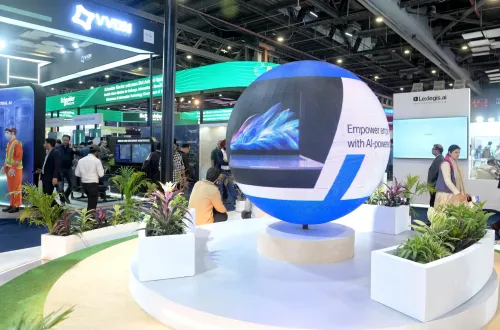
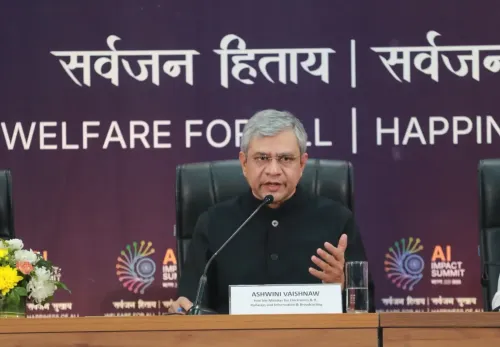
India is actively positioning itself as a significant player in AI through digital public infrastructure, including Aadhaar and other large-scale government initiatives. The forthcoming India AI Impact Summit is designed to highlight policy directions, industry collaborations, and talent capabilities.
Point of View
It's vital to recognize India's potential not just as a participant in the AI revolution but as a leader. The insights shared by Umesh Sachdev signal a promising future for India, where strategic alliances and a focus on talent could propel the nation to unprecedented economic heights. It's essential that we support and follow the developments around the upcoming India AI Impact Summit to ensure that the country capitalizes on this technological transformation.
NationPress
7 Oct 2026
Frequently Asked Questions
What is the predicted GDP growth rate for India in the next two years?
According to Umesh Sachdev, India could potentially exceed 10 percent GDP growth within the next two years if it prioritizes AI adoption.
Who is Umesh Sachdev?
Umesh Sachdev is the CEO and co-founder of Uniphore, an AI company serving global clients and focusing on AI applications.
What are the major trends in AI adoption mentioned by Sachdev?
Sachdev highlighted the importance of customized ecosystems and partnerships, as well as India's unique potential for AI adoption due to its large population and talent pool.
How does AI impact job creation according to Sachdev?
Sachdev believes that AI will not eliminate jobs but rather create more opportunities within the workforce.
What is the significance of the India AI Impact Summit?
The India AI Impact Summit aims to showcase policy direction, industry partnerships, and talent strength in the AI sector, positioning India as a key player in the global AI landscape.