How India's Choices Will Influence the Indo-Pacific: Insights from US Officials
Synopsis
US Under Secretary Elbridge Colby emphasizes India's pivotal role in shaping the Indo-Pacific landscape. With a rich strategic history, India's decisions are crucial for regional stability and autonomy. Discover how these dynamics play out in the broader context of US-India relations.
Key Takeaways
US respects India for its strategic history and autonomy.
India's decisions will shape the Indo-Pacific's future .
The US sees India as a key partner for stability in Asia.
India's geographic location is crucial for regional connectivity .
The framework for US-India defense partnership is robust and promising.
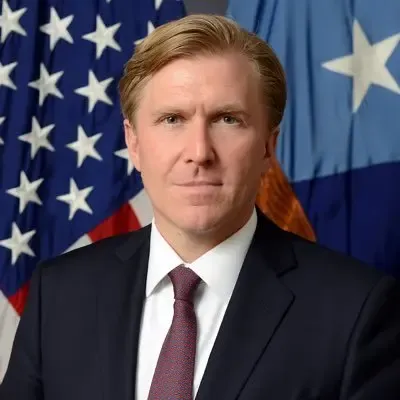
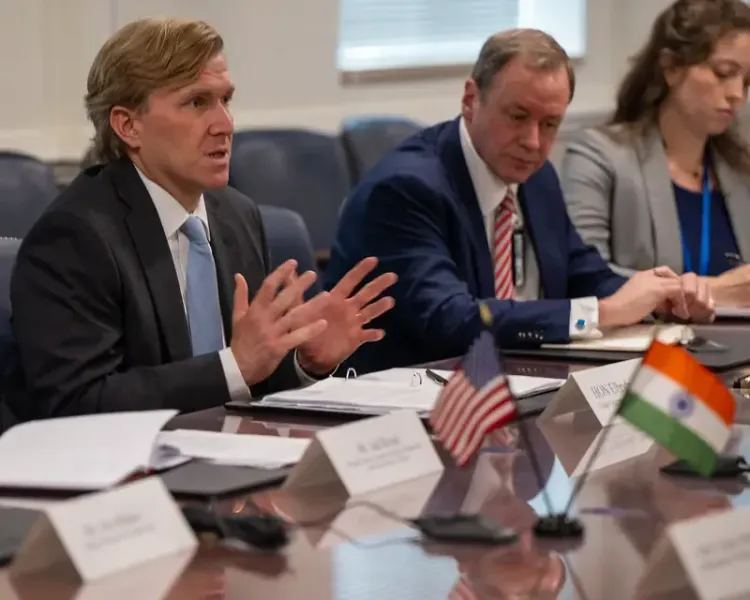
New Delhi/Washington, March 24 (NationPress) Stating that the United States holds India in high regard, US Under Secretary of War for Policy, Elbridge Colby, remarked on Tuesday that the nation has a commendable strategic legacy, and decisions made in New Delhi are set to significantly influence the Indo-Pacific's future.
"The United States respects India deeply — recognizing it as a vast republic with a notable strategic legacy, and as a nation whose choices will greatly affect the Indo-Pacific and the broader international landscape. Although our two countries have distinct histories, geographies, and viewpoints, we share a fundamental belief: the future of Asia must be determined by sovereign nations capable of defining their own paths," Colby declared during a special session at the Ananta Centre.
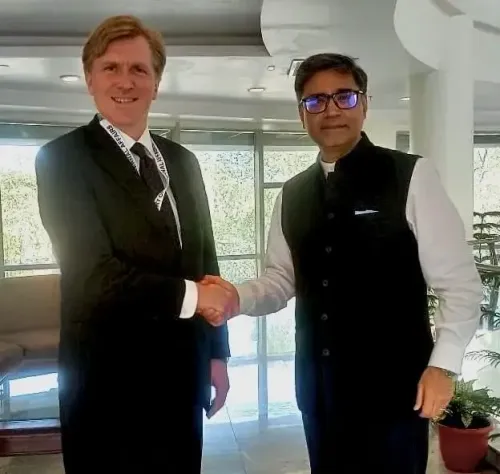
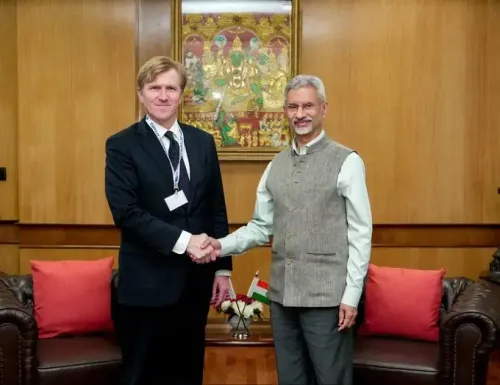
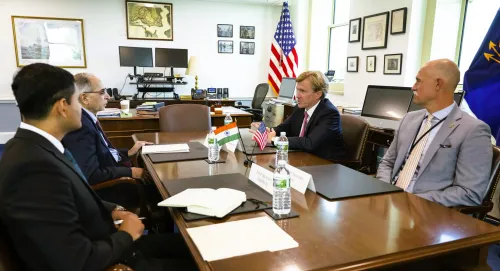
The senior Pentagon official is currently visiting India to engage with high-ranking officials in New Delhi and to further the critical India-US relationship.
Colby pointed out that the US regards India not just as a significant partner but as a crucial player in maintaining a favorable long-term balance of power in Asia.
"India's significance arises not only from its size and economic potential but from its geographical and strategic positioning. The country occupies a pivotal location in the Indian Ocean, which serves as the connective fabric of the Indo-Pacific. India has a longstanding tradition of strategic autonomy and an expanding capacity to influence events beyond its borders. As the largest republic globally, its success carries immense symbolic and political significance, complemented by its robust, self-sufficient military forces ready to assume substantial security responsibilities," Colby explained.
Highlighting India's crucial role, the US Under Secretary noted that Washington's approach to its strategic partnership with India is grounded in realistic interests and shaped by geopolitical factors, rather than lofty ideals or detached perspectives.
"We fully acknowledge that India has its own interests, strategic culture, and priorities, and that India is assertive in pursuing them," Colby stated, adding that the perspectives of the US and India appear to be closely aligned.
Colby referenced that India's Foreign Minister Dr. Jaishankar has characterized India's strategy as 'Bharat First' and its diplomatic approach as 'the India Way'. Similar to the 'America First' and flexible realism, Bharat First and the India Way highlight the importance of a pragmatic foreign policy, an undisguised willingness to prioritize national interests, and a results-driven mindset regarding international relations," the US Under Secretary for Policy conveyed.
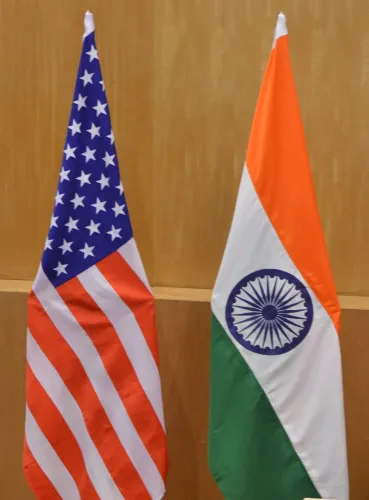
He further stated that the framework established for the US-India Major Defence Partnership, signed last October by US Secretary of War Pete Hegseth and Defence Minister Rajnath Singh, provides a robust foundation for progress.
"Our immediate focus must be on advancing from these vital agreements to fulfill a larger strategic objective: enhancing the capacity of both nations to promote a stable balance of power in this crucial region," he concluded.
Point of View
Focusing on their shared commitment to a stable and sovereign Asia.
NationPress
22 Sept 2026
Frequently Asked Questions
Why is India's role significant in the Indo-Pacific?
India's geographical position and strategic autonomy allow it to influence regional dynamics, making it a key player in maintaining a balanced power structure in the Indo-Pacific.
What did Elbridge Colby say about US-India relations?
Colby emphasized that the US views India as an essential partner in ensuring a favorable balance of power in Asia, recognizing India's own strategic priorities.
How does India's strategic approach differ from the US?
While the US focuses on interests-based realism, India's 'Bharat First' approach emphasizes national priorities and a practical mindset in foreign policy.
What agreements are crucial for US-India defense cooperation?
The framework for the US-India Major Defence Partnership, signed last October, serves as a strong foundation for advancing defense cooperation between the two nations.
What is 'the India Way'?
'The India Way' refers to India's pragmatic approach to foreign policy, focusing on national interests and a results-oriented mindset similar to the US 'America First' strategy.