Iran's Leadership Shift: A New Negotiating Stance Revealed by Hegseth
Synopsis
The US has observed a significant shift in Iran's negotiating tactics following a change in leadership, as Secretary of War Pete Hegseth highlights the implications of military pressure and battlefield losses on Tehran's decision-making.
Key Takeaways
Leadership Change: A new regime in Iran is recalibrating its negotiating strategy.
Military Pressure: Sustained US military operations have influenced Tehran's decision-making.
Ceasefire Acceptance: Iran's willingness to negotiate indicates a shift in approach.
Nuclear Program: The US aims to prevent Iran from developing nuclear weapons.
Internal Uncertainty: The situation in Iran remains fluid, affecting governance and public sentiment.
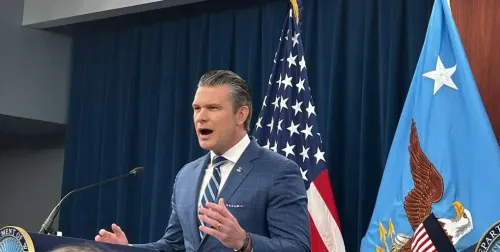
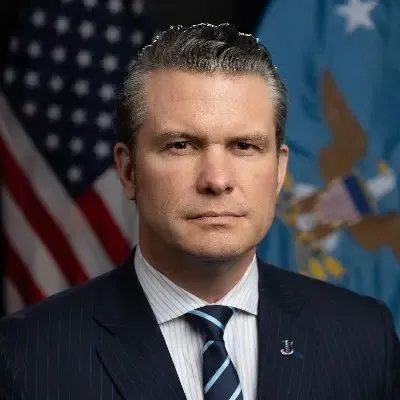
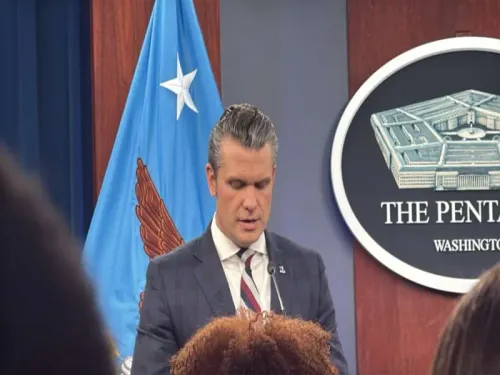
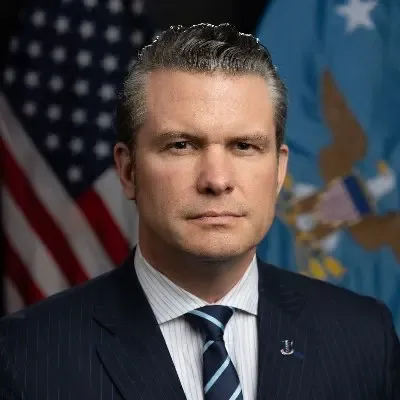
Washington, April 8 (NationPress) The United States has indicated that a transformation in Iran's leadership has changed its stance in negotiations. Secretary of War Pete Hegseth noted that a "new regime" in Tehran is now compelled to reassess its strategy in light of ongoing US military pressure.
"This new regime... is calculating differently about what it means to negotiate with us," Hegseth remarked, attributing this shift to the extensive destruction caused during Operation Epic Fury.
He characterized the current Iranian leadership as emerging from significant losses within its military and political echelons.
"You heard the list I presented... It’s a fresh group that has witnessed the full might of the United States military," Hegseth stated.
US officials maintain that this leadership change is pivotal in Iran's choice to pursue a ceasefire and engage in negotiations.
"That’s why they came to the table... seeking a ceasefire and an end to hostilities," he added.
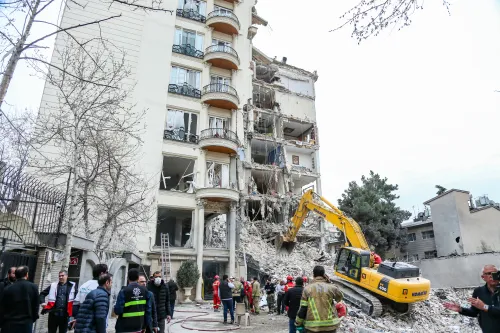
The Pentagon has detailed the extent of leadership upheaval, noting that numerous senior Iranian figures across military, intelligence, and defense sectors have been eliminated or rendered ineffective during the campaign.
Hegseth asserted that the new leadership now encounters limited alternatives.
"This new regime is out of options and time... hence they opted for a deal," he explained.
The US perceives this shift not as a formal political transition but as a result of battlefield defeats that have altered Tehran's decision-making landscape.
Officials commented that the leadership change has directly impacted Iran's readiness to accept conditions set by Washington, including limitations on its nuclear program and the reopening of vital shipping routes.
"They understand that this agreement signifies they will never, under any circumstances, possess a nuclear weapon," Hegseth emphasized.
Simultaneously, the US indicated that the internal situation in Iran is still precarious, especially with regard to public sentiment and long-term governance.
"I hope the Iranian populace can seize this opportunity," Hegseth remarked, noting that the citizens have been "oppressed by the previous regime."
However, he clarified that regime change was not the explicit goal of the US military operation.
"That was not our aim in this initiative," he stated.
Officials also noted that US forces remain ready to act if Tehran tries to regroup or resume aggressive actions.
Point of View
It is essential to recognize the complexities involved in Iran's recent leadership shift. While the US military's role is undeniable, the internal dynamics in Iran and the historical context must be considered in any analysis of future negotiations and regional stability.
NationPress
15 Oct 2026
Frequently Asked Questions
What prompted the shift in Iran's leadership?
The shift in Iran's leadership was largely influenced by significant military losses and sustained pressure from US operations.
How has the new regime in Iran changed its negotiating stance?
The new regime has recalibrated its approach, indicating a willingness to accept conditions from the US, including nuclear restrictions.
What are the implications of this leadership change for US-Iran relations?
This leadership change may facilitate negotiations and could lead to a ceasefire, though internal stability in Iran remains uncertain.
Is regime change in Iran a goal of the US military?
No, the explicit objective of the US military campaign is not regime change, but rather to influence Iran's negotiating posture.
What does the US expect from Iran in future negotiations?
The US expects Iran to adhere to conditions that prevent it from acquiring nuclear weapons and to cooperate on reopening shipping routes.