Is India a Theocratic State or an Inclusive Republic?
Synopsis
Kerala Governor Rajendra Arlekar asserts that India is an inclusive republic rather than a theocratic state, emphasizing the nation's ability to unite in diversity. His remarks come amid ongoing tensions with the LDF government over addressed omissions.
Key Takeaways
India is an inclusive republic embracing diversity.
Governor highlights Kerala's achievements in the Padma Awards.
Ongoing tensions between the Governor and LDF government.
Cooperative federalism is essential for national growth.
Importance of National Voters' Day emphasized.
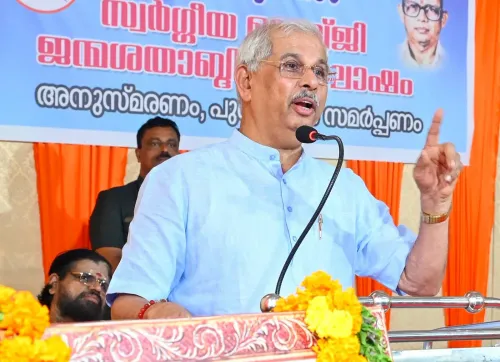
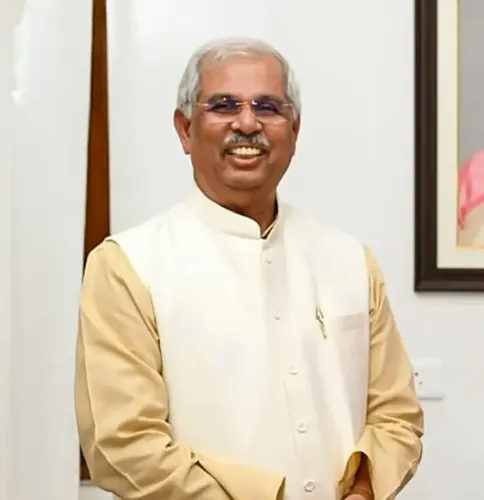
Thiruvananthapuram, Jan 26 (NationPress) Kerala Governor Rajendra Arlekar emphasized that India is not a theocratic nation but rather an inclusive republic that treats all its citizens with equality. He highlighted that the strength of the country lies in its capacity to embrace diversity while maintaining its cultural essence.
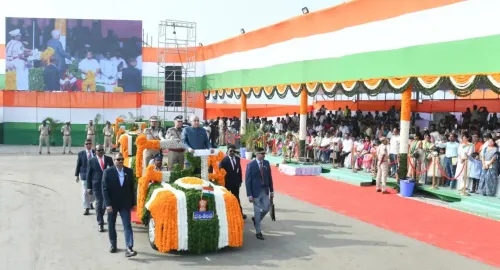
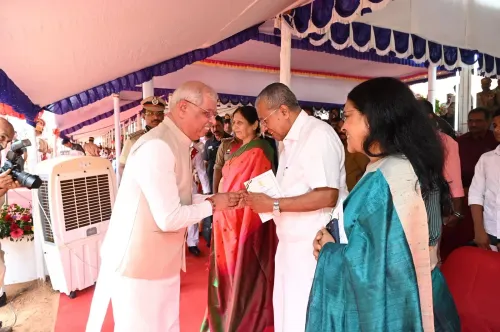
During his address at the Republic Day parade held at the Central Stadium in Thiruvananthapuram, Arlekar stated that India has upheld its democratic values for the last 76 years and is globally acknowledged as the “mother of democracy”.
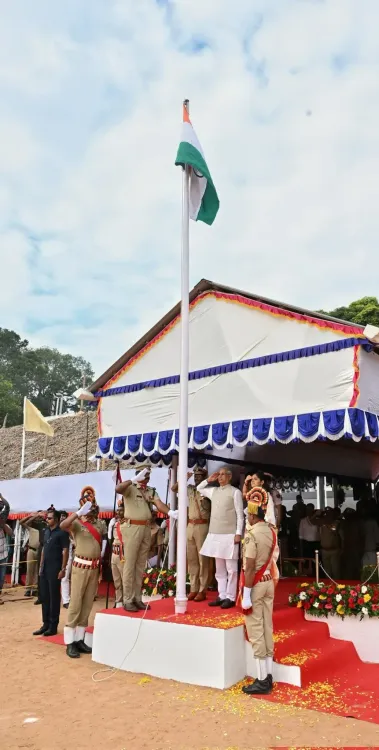
Nevertheless, the ceremony was overshadowed by renewed tensions in the ongoing dispute between the Governor and the LDF government. Arlekar raised the national flag, reviewed the parade, and received ceremonial honors, but notably diverged from the pre-prepared speech, which had been distributed at the event.
This speech is typically crafted in collaboration with the state government, making this deviation politically significant.
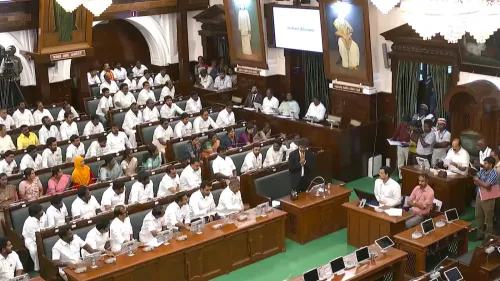
This incident occurs amidst ongoing controversies regarding the Governor’s address at the beginning of the Assembly session. Arlekar had unilaterally altered the policy address, prompting Chief Minister Pinarayi Vijayan to read out the omitted sections, igniting a significant constitutional and political debate.
The Chief Minister later criticized the Governor in the Assembly for excluding portions of the address, asserting the government’s commitment to the original content. In response, Lok Bhavan claimed that the omitted sections contained factual inaccuracies and assured corrections would be made.
The disagreement has since intensified, with the Governor formally requesting clarification. To this end, Lok Bhavan has contacted the Assembly Speaker for the text and video of the Chief Minister's speech following the policy address.
While the Republic Day celebration went on without a hitch, the Governor’s choice to bypass the prepared speech highlighted the ongoing friction between the constitutional authority of the state and the elected government.
In his address, Arlekar, while celebrating Kerala’s accomplishments, expressed pride in the state's notable recognition in this year’s Padma Awards.
He remarked that the Padma Vibhushan awarded to former Chief Minister V.S. Achuthanandan was a significant honor for Kerala, acknowledging his unparalleled contributions to the political and social landscape.
The honors given to Justice K.T. Thomas and P. Narayanan further emphasized Kerala’s esteemed position on the national stage.
Congratulating actor Mammootty and SNDP Yogam General Secretary Vellappally Natesan for receiving the Padma Bhushan for their contributions to art and culture, the Governor remarked that their accolades reflect the depth of Kerala’s cultural influence.
He also recognized Padma Shri awardees Kalamandalam Vimala Menon and Devaki Amma, highlighting their achievements as a testament to the state’s rich artistic heritage.
The Governor reminded everyone that the nation is commemorating the 150th anniversary of “Vande Mataram,” the iconic anthem of India’s freedom struggle.
Reflecting on Kerala’s civilizational contributions, he noted that the cultural enlightenment provided by figures such as Adi Shankaracharya, Sree Narayana Guru, and Swami Chinmayananda continues to guide the nation.
He acknowledged that Malayalis have made unique contributions across various fields including art, sports, science, and literature.
Advocating for cooperative federalism, the Governor stated that the Centre and states are partners rather than adversaries, emphasizing the need for collaboration for national progress. While differing opinions are natural, he insisted that development necessitates a common vision and collective effort.
Urging all states to dedicate themselves to realizing the goal of a “Developed India” by 2047, the Governor called for unity in pursuing national growth through state-led initiatives.
He also highlighted Kerala’s achievements in education, healthcare, and social progress, using this occasion to remind citizens of the significance of National Voters’ Day, encouraging all Malayalis to participate in the electoral process and set a new democratic example.
In the 13 district headquarters, cabinet ministers took the salute, while celebrations also took place in various Central and state government establishments, clubs, and numerous other locations throughout the state.
Point of View
The ongoing tensions between Kerala's Governor and the LDF government underscore the complexities of federal dynamics in India. The Governor's emphasis on India's inclusive nature resonates with the core democratic ideals while also revealing the challenges faced in state governance. As the nation navigates these political waters, fostering dialogue and cooperation remains essential for progress.
NationPress
9 Oct 2026
Frequently Asked Questions
What did Kerala Governor Rajendra Arlekar say about India's political structure?
He stated that India is not a theocratic nation, but an inclusive republic that embraces all citizens equally.
What were the significant achievements highlighted by the Governor?
He emphasized Kerala's recognition in the Padma Awards and its contributions to education, healthcare, and social progress.
What was the controversy surrounding the Governor's speech?
The Governor chose to deviate from the prepared speech, which raised concerns about the ongoing tensions with the LDF government.
How did the Chief Minister respond to the Governor's actions?
The Chief Minister criticized the Governor for excluding parts of the address, asserting the government's position on the content.
What is the significance of National Voters' Day as mentioned by the Governor?
The Governor urged citizens to participate in the electoral process and set a new democratic example.