Israel and US Dominate Iranian Skies, Targeting 2,500+ Military Sites: Ambassador

Synopsis
In a recent interview, Israel's Ambassador to India, Reuven Azar, disclosed that Israel and the US are dominating Iranian airspace and targeting over 2,500 military sites. He expressed hope for regime change in Iran, reflecting on the ongoing military actions and their impact on regional stability.
Key Takeaways
Israel and the US are actively targeting over 2,500 military sites in Iran.
Ambassador Reuven Azar expresses hope for a potential regime change in Iran.
Recent missile strikes resulted in civilian casualties in Israel .
Israel aims to neutralize Iranian missile capabilities.
Ground troop deployment in Iran is currently not planned.
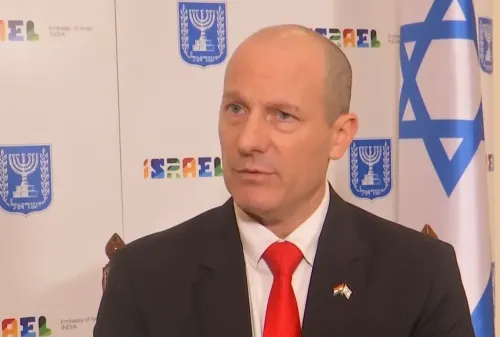
Jerusalem, March 2 (NationPress) In a recent statement, Israel's Ambassador to India, Reuven Azar, revealed that both Israel and the United States are dominating the airspace over Iran, actively targeting more than 2,500 military installations. During an exclusive interview with IANS, Azar expressed optimism regarding a potential regime change in Iran.
Ambassador Azar highlighted that Israel has successfully intercepted and neutralized a significant number of missiles aimed at the country. He emphasized that, like India, Israel is committed to pursuing peace, stability, and prosperity in the region. He also discussed Prime Minister Narendra Modi's recent visit to Israel.
Excerpts:
IANS: What is the current state in Israel following the extensive assaults on Iran?
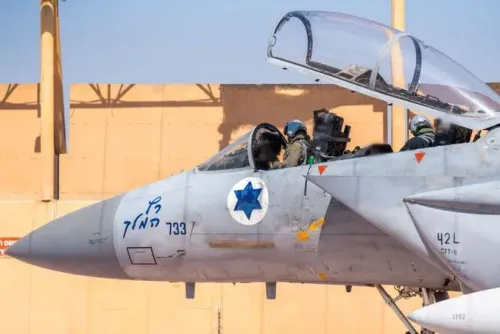
Reuven Azar: We are effectively managing the situation here, intercepting most missiles and drones targeting us, including those from Iran and recently from Hezbollah in the north. Israel is currently controlling Iran's airspace in collaboration with the United States, and we are actively targeting over 2,500 military sites. Unfortunately, we experienced the tragic loss of nine civilians due to a ballistic missile strike in Beit Shemesh, which also left around 50 individuals injured. On a positive note, we have managed to intercept and neutralize the majority of missiles aimed at our territory.
IANS: Do you anticipate a regime change in Iran?
Reuven Azar: We certainly hope for that. Ultimately, it is the Iranian populace that will determine their future. Many Iranians have expressed their desire for change, as evidenced by recent protests. Regrettably, we have witnessed the Iranian regime's brutal actions against countless innocent civilians. Our military actions aim to diminish the Iranian regime's ability to threaten us and to strike at key locations such as the Basij and the Revolutionary Guards across Iran. We hope that the Iranian people will feel empowered to take to the streets to demand the change they rightfully seek.
IANS: What challenges do you foresee in Iran following the passing of Supreme Leader Ayatollah Ali Khamenei?
Reuven Azar: Our challenge is to persist in degrading Iran's military capabilities to ensure they cannot launch attacks against Israel or American bases in the region. We hope remaining Iranian leaders will recognize the need for a change in strategy, or they too will face consequences.
IANS: How do you regard Prime Minister Modi's leadership in this context?
Reuven Azar: We hold great appreciation for Prime Minister Modi's leadership, particularly his recent visit to Israel, which showcased the mutual warmth between our nations. Both Israelis and Indians recognize the strong bond we share, grounded not just in shared interests but also in our values and historical ties. This marks a significant milestone in our relationship. We view India as a reliable partner, and like them, we aspire for peace, stability, and prosperity in our regions. We are confident that we will continue to engage in positive initiatives as we neutralize the threats emanating from the Iranian regime.
IANS: Is there a possibility of ground troops in Iran?
Reuven Azar: Currently, Israel is focused on aerial operations, although there may be instances where specific actions are necessary to eliminate particular threats. However, I am not aware of any plans for a large-scale ground invasion.
IANS: What was your initial reaction to Iran's attack on an oil tanker?
Reuven Azar: The escalation initiated by the Iranians will ultimately backfire on them. Their choice to target civilian sites, including those in the United Arab Emirates, Bahrain, and other neighboring nations, is inciting unnecessary tensions. They are attempting to disrupt oil trade, but I believe their efforts will fail. As our military operations progress, their capabilities will diminish, preventing them from causing the chaos they desire and deterring actions by the United States, Israel, and regional nations. Ultimately, we anticipate a de-escalation in the near future.
Frequently Asked Questions
What military actions are Israel and the US taking against Iran?
Israel and the US are actively targeting over 2,500 military sites in Iran, controlling the airspace to neutralize missile threats.
What does Israel hope for regarding the Iranian regime?
Israel hopes for a regime change in Iran, believing that the Iranian people desire a new leadership.
How has the recent conflict affected civilians in Israel?
The conflict has resulted in casualties, including the tragic loss of nine civilians due to missile strikes.
Is there a possibility of ground troops being deployed in Iran?
Currently, Israel is focused on aerial operations and does not have plans for a large-scale ground invasion.
What are the implications of Iran's attacks on civilian targets?
Iran's attacks on civilian targets may escalate tensions and provoke further military responses from Israel and its allies.