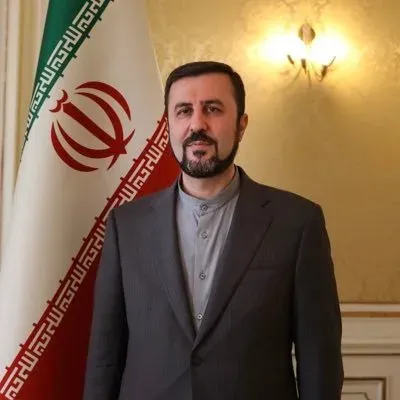
Iran must accept US terms or face more pressure, says Israeli Ambassador Reuven Azar

Synopsis
Israel's Ambassador to India isn't mincing words — Iran has been defeated militarily, and the pressure, including a naval blockade, won't ease until Tehran accepts US terms. With over 1,000 rockets fired since the Hezbollah ceasefire and IAEA repeatedly flagging non-compliance, Azar's message is clear: the window for Iranian intransigence is closing.
Key Takeaways
Israeli Ambassador Reuven Azar said on 1 June that Iran will face continued pressure, including a naval blockade , until it accepts US terms.
Azar stated Iran has been 'defeated' militarily and must renounce two 'existential threats' it built against Israel and the region.
Both Israel and the US stand ready to take 'further action' if Iran does not abandon its military nuclear programme .
The IAEA has repeatedly found Iran non-compliant with its NPT commitments, according to Azar.
More than 1,000 rockets and UAV attacks have been recorded since the Hezbollah ceasefire, resulting in 12 fatalities .
Azar noted a drop in oil prices , suggesting markets have absorbed regional tensions, but warned against easing pressure on Tehran.
Israel's Ambassador to India, Reuven Azar, on Monday, 1 June said that Iran will continue to face sustained pressure — including through a naval blockade — until it accepts the terms put forward by the United States. Speaking in an interview in New Delhi, Azar framed the standoff as a direct consequence of Iran's efforts to reverse the outcome of a recent military confrontation.
Iran Trying to Reverse Military Outcome, Says Azar
'We have to be stubborn because Iranians are trying to reverse the result of this military confrontation. They have been defeated... They must renounce the two existential threats they built against Israel and the region and the US President is being stubborn about it. I don't think he is going to renounce his goals and Iran will continue facing pressure, including through the naval blockade, until it agrees to the terms that the United States has put forward,' Azar said.
The ambassador added that there is a 'very clear demand' to eliminate Iran's military nuclear programme, and that 'sufficient military pressure' has already been applied. He noted that the Iranian regime has 'finally realised' that intransigence on this issue is 'not paying off.'
Regional Alignments and the Circle of Peace
Azar pointed to a growing convergence of interests across the region as a direct response to what he described as decades of Iranian destabilisation. He cited Egypt, Jordan, the Abraham Accords nations, and other regional states as working 'behind the scenes with the United States' to neutralise these threats.
'We are working diligently on both the security and economic fronts to bring prosperity to this region,' he said, underlining that both Israel and the US remain prepared to take 'further action' if Iran does not abandon its military nuclear ambitions.
Iran's Non-Compliance with NPT and IAEA
The Israeli diplomat invoked Iran's record of alleged violations under international non-proliferation frameworks. He stated that the International Atomic Energy Agency (IAEA) has 'repeatedly issued reports' finding Iran non-compliant with its commitments under the Nuclear Non-Proliferation Treaty (NPT).
'Whoever wants to enjoy legal rights must respect the regime it is part of. Unfortunately, the Iranian regime has not been respecting the regime it has committed to,' Azar said.
Hezbollah Ceasefire Violations and Israel's Response
On the northern front, Azar stated that Israel will 'do whatever is necessary' to protect communities that have faced repeated Hezbollah attacks. He cited more than 1,000 rockets fired since a ceasefire was established, along with the use of UAVs and 12 fatalities since the truce began.
'We are not going to accept that situation. We will continue taking action until a sustainable ceasefire is achieved, in which Hezbollah refrains from attacking civilians,' he said.
Oil Prices and Regional Stability
Addressing the global energy market, Azar noted that oil prices have actually dropped, suggesting the international community has managed to cope with the regional tensions. He expressed hope for a swift ceasefire to restore market stability, and warned that easing pressure on the Iranian regime now would risk a 'much bigger' crisis in the future.
The remarks come amid ongoing diplomatic efforts between Washington and Tehran, with the trajectory of US-Iran negotiations likely to shape the region's security architecture in the months ahead.
Point of View
Not an ongoing negotiation. The invocation of the IAEA and NPT is strategically significant: it positions Israel's pressure campaign as multilateral law enforcement rather than unilateral coercion. What goes largely unexamined is the 'further action' threshold — neither Israel nor the US has defined what triggers it, leaving Tehran, and the region, to calculate risk in a vacuum. The Hezbollah data point — over 1,000 rockets since a ceasefire — is particularly telling: it suggests the northern front remains live even as the nuclear diplomacy narrative dominates headlines.
NationPress
21 Sept 2026
Frequently Asked Questions
What did Israeli Ambassador Reuven Azar say about Iran?
Ambassador Reuven Azar said Iran will continue facing pressure, including through a naval blockade, until it accepts the terms put forward by the United States. He stated that Iran has been militarily defeated and must renounce its military nuclear programme and its threats against Israel and the region.
What are the US terms Iran is being asked to accept?
According to Azar, the core US demand is the elimination of Iran's military nuclear programme. Iran is also being asked to renounce what Azar described as two existential threats it has built against Israel and the broader region, though specific treaty terms were not detailed in his remarks.
What is the current situation with Hezbollah and the ceasefire?
Azar said more than 1,000 rockets and UAV attacks have been recorded since the ceasefire with Hezbollah came into effect, resulting in 12 fatalities. He stated Israel will continue taking action until a sustainable ceasefire is achieved in which Hezbollah stops attacking civilians.
How has Iran violated international nuclear commitments, according to Israel?
Azar cited repeated IAEA reports finding Iran non-compliant with its obligations under the Nuclear Non-Proliferation Treaty (NPT). He argued that Iran has spent decades deceiving the international community and failing to meet its legal commitments under these frameworks.
What is the impact of the Middle East tensions on global oil prices?
Azar noted that oil prices have actually dropped, indicating the international community has managed to cope with the regional situation. He expressed hope for a swift ceasefire to restore market stability, while warning that reducing pressure on Iran now risks a far larger crisis in the future.