Jaipur Dairy's ₹133 crore modernisation doubles milk processing to 20 lakh litres

Synopsis
Jaipur Dairy has quietly pulled off one of Rajasthan's biggest cooperative infrastructure overhauls — a ₹133 crore modernisation that nearly doubles milk processing to 20 lakh litres a day and adds 70 tonnes of daily ghee capacity. For thousands of village milk producers facing seasonal surplus crises, the upgrade could be the most consequential rural economy move in the state this year.
Key Takeaways
Jaipur Dairy has completed a ₹133 crore modernisation and renovation of its processing facility.
Daily milk processing capacity has doubled from 12 lakh litres to 20 lakh litres .
Milk pouch packaging capacity has risen from 10 lakh litres to 16.5 lakh litres per day.
The upgraded plant can produce up to 70 tonnes of ghee per day, along with butter and whey-based products.
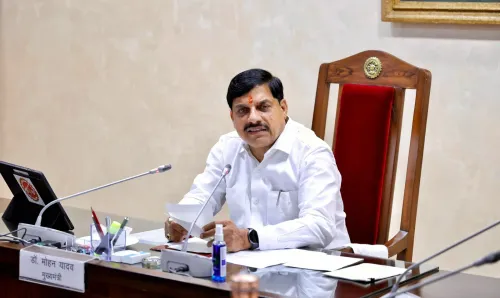
State Dairy Minister Joraram Kumawat inspected the facility and called it a milestone for Rajasthan's dairy sector.
The upgrade is expected to reduce seasonal milk surplus wastage and improve market access for dairy farmers across Rajasthan .
Jaipur Dairy — formally the Jaipur District Milk Producers' Cooperative Union Limited — has completed a ₹133 crore modernisation and renovation drive that doubles its daily milk processing capacity to 20 lakh litres, up from 12 lakh litres earlier. The upgraded facility is set to be inaugurated shortly, marking the cooperative's most significant infrastructure leap since its founding.
Scale of the Upgrade
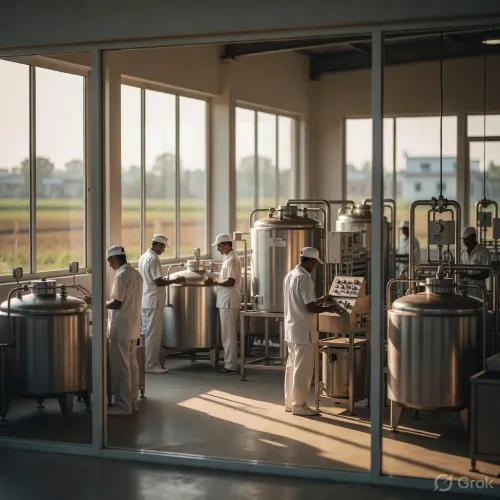
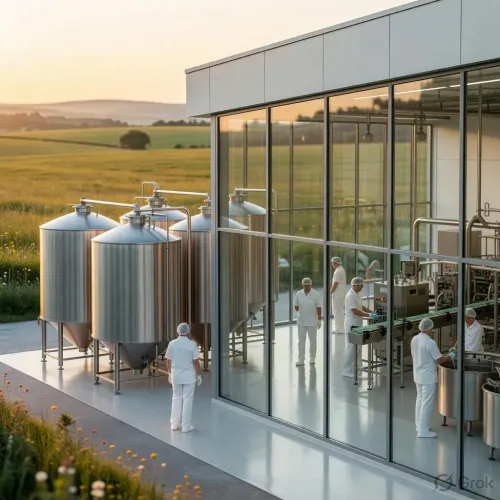
The transformation is visible across the sprawling plant. New-age automated machinery has replaced ageing manual systems, and production capacities have expanded on a scale not seen before in the cooperative's history. Milk pouch packaging capacity has surged from 10 lakh litres to 16.5 lakh litres per day, enabling faster turnaround and a more resilient supply chain.
The upgraded plant is also engineered to produce up to 70 tonnes of ghee per day, positioning Jaipur as a significant hub for value-added dairy products. Modern boilers and advanced processing systems support large-scale production of ghee, butter, and whey-based products — categories that command higher margins and reduce dependence on liquid milk alone.
What It Means for Rajasthan's Dairy Farmers
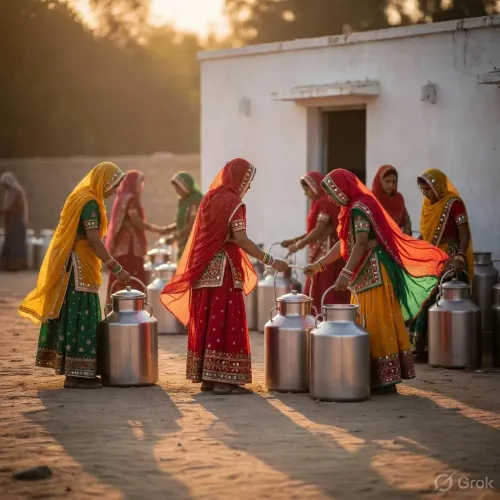
For the thousands of milk producers across Rajasthan's villages, the expanded capacity addresses a longstanding pain point. During peak flush seasons, surplus milk frequently creates logistical bottlenecks, leading to wastage and depressed farm-gate prices. The higher procurement and processing volumes are expected to reduce that surplus pressure, giving farmers better market access and more predictable incomes.
This comes amid a broader push to strengthen cooperative dairy networks in India's largest state by area, where rural livelihoods remain closely tied to livestock and milk production.
What the Government Said
State Dairy Minister Joraram Kumawat recently inspected the facility and described the project as a milestone for Rajasthan's dairy sector. Officials from the Rajasthan Cooperative Dairy Federation (RCDF) briefed him on the technological upgrades and operational improvements achieved through the renovation drive.
Notably, the modernisation aligns with the Centre's renewed emphasis on cooperative dairy development as a vehicle for rural income growth — a policy thread running from the original White Revolution of the 1970s through to current schemes targeting farmer collectives.
Impact on Consumers
Higher processing and packaging capacities are expected to improve product availability across Jaipur and neighbouring districts, while maintaining quality and hygiene standards. Faster packaging throughput means fresher milk reaches urban households with shorter cold-chain dwell times.
The Road Ahead
When the plant begins full-scale operations, the ripple effects are expected to extend well beyond city limits — from village milk collection centres to urban breakfast tables — reinforcing a dairy ecosystem that serves millions of producers and consumers alike. Observers are watching whether the modernised cooperative can also expand its branded product portfolio to capture premium retail segments, the next frontier for India's cooperative dairies.
Point of View
But the more telling number is 70 tonnes of ghee per day — a deliberate pivot toward value-added products that cooperative dairies have historically underexploited. Liquid milk is a low-margin, logistics-heavy business; ghee, butter, and whey derivatives are where the economics improve. If Jaipur Dairy can pair this capacity with branded retail distribution, it could shift the cooperative model from a price-taker to a market-maker. The risk is execution: India's cooperative dairies have a long record of building capacity that outpaces their ability to manage quality, cold chain, and working capital at scale. The real test of this 'new White Revolution' framing will come in the first flush season after inauguration.
NationPress
20 Sept 2026
Frequently Asked Questions
What is the Jaipur Dairy ₹133 crore modernisation project?
It is a major infrastructure upgrade of the Jaipur District Milk Producers' Cooperative Union Limited (Jaipur Dairy) in Rajasthan, costing ₹133 crore. The project has replaced ageing equipment with automated systems, nearly doubled milk processing capacity, and added large-scale ghee and butter production lines.
How much has Jaipur Dairy's milk processing capacity increased?
Jaipur Dairy's daily milk processing capacity has increased from 12 lakh litres to 20 lakh litres. Milk pouch packaging capacity has also risen from 10 lakh litres to 16.5 lakh litres per day.
How will the upgrade benefit Rajasthan's dairy farmers?
The expanded capacity allows Jaipur Dairy to procure and process larger milk volumes, particularly during peak flush seasons when surplus milk previously led to wastage and lower farm-gate prices. Farmers are expected to gain better market access and more stable incomes.
What new products can the upgraded Jaipur Dairy plant produce?
The modernised facility is equipped to produce up to 70 tonnes of ghee per day, along with butter and whey-based products. Modern boilers and advanced processing systems support this value-added production alongside the core liquid milk business.
When will the new Jaipur Dairy plant begin full operations?
The upgraded facility is set to be inaugurated shortly, according to officials. State Dairy Minister Joraram Kumawat recently inspected the plant, and RCDF officials have briefed him on the completed technological upgrades ahead of the formal launch.