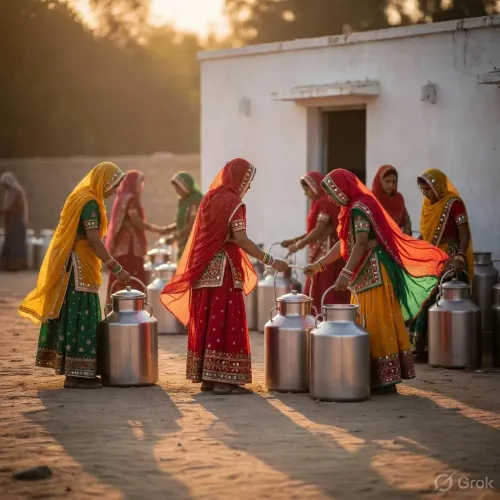
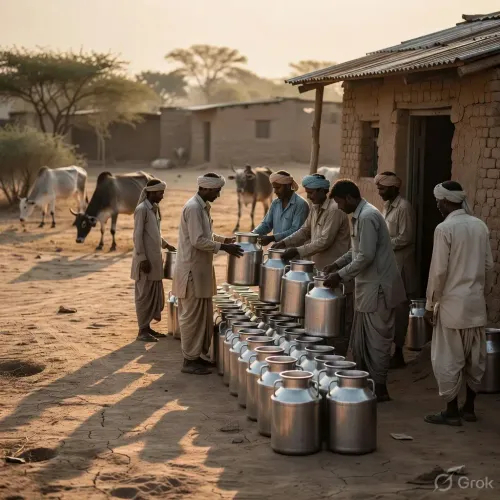
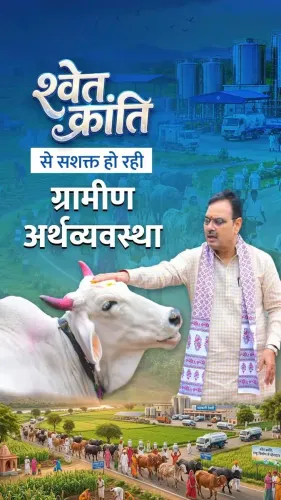
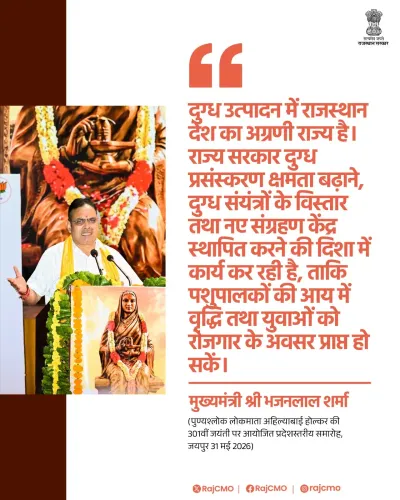
Rajasthan CMO greets dairy farmers on World Milk Day
Synopsis
The Chief Minister's Office of Rajasthan marked World Milk Day on 1 June 2026 with greetings to dairy farmers and livestock keepers, pledging full commitment to milk production growth and economic empowerment while calling for a renewed resolve to strengthen India's White Revolution.
Key Takeaways
The Chief Minister's Office of Rajasthan posted World Milk Day greetings on 1 June 2026 for dairy farmers, livestock keepers and milk producers.
World Milk Day is a FAO -established global observance held every year on 1 June since 2001 .
The CMO reaffirmed the state government's commitment to animal husbandry welfare, milk production growth and economic empowerment of producers.
The post invoked the White Revolution ( Shwet Kranti ), rooted in Operation Flood launched in 1970 by the National Dairy Development Board .
Rajasthan has one of India's largest livestock populations and is a key contributor to national milk output through state cooperative networks.
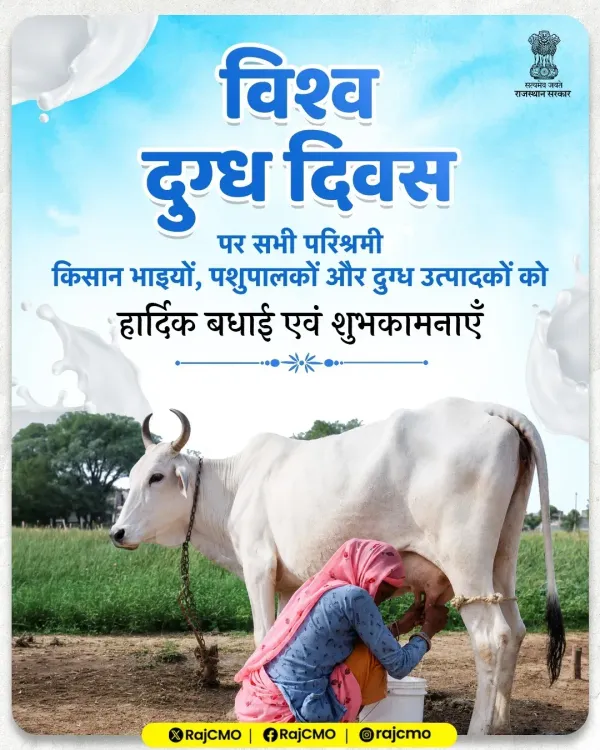
The Chief Minister's Office of Rajasthan on Monday, 1 June 2026 extended greetings to farmers, livestock keepers and milk producers on World Milk Day, reaffirming the state government's commitment to dairy welfare, milk production growth and economic empowerment of animal husbandry communities.
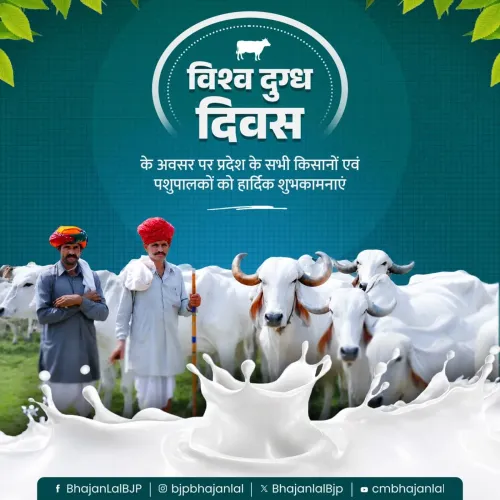
Posting in Hindi on the occasion, the CMO wrote: 'विश्व दुग्ध दिवस पर सभी परिश्रमी किसान भाइयों, पशुपालकों और दुग्ध उत्पादकों को हार्दिक बधाई' ['Heartfelt congratulations to all hardworking farmer brothers, livestock keepers and milk producers on World Milk Day']. The post called on citizens to renew their resolve to strengthen the White Revolution — Shwet Kranti — on this special day.
Context
World Milk Day is observed every year on 1 June, a date established by the Food and Agriculture Organisation (FAO) in 2001 to recognise the vital role the dairy sector plays in nutrition and rural livelihoods globally. The day provides governments and institutions an annual occasion to highlight policy commitments to the farming communities that sustain milk supply chains. In India, the occasion carries particular resonance because the country is the world's largest milk producer — a status built over decades through cooperative infrastructure. The Rajasthan CMO's message aligns with a pattern of state-level reaffirmations that accompany the observance each year.Policy Backdrop
The reference to the White Revolution invokes Operation Flood, launched in 1970 by the National Dairy Development Board (NDDB) — a statutory body established in 1965 — which transformed India into a milk-surplus nation through village cooperative procurement and breed-improvement programmes. That cooperative model remains the backbone of dairy marketing across states, including Rajasthan. Rajasthan holds one of the largest livestock populations in India, making it a significant contributor to national milk output. State governments have periodically announced measures covering animal health, fodder availability and market linkages to sustain productivity. The CMO's statement that the government is working 'with full commitment' toward the welfare of livestock keepers and their economic empowerment is consistent with this long-standing policy direction, though specific scheme details or numerical targets were not enumerated in the post.Stakeholders and Impact
The primary beneficiaries of dairy-sector policies are dairy farmers, livestock keepers and milk producers — the three groups explicitly named in the CMO's greeting. In a state like Rajasthan, where animal husbandry is a principal source of rural income, government messaging on this sector carries direct economic significance for a large section of the population. Cooperative dairy networks in the state channel milk from village collection points to processing plants and consumer markets, meaning that policy support — whether through veterinary services, subsidised fodder or procurement price assurances — has a cascading effect on household incomes across rural districts.What's Next
Attention will now turn to whether the Rajasthan government follows its World Milk Day messaging with concrete allocations in forthcoming animal husbandry budget announcements or new joint projects under the central National Programme for Dairy Development. Quarterly milk procurement figures from state cooperatives will serve as a measurable indicator of progress toward the productivity goals the CMO's office has signalled. Observers of agrarian policy will watch for scheme-level announcements that translate the government's stated commitment into funded programmes for the state's dairy communities.Point of View
Where livestock ownership is deeply intertwined with rural livelihoods, such messaging serves as a signal to a large vote-relevant constituency. The real test will be whether the sentiment translates into measurable budget commitments and procurement-price support in the months ahead.
NationPress
15 Oct 2026
Frequently Asked Questions
What is World Milk Day and why is it celebrated?
World Milk Day is observed on 1 June every year, established by the FAO in 2001 to recognise the dairy sector's contribution to nutrition, livelihoods and food security worldwide.
What is the White Revolution in India?
The White Revolution refers to Operation Flood , launched in 1970 by the National Dairy Development Board , which made India the world's largest milk producer through village dairy cooperatives and breed-improvement programmes.
What did the Rajasthan CMO say on World Milk Day 2026?
The Chief Minister's Office of Rajasthan extended greetings to dairy farmers, livestock keepers and milk producers, reaffirming the government's commitment to animal husbandry welfare, milk production growth and economic empowerment, and called for renewing the resolve to strengthen the White Revolution.
Why is Rajasthan important for India's dairy sector?
Rajasthan has one of the largest livestock populations in India, making it a significant contributor to national milk output, with state cooperative networks linking village producers to processing and consumer markets.
What is the National Dairy Development Board?
The National Dairy Development Board (NDDB) is a statutory body established in 1965 to expand dairy infrastructure, cooperative marketing and breed-improvement programmes across India.