CM Saini Greets Dairy Farmers on World Milk Day
Synopsis
Haryana Chief Minister Nayab Singh Saini marked World Milk Day on 1 June 2026 by honouring milk producers and livestock farmers, framing the dairy sector as a foundation of rural prosperity and India's self-reliance mission.
Key Takeaways
Haryana CM Nayab Singh Saini extended greetings to dairy farmers and livestock holders on World Milk Day, 1 June 2026 .
He described milk as a pillar of the rural economy, farmer prosperity, and Atmanirbhar Bharat .
World Milk Day has been observed globally every 1 June since 2001 , promoted by the FAO .
India became the world's largest milk producer following Operation Flood , launched by the NDDB in 1970 .
Haryana is a key contributor to national dairy output, known for its high-yielding Murrah buffaloes.
The dairy sector employs tens of millions in rural India and is central to agricultural GDP.
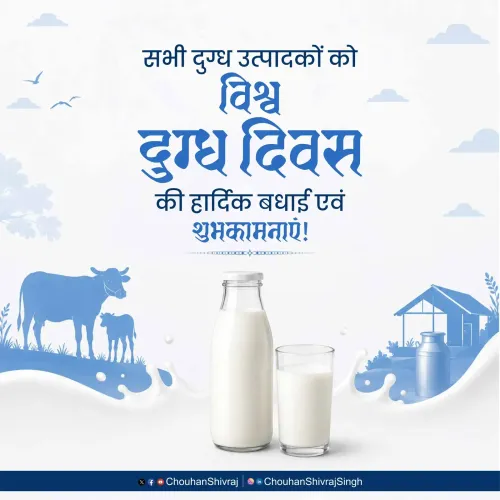
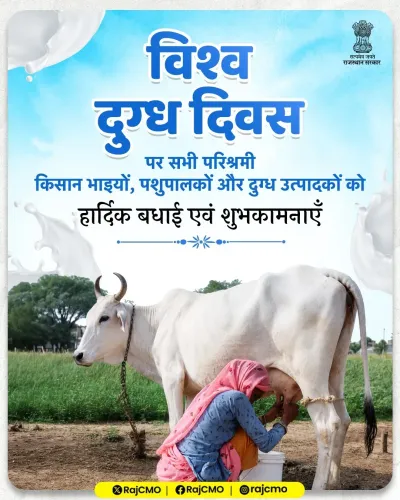
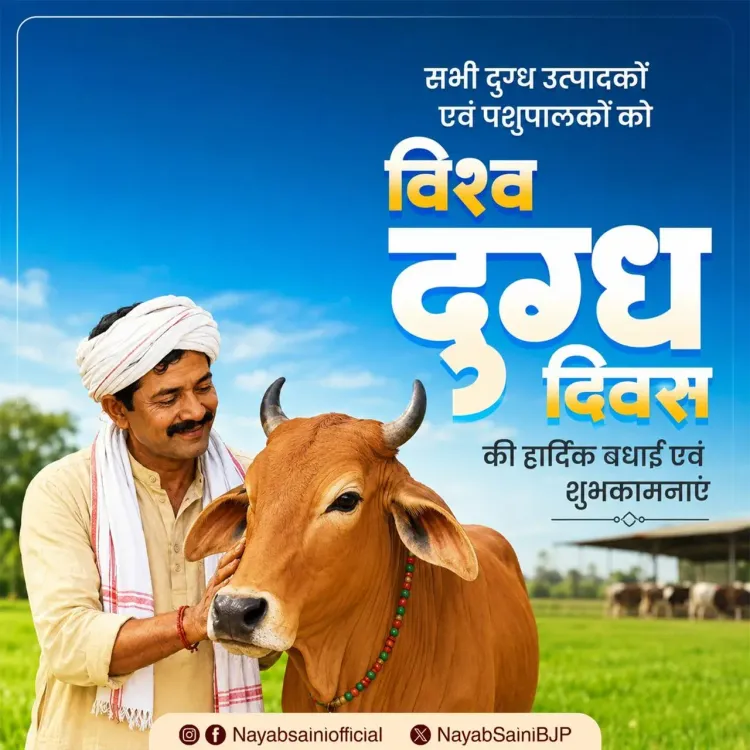
Haryana Chief Minister Nayab Singh Saini on Sunday, 1 June 2026 extended greetings to milk producers, livestock farmers, and dairy-sector families across the country on the occasion of World Milk Day, calling the dairy sector a cornerstone of rural prosperity and self-reliant India.
In his post, Saini wrote: 'दूध केवल पोषण का स्रोत ही नहीं, बल्कि ग्रामीण अर्थव्यवस्था, किसान समृद्धि और आत्मनिर्भर भारत की सशक्त आधारशिला भी है' ('Milk is not merely a source of nutrition, but also the strong foundation of the rural economy, farmer prosperity, and self-reliant India'). He credited the hard work of livestock farmers and milk producers with empowering the livelihoods of lakhs of families while contributing to the nation's economic progress.
Context
World Milk Day is observed every year on 1 June, an annual global event promoted by the Food and Agriculture Organisation (FAO) since 2001 to recognise the nutritional value of milk and the economic importance of the dairy sector. The day is marked by governments, cooperatives, and industry bodies worldwide with outreach programmes, policy announcements, and tributes to farming communities.
Saini's message aligns with the broader national framing under the Atmanirbhar Bharat initiative — launched in 2020 — which emphasises strengthening domestic agricultural and allied sectors, including dairy, to reduce import dependence and boost rural incomes.
Policy Backdrop
India's dairy sector traces its modern cooperative structure to Operation Flood, launched in 1970 by the National Dairy Development Board (NDDB). The programme created a national milk grid and a village-level cooperative model that transformed India into the world's largest milk producer across subsequent decades.
The NDDB, established in 1965, continues to oversee dairy cooperative expansion and infrastructure across states. Haryana has been a significant contributor to national output, with its high-yielding Murrah buffaloes recognised as among the most productive dairy breeds in the country. Successive state and central governments have treated dairy expansion as a direct route to rural income growth.
Stakeholders and Impact
India's dairy sector employs tens of millions of people in rural areas and contributes substantially to agricultural GDP through milk production and processing. For small and marginal farmers, livestock rearing and milk sales often constitute a primary or supplementary income stream, providing year-round cash flow unlike seasonal crop cycles.
Dairy cooperatives have historically served as a buffer against price volatility, ensuring that producers receive stable returns. Haryana's dairy families, in particular, operate within this cooperative framework and benefit from state-level animal husbandry support programmes.
What's Next
Attention will now turn to whether the Haryana government follows the World Milk Day message with concrete policy action — including state budget allocations for dairy infrastructure, veterinary services, or new targets under the animal husbandry department's annual policy cycle. Any announcements in the upcoming economic survey or supplementary budget will be closely watched by the state's dairy farmer community.
Point of View
Reinforcing the BJP's sustained outreach to rural and agrarian constituencies ahead of any electoral cycle. By invoking Atmanirbhar Bharat alongside the dairy sector, he ties a state-level tribute to the central government's flagship self-reliance narrative — a pattern common among BJP chief ministers seeking to align state messaging with national branding. The emphasis on 'lakhs of families' signals awareness of dairy's scale as a vote bank issue in a state where livestock farming is integral to rural household economics. Whether the rhetoric translates into budgetary commitment to dairy infrastructure will be the measure analysts and farmer bodies will apply.
NationPress
22 Sept 2026
Frequently Asked Questions
Why is World Milk Day celebrated on 1 June?
World Milk Day is observed on 1 June every year, a date established by the FAO in 2001 to recognise the global importance of milk as a nutritional resource and to acknowledge the contribution of the dairy sector to economies worldwide.
What did Haryana CM Nayab Singh Saini say on World Milk Day 2026?
Nayab Singh Saini extended greetings to milk producers, livestock farmers, and dairy-sector families, stating that milk is not only a source of nutrition but also the foundation of the rural economy, farmer prosperity, and self-reliant India.
What is Operation Flood and how does it relate to India's dairy sector?
Operation Flood was a nationwide dairy development programme launched in 1970 by the National Dairy Development Board (NDDB) . It created village-level cooperatives and a national milk grid, transforming India into the world's largest milk producer.
What is Haryana's role in India's dairy industry?
Haryana is a significant contributor to India's national milk output, largely due to its high-yielding Murrah buffaloes, which are among the most productive dairy breeds globally. The state's farmers operate within the national cooperative framework supported by the NDDB .
What is Atmanirbhar Bharat and how does it connect to dairy farming?
Atmanirbhar Bharat is a self-reliance initiative launched by the central government in 2020 that emphasises strengthening domestic production across sectors including agriculture and allied industries. The dairy sector is highlighted under this framework as a driver of rural income and reduced dependence on imported dairy products.