Shivraj Singh Chouhan Greets Dairy Sector on World Milk Day
Synopsis
Union Agriculture Minister Shivraj Singh Chouhan marked World Milk Day on 1 June 2026 by congratulating India's dairy farmers, cattle rearers and livestock workers, celebrating the country's status as the world's largest milk producer and urging continued dedication to national development.
Key Takeaways
World Milk Day is observed on 1 June every year, established by the FAO in 2001 .
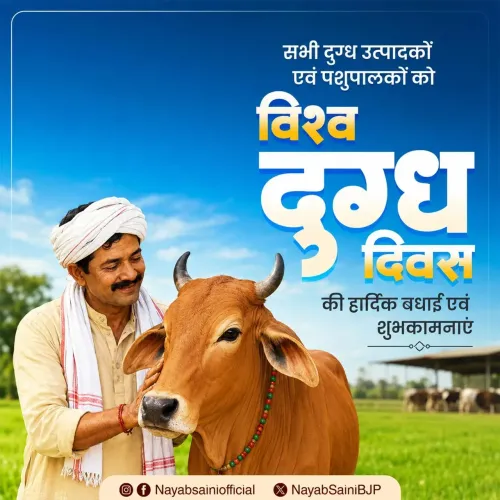
Union Agriculture Minister Shivraj Singh Chouhan greeted milk producers, gopalaks, pashupalaks and dairy sector workers on the occasion.
India is the world's largest milk-producing country, a position it has held since the late 1990s .
India's dairy dominance traces back to Operation Flood (launched 1970 ) and the cooperative model built by the National Dairy Development Board .
Key ongoing schemes include the Rashtriya Gokul Mission and the National Programme for Dairy Development , targeting breed improvement and value chain strengthening.
Smallholder livestock rearers — many of them women — form the backbone of India's dairy output.
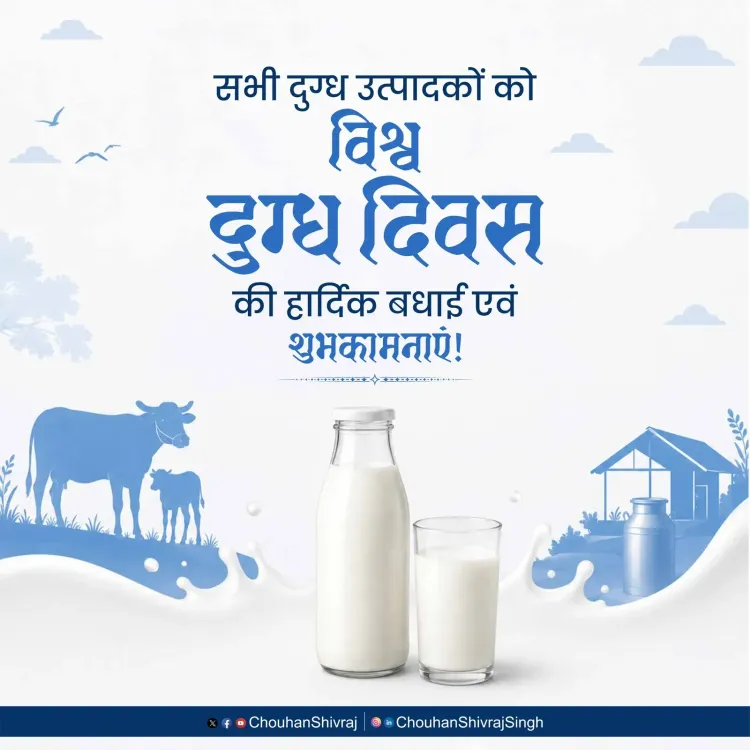
Union Agriculture Minister Shivraj Singh Chouhan on Monday, 1 June 2026 extended greetings to milk producers, cattle rearers, livestock farmers and all those connected with the dairy sector on the occasion of World Milk Day, reaffirming India's standing as the world's largest milk-producing nation.
Posting on X in Hindi, the Minister congratulated the farming community, saying: 'आज भारत दुनिया का सबसे बड़ा दुग्ध उत्पादक देश है' ('Today India is the world's largest milk-producing country'). He saluted all 'annadata' farmers, cattle keepers and dairy workers for making India self-reliant and a leader in milk production, urging them to continue contributing to the nation's renewal with the same dedication and hard work.
Context
World Milk Day is observed every year on 1 June, a date established by the Food and Agriculture Organisation (FAO) in 2001 to recognise the global importance of milk and to celebrate the dairy sector's contributions to livelihoods, nutrition and economies. The day provides governments and institutions an opportunity to highlight national dairy achievements and affirm policy commitments to the sector.
Chouhan, a senior BJP leader and former four-term Chief Minister of Madhya Pradesh, holds the Union portfolio of Agriculture and Farmers Welfare as well as Rural Development, making the dairy sector a direct area of his ministerial responsibility.
Policy Backdrop
India's position as the world's top milk producer is rooted in Operation Flood, the world's largest dairy development programme launched in 1970 under the National Dairy Development Board (NDDB). The programme transformed India from a milk-deficit nation into a surplus one by building a network of village dairy cooperatives, a model that continues to underpin the sector today.
The NDDB, established in 1965, spearheaded this cooperative revolution and remains central to India's dairy architecture. Successive governments have built on this foundation through schemes such as the Rashtriya Gokul Mission and the National Programme for Dairy Development, which focus on indigenous breed improvement, cattle health, feed and fodder availability, and value addition across the dairy supply chain.
India has maintained its rank as the largest global milk producer since the late 1990s, with smallholder livestock rearers — the very constituency Chouhan addressed in his post — forming the backbone of this output.
Stakeholders and Impact
The dairy sector in India involves tens of millions of smallholder farmers, the majority of whom are women, making it one of the most inclusive segments of the agricultural economy. Milk cooperatives and self-help groups in rural areas depend on sustained government support for price stability, veterinary services and market access.
Chouhan's public acknowledgement of cattle rearers (gopalaks) and livestock farmers (pashupalaks) alongside mainstream crop farmers signals the Ministry's intent to keep the animal husbandry and dairy constituency at the centre of agricultural policy discourse. The message aligns with a broader governmental emphasis on rural income diversification and doubling farmer welfare.
What's Next
Policy watchers will track upcoming announcements on the rollout and funding status of the Rashtriya Gokul Mission and the National Programme for Dairy Development in forthcoming budget sessions and state-level dairy policy reviews. With World Milk Day serving as an annual advocacy moment, the Minister's message may set the tone for near-term departmental priorities around breed improvement, cooperative strengthening and dairy export promotion.
Point of View
But it carries policy weight given his dual charge of Agriculture and Rural Development — portfolios where dairy income is a lever for rural poverty reduction. By explicitly naming gopalaks and pashupalaks alongside crop farmers, the Minister signals an inclusive framing of 'farmer welfare' that extends beyond the paddy-wheat belt. This positioning is consistent with the BJP's long-standing outreach to the cattle-rearing and Gau-seva constituency. The broader arc points toward intensified investment in the cooperative dairy model and indigenous breed programmes as the government seeks to sustain India's global dairy leadership.
NationPress
20 Oct 2026
Frequently Asked Questions
When is World Milk Day celebrated?
World Milk Day is celebrated every year on 1 June . It was established by the Food and Agriculture Organisation (FAO) in 2001 to recognise the importance of milk and the dairy sector globally.
Is India the largest milk producer in the world?
Yes, India has been the world's largest milk-producing country since the late 1990s , a position built on the cooperative dairy model pioneered through Operation Flood starting in 1970 .
What did Shivraj Singh Chouhan say on World Milk Day 2026?
Shivraj Singh Chouhan extended greetings to all milk producers, cattle rearers, livestock farmers and dairy sector workers, congratulated them for making India the world's largest milk producer, and urged them to continue contributing to national development with the same dedication.
What is Operation Flood and why does it matter for India's dairy sector?
Operation Flood , launched in 1970 by the National Dairy Development Board , was the world's largest dairy development programme. It transformed India from a milk-deficit to a milk-surplus nation by establishing village dairy cooperatives, and its legacy underpins India's dairy leadership today.
What government schemes support India's dairy farmers?
Key schemes include the Rashtriya Gokul Mission , focused on indigenous cattle breed improvement, and the National Programme for Dairy Development , which supports infrastructure, feed and fodder, and value addition across the dairy supply chain.