Jaipur to host 52-nation Commonwealth judicial conference, July 31–Aug 2
Synopsis
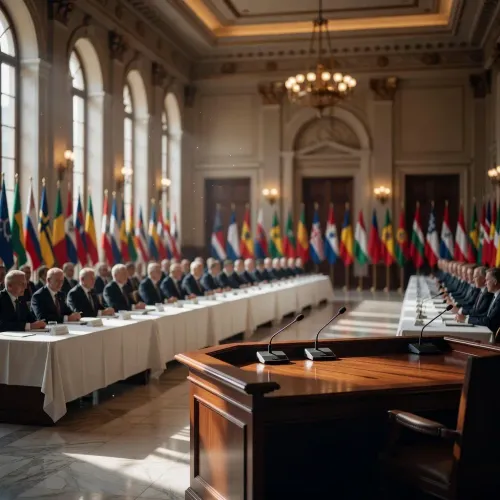
Jaipur is about to make judicial history. With delegates from all 52 Commonwealth nations converging from 31 July, the city is poised to adopt the 'Jaipur Peace Mediation Declaration' — a first-of-its-kind framework that could redefine how 2.5 billion people across Commonwealth nations resolve disputes. Rajasthan's record of settling 25,000 cases through mediation earned it the hosting rights.
Key Takeaways
The Commonwealth Peace Mediation and Rule of Law Conference runs from 31 July to 2 August in Jaipur , hosted by the Rajasthan State Legal Services Authority .
Delegates from all 52 Commonwealth nations are invited; around 30 countries have confirmed participation as of 29 July .
The summit is expected to adopt the 'Jaipur Peace Mediation Declaration' , a first-of-its-kind framework for peaceful dispute resolution across Commonwealth jurisdictions.
Chief Justice of India Surya Kant , CM Bhajanlal Sharma , and Attorney General R.
Venkataramani are among the dignitaries expected at the inaugural on 31 July .
Rajasthan was chosen as host on the strength of resolving nearly 25,000 disputes through mediation and training over 2,000 mediators under the Supreme Court's Mediation Mission.
The Ministry of External Affairs and Ministry of Home Affairs have extended support for the conference.
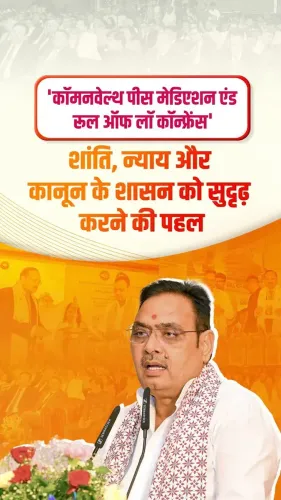
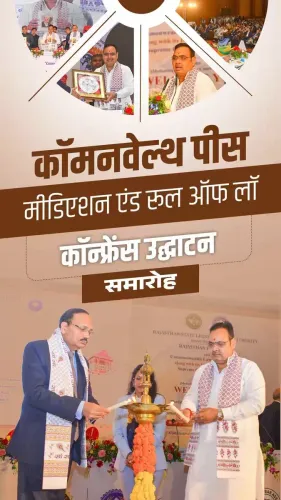
Jaipur is set to host the Commonwealth Peace Mediation and Rule of Law Conference from 31 July to 2 August, drawing delegates from all 52 Commonwealth nations to deliberate on peaceful dispute resolution and judicial reform. The three-day summit, organised by the Rajasthan State Legal Services Authority (RSLSA), is expected to culminate in the adoption of the 'Jaipur Peace Mediation Declaration' — described as a first-of-its-kind framework for mediation and rule of law across Commonwealth jurisdictions.
Key Dignitaries and Confirmed Participants
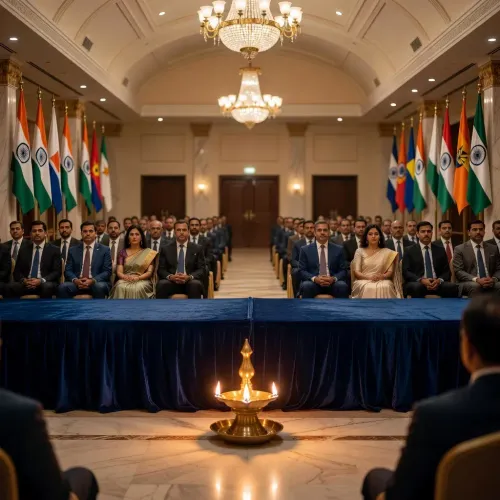
The formal inauguration, scheduled for the evening of 31 July at Hotel The Lalit, Jaipur, is expected to be attended by Chief Justice of India Surya Kant, Rajasthan Chief Minister Bhajanlal Sharma, Acting Chief Justice of the Rajasthan High Court Justice Sanjeev Prakash Sharma, Attorney General R. Venkataramani, and Supreme Court Bar Association President Vikas Singh, among other dignitaries.
Foreign judges who have confirmed participation include Justice Daba Nair Patel of the Supreme Court of Zambia, Justice A.H.M. Nawaz of the Supreme Court of Sri Lanka, and Justice Vashisht V. Okara of the Court of Appeal of the Bahamas. Jurists from Singapore, Zimbabwe, Hong Kong, the United Kingdom, Malaysia, Bangladesh, Eswatini, Kenya, and the Maldives are also expected to attend. Around 30 countries have already confirmed participation as of 29 July.
The Ministry of External Affairs and the Ministry of Home Affairs have extended significant support for organising the event.
The Jaipur Peace Mediation Declaration
The conference's most anticipated outcome is the Jaipur Peace Mediation Declaration, which will be signed by judges, senior advocates, attorneys, mediators, and legal experts from participating Commonwealth nations. According to RSLSA officials, the declaration aims to establish shared principles on conflict resolution, peace mediation, the rule of law, and speedy access to justice.
Organisers believe the document could become an important reference point for future international judicial cooperation. Notably, the declaration goes beyond conventional mediation — it seeks to address not only legal disputes but also the underlying mistrust, bitterness, and emotional discord between parties, with a focus on long-term reconciliation rather than temporary settlements.
Why Rajasthan Was Chosen
According to Dr Hariom Attri, Member Secretary of the RSLSA, Rajasthan was selected to host the conference on the basis of its nationally recognised achievements in mediation. Under the Supreme Court's Mediation Mission, Rajasthan resolved nearly 25,000 disputes through mediation and built a network of more than 2,000 trained mediators, significantly reducing litigation through out-of-court settlements.
Dr Attri noted that all 52 Commonwealth nations share legal systems historically rooted in the British Common Law tradition, making the Commonwealth a natural forum for harmonising judicial reform and alternative dispute resolution practices.
Impact on Citizens and Judicial Backlog
Pawan Kumar Jeenwal, Secretary of the Jaipur District Legal Services Authority, said that effective implementation of the conference's outcomes could directly benefit ordinary citizens by enabling faster resolution of disputes that might otherwise remain pending in courts for years. He added that wider adoption of mediation would reduce judicial backlog, lower litigation costs, save time, and promote lasting peace between disputing parties.
Officials described the conference as an opportunity for India's judicial system to demonstrate global leadership. 'For Rajasthan, this is not just an event but an opportunity to establish a strong presence on the global judicial map,' organisers said. The conference will also deliberate on judicial accountability, constitutional values, and mechanisms to improve justice delivery across Commonwealth jurisdictions.
What Comes Next
If adopted as planned on 2 August, the Jaipur Peace Mediation Declaration could emerge as one of the most consequential judicial initiatives in the Commonwealth's recent history, potentially reshaping how member nations approach dispute resolution and court pendency. Organisers said the conference marks 'the beginning of a new way of thinking' within the global justice system, with India positioned at the forefront of shaping that agenda.
Point of View
000-case mediation record is a credible credential, not a ceremonial one. The real test, however, is whether the Jaipur Peace Mediation Declaration moves beyond a signed document into binding practice across 52 jurisdictions with vastly different resource levels and political will. Commonwealth declarations have a mixed track record of implementation. If India wants this to be more than a prestige moment, it will need to champion a follow-up monitoring mechanism — something the current agenda does not yet publicly specify.
NationPress
28 Oct 2026
Frequently Asked Questions
What is the Commonwealth Peace Mediation and Rule of Law Conference in Jaipur?
It is a three-day international judicial summit hosted by the Rajasthan State Legal Services Authority in Jaipur from 31 July to 2 August, bringing together judges, legal experts, and policymakers from all 52 Commonwealth nations. The conference is expected to adopt the 'Jaipur Peace Mediation Declaration', a framework for promoting mediation and the rule of law across Commonwealth jurisdictions.
What is the Jaipur Peace Mediation Declaration?
It is a landmark document expected to be signed at the close of the conference on 2 August, establishing shared principles on conflict resolution, peace mediation, the rule of law, and access to justice for Commonwealth nations. Organisers describe it as a first-of-its-kind framework that prioritises long-term reconciliation over temporary legal settlements.
Why was Jaipur chosen to host the Commonwealth judicial conference?
Rajasthan was selected because of its outstanding record in mediation under the Supreme Court's Mediation Mission, which saw the state resolve nearly 25,000 disputes and build a network of over 2,000 trained mediators. Organisers said the state's model of out-of-court dispute resolution offers a replicable template for other Commonwealth jurisdictions.
Who are the key attendees at the Jaipur conference?
Chief Justice of India Surya Kant, Rajasthan Chief Minister Bhajanlal Sharma, Attorney General R. Venkataramani, and Supreme Court Bar Association President Vikas Singh are among the expected Indian dignitaries. Foreign judges confirmed include Justice Daba Nair Patel of Zambia, Justice A.H.M. Nawaz of Sri Lanka, and Justice Vashisht V. Okara of the Bahamas.
How will the conference benefit ordinary citizens?
According to Jaipur District Legal Services Authority Secretary Pawan Kumar Jeenwal, effective implementation of the conference's outcomes could enable faster resolution of disputes that might otherwise remain pending in courts for years. Wider adoption of mediation is expected to reduce judicial backlog, lower litigation costs, and promote lasting peace between disputing parties.