Jaipur Mayor Sunil Kothari sweeps road himself during Walled City night sanitation check
Synopsis
Jaipur Mayor Sunil Kothari did something unusual for a civic chief on Thursday night — he picked up a broom and swept a road in the Walled City after finding garbage during a late-night inspection. With Deepotsav approaching and the city's UNESCO heritage status at stake, the gesture spotlights a larger accountability question: can one-off field visits fix a systemic sanitation gap in one of Rajasthan's most visited heritage corridors?
Key Takeaways
Jaipur Mayor Sunil Kothari conducted a late-night sanitation inspection of the Walled City on Thursday, 2 October .
After finding garbage on the road, Kothari personally picked up a broom and swept the street during the inspection.
The visit started near the Hanuman Temple at Sanganeri Gate and covered major commercial markets post-business-hours.
Jaipur MP Manju Sharma , Councilor Anuradha Maheshwari , and Deputy Commissioner Balram Meena accompanied the Mayor.
Kothari said special sanitation measures are being planned ahead of Deepotsav and Diwali , with operational changes to follow based on inspection findings.
The Mayor reaffirmed that Jaipur's UNESCO World Heritage City status would be protected.
Jaipur Mayor Sunil Kothari conducted a late-night reality check of sanitation arrangements in Jaipur's Walled City on Thursday, personally picking up a broom and sweeping a road after spotting garbage during the inspection. The visit, which covered major commercial markets of the heritage zone, was part of the Mayor's ongoing drive to assess ground-level civic service delivery since taking charge at the Jaipur Municipal Corporation (JMC).
How the Night Inspection Unfolded
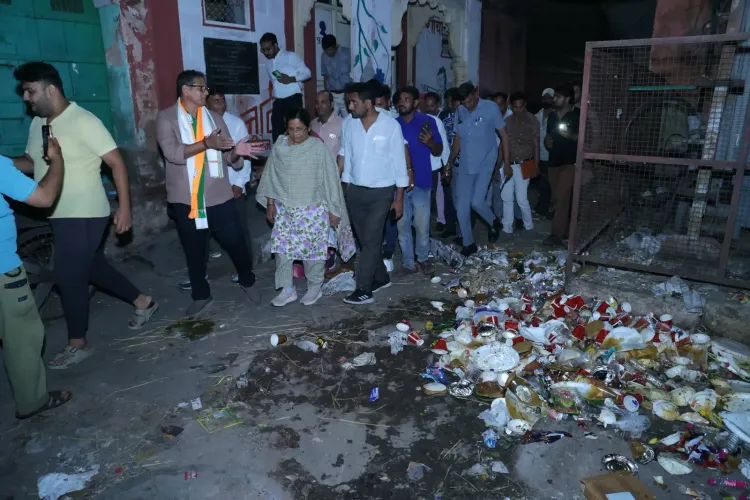
The inspection commenced near the Hanuman Temple at Sanganeri Gate. Jaipur MP Manju Sharma accompanied Mayor Kothari, along with Councilor Anuradha Maheshwari, Deputy Commissioner Balram Meena, municipal officials, and other public representatives. The team reviewed garbage accumulation points, the deployment of sanitation workers, the availability of cleaning equipment, and the waste collection process in areas where commercial activity had wound down for the day.
When garbage was found lying on the road, Kothari did not merely flag the lapse — he picked up a broom and began sweeping the street himself, a gesture that drew attention to the gap between planned sanitation operations and their on-ground execution.
What the Mayor Said
'I am personally assessing the night-time sanitation operations,' Kothari said, adding that understanding the challenges faced by sanitation workers on the ground is essential to improving the system. He noted that officials are examining worker deployment, resource availability, and the post-market-closure garbage collection process, with necessary changes to follow based on findings.
Kothari said special sanitation measures were being planned ahead of 2 October, and that his approach going into the Deepotsav season is to ensure Jaipur remains clean and visually attractive as the city lights up for Diwali.
The Walled City's Dual Challenge
The Walled City is among Jaipur's most congested commercial and tourism corridors, where large volumes of waste accumulate after markets close each evening. Timely garbage collection, cleaning outside shops, and adequate deployment of sanitation workers represent persistent challenges for the civic administration in this zone. Notably, the area also carries a significant heritage burden — Jaipur holds UNESCO World Heritage City status, and any degradation of the streetscape has implications beyond cleanliness.
During the inspection, Kothari raised concerns about preserving that heritage identity, saying discussions are under way with officials on heritage-related issues and that effective measures would be taken. He stated that Jaipur's UNESCO heritage status would not be allowed to be lost.
Broader Context and What Comes Next
The late-night visit is the latest in a series of field inspections Kothari has undertaken since assuming charge at the JMC. Such exercises by elected civic heads are often intended as accountability signals — to both staff and residents — though their lasting impact depends on whether issues identified during visits are systematically translated into operational changes. The Municipal Corporation faces the dual challenge of upgrading sanitation in a densely populated heritage zone while maintaining the aesthetic character that underpins the city's tourism economy. Based on the night inspection findings, Kothari indicated that adjustments to sanitation operations would be announced.
Point of View
But Jaipur's Walled City sanitation problem is structural — a high-footfall heritage corridor where post-market waste accumulation has long outpaced civic capacity. Field visits by elected heads can jolt officials into short-term action, yet without measurable deployment targets and an independent audit of night-cleaning operations, the inspection risks being a one-cycle event rather than a turning point. The UNESCO heritage angle adds urgency that goes beyond aesthetics: repeated sanitation failures in a World Heritage zone can invite international scrutiny. The Mayor's stated intent to institutionalise changes is the only metric that will ultimately matter.
NationPress
2 Oct 2026
Frequently Asked Questions
Why did Jaipur Mayor Sunil Kothari sweep a road himself?
During a late-night sanitation inspection of the Walled City on Thursday, Mayor Kothari found garbage lying on the road and personally picked up a broom to sweep it, drawing attention to the gap between planned and actual sanitation operations. The act was intended to highlight the need for ground-level civic systems to work effectively, particularly in busy commercial areas after business hours.
Where did the Jaipur Mayor's night inspection take place?
The inspection covered major commercial markets in Jaipur's Walled City, beginning near the Hanuman Temple at Sanganeri Gate. The Walled City is a high-footfall heritage and tourism corridor where large quantities of waste accumulate after markets close each evening.
Who accompanied Mayor Kothari during the inspection?
Jaipur MP Manju Sharma, Councilor Anuradha Maheshwari, Deputy Commissioner Balram Meena, municipal officials, and other public representatives accompanied the Mayor during the late-night visit.
What changes did the Mayor say would follow the inspection?
Kothari said officials are reviewing worker deployment, resource availability, and the garbage collection process after markets close, with necessary changes to be made based on the findings. He also indicated that special sanitation measures are being planned ahead of the Deepotsav and Diwali season.
What is the significance of Jaipur's UNESCO heritage status in this context?
Jaipur holds UNESCO World Heritage City status, meaning that persistent sanitation failures in its historic core carry implications beyond cleanliness — they can affect the city's international standing. Mayor Kothari reaffirmed during the inspection that Jaipur's UNESCO status would not be allowed to be lost, signalling that heritage preservation is being factored into the civic sanitation agenda.