Jaipur internet restored after 19-hour shutdown; JDA razes 100+ structures in Jagatpura drive
Synopsis
Jaipur authorities suspended mobile internet for nearly 19 hours across dozens of police station areas on 8 June — a rare administrative move — to cover a single demolition drive that razed over 100 structures, including five religious sites, along a 1.5-km stretch. The operation's peaceful conclusion and early restoration of services mark a significant logistical milestone for the JDA's road-widening agenda.
Key Takeaways
Mobile internet services were suspended for nearly 19 hours across large parts of Jaipur on 8 June to facilitate the anti-encroachment drive.
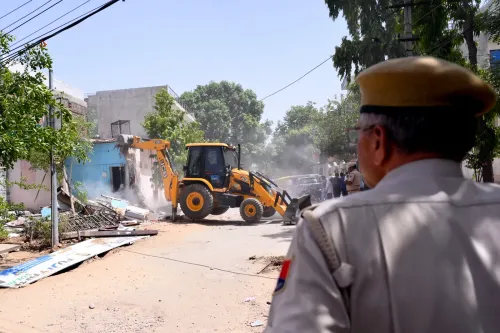
The Jaipur Development Authority (JDA) demolished more than 100 illegal structures , including 5 religious structures , along a 1.5-km stretch in Jagatpura .
The road-widening project aims to restore the route to its sanctioned width of 80 feet ; encroachments had reduced it to 25–30 feet in places.
Around 3,000 police personnel were deployed; drone surveillance and loudspeaker announcements were used to manage crowds.
Services were restored at 7 pm — about 5 hours early — after the operation concluded without major incident.
Residents of more than 50 colonies are expected to benefit from improved access to Malviya Nagar , Pradhan Marg , and Apex Circle .
Mobile internet services were restored across large parts of Jaipur on the evening of 8 June after a nearly 19-hour suspension, as the Jaipur Development Authority (JDA) completed a major anti-encroachment operation in the Jagatpura area that brought down more than 100 illegal structures, including five religious structures. The drive, described by officials as one of the largest of its kind in the city in recent years, concluded without any major untoward incident.
What the Operation Involved
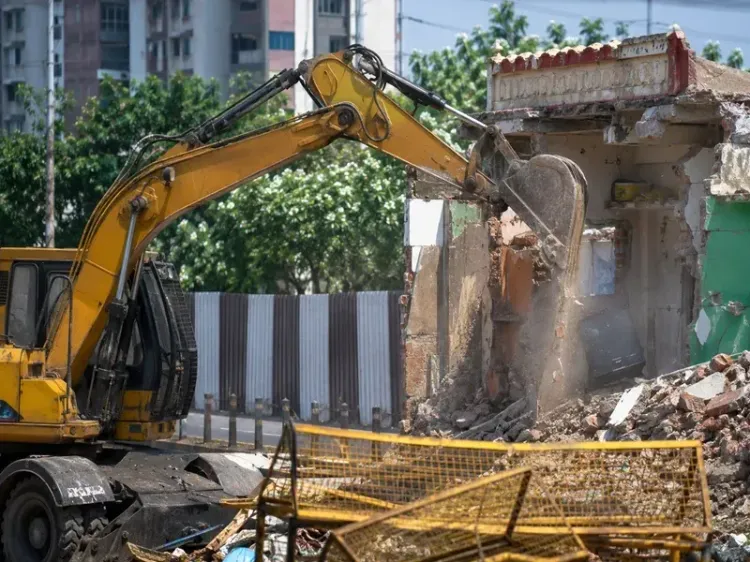
The JDA deployed bulldozers and JCB machines from early morning along an approximately 1.5-km stretch connecting the Nandpuri Underpass to Jagatpura, running alongside the railway line. The objective was to restore the road to its sanctioned width of 80 feet — a target that encroachments had reduced to a mere 25–30 feet in several stretches, according to officials, despite revenue records confirming the approved width.
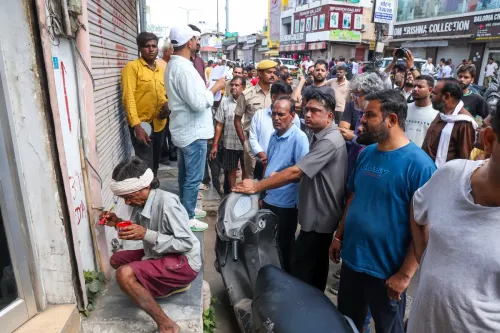
Around 3,000 police personnel were deployed to maintain order. Power supply to the entire Nandpuri area was temporarily cut, roads were barricaded, and public movement was restricted. Drone cameras provided aerial surveillance, while police used loudspeakers to ask residents not to gather on rooftops or film the operation.
Why Internet Services Were Suspended
Jaipur Divisional Commissioner V. Saravana Kumar had ordered the suspension of 2G, 3G, 4G, and 5G mobile internet services across several parts of the city from midnight Sunday until midnight Monday to pre-empt any law-and-order disruption. Services were restored at around 7 pm once the operation concluded peacefully — roughly five hours ahead of the original deadline.
The shutdown covered a large swath of Jaipur district. In Jaipur North, it extended to areas under the Ramganj, Galta Gate, Manak Chowk, Subhash Chowk, Amer, Brahmpuri, Nahargarh, Kotwali, Jalupura, Sanjay Circle, Shastri Nagar, Bhatta Basti, Vidyadhar Nagar, and Jaisinghpura Khor police station limits. In Jaipur East, the suspension covered Bassi, Kanota, Tunga, Adarsh Nagar, Transport Nagar, Jawahar Nagar, Jamdoli, SMS Hospital, Gandhi Nagar, Lalkothi, Moti Doongri, Airport, Malviya Nagar, Jawahar Circle, Bajaj Nagar, Kho-Nagorian, Sanganer, Pratap Nagar, Ramnagaria, and Malpura Gate police station areas.
Religious Structures and Sensitivities
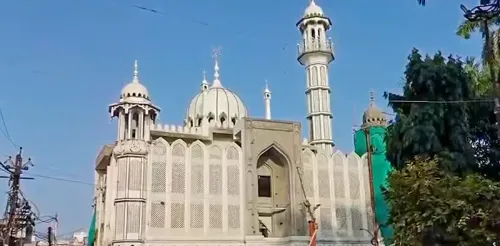
Among the structures demolished were five religious structures that fell within the designated road right-of-way. Officials maintained that the removals were part of the broader mandate to clear all encroachments obstructing the road-widening project, with no exceptions made for the nature of the structure. The operation's peaceful conclusion — despite the sensitivity of removing religious sites — was highlighted by the administration as a sign of careful planning.
Impact on Residents and Connectivity
The road-widening project passes through six major residential colonies. Authorities said it would significantly ease traffic congestion on Hare Krishna Marg and improve connectivity between Nandpuri and Jagatpura. Residents of more than 50 colonies are expected to benefit from improved access to key areas including Malviya Nagar, Pradhan Marg, and Apex Circle.
This comes amid a broader pattern of large-scale anti-encroachment actions across Rajasthan, where urban development bodies have increasingly invoked road-widening mandates to clear long-standing illegal constructions. The Jaipur operation's scale — and the rare step of suspending internet services to accompany it — signals the administration's intent to push through contested urban infrastructure projects with minimal disruption.
Point of View
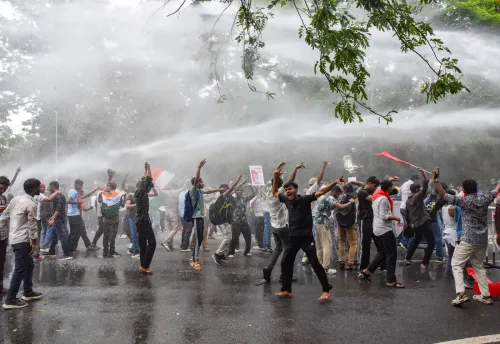
The blanket shutdown affected millions of residents with no direct connection to the encroachments, raising questions about proportionality. The inclusion of religious structures in the demolition list, handled without incident here, is a flashpoint that has triggered violence in other Indian cities; the Jaipur administration's ability to manage it quietly is noteworthy, but the template of pre-emptive internet blackouts for urban infrastructure work sets a precedent worth scrutinising.
NationPress
25 Oct 2026
Frequently Asked Questions
Why was internet suspended in Jaipur on 8 June 2025?
Jaipur Divisional Commissioner V. Saravana Kumar ordered the suspension of 2G, 3G, 4G, and 5G mobile internet services from midnight Sunday to midnight Monday to prevent any law-and-order disruption during the JDA's large-scale anti-encroachment drive in Jagatpura. Services were restored early, at around 7 pm, after the operation concluded peacefully.
How many structures were demolished in the Jagatpura anti-encroachment drive?
The Jaipur Development Authority demolished more than 100 illegal structures during the drive, including five religious structures that fell within the road's right-of-way. The operation targeted a 1.5-km stretch from the Nandpuri Underpass to Jagatpura.
What is the purpose of the Nandpuri–Jagatpura road-widening project?
The project aims to restore the road to its sanctioned width of 80 feet, which encroachments had reduced to just 25–30 feet in several stretches. Authorities say it will ease congestion on Hare Krishna Marg and improve connectivity for residents of more than 50 colonies.
Which areas of Jaipur were affected by the internet shutdown?
The suspension covered a large part of Jaipur district, spanning over 30 police station areas across Jaipur North and Jaipur East, including Ramganj, Galta Gate, Amer, Malviya Nagar, Sanganer, and Vidyadhar Nagar, among others.
Did the demolition drive cause any violence or protests?
According to officials, the operation concluded without any major untoward incident. Around 3,000 police personnel were deployed, power was cut to the Nandpuri area, and drone surveillance was used — measures the administration credited for the peaceful outcome.