Jairam Ramesh slams 'fraudulent two-thirds majority' bid in LS
Synopsis
Congress’s Jairam Ramesh says the Modi government, unable to revive manufacturing, is now trying to ‘manufacture’ a two-thirds Lok Sabha majority through delimitation. With Parliament returning after a record 105-day mid-session gap and the DMK open to a deal if Tamil Nadu’s share is protected, a four-day sitting could decide the shape of India’s future Lok Sabha.
Key Takeaways
Jairam Ramesh on 27 November 2026 accused the Modi government of seeking a ‘fraudulent two-thirds majority’ in the Lok Sabha .
The Congress wants the Lok Sabha’s strength and state-wise seat share frozen for 25 years .
The party demands one-third women’s reservation from 2029 , with an SC/ST sub-quota.
Parliament reconvenes on 30 November , 105 days after the Monsoon Session was adjourned on 13 August .
The Rajya Sabha meets on 2 December , and both Houses may close on 3 December .
The DMK may back the delimitation Bill if Tamil Nadu’s existing representation share is protected.
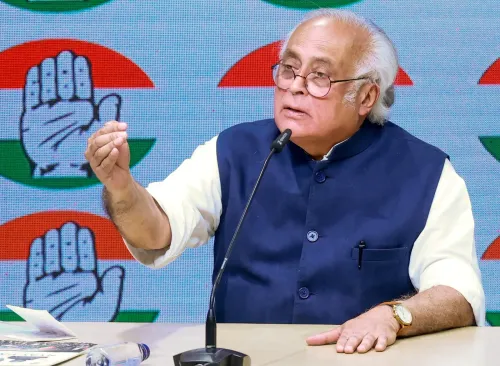
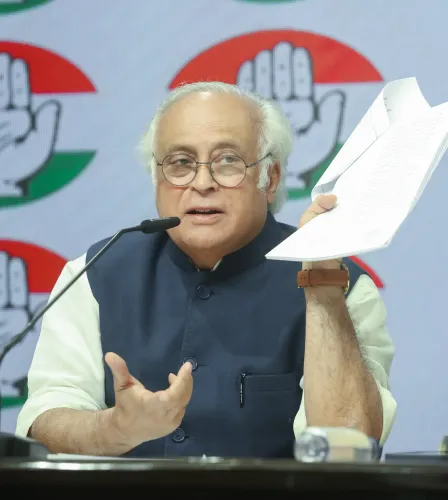
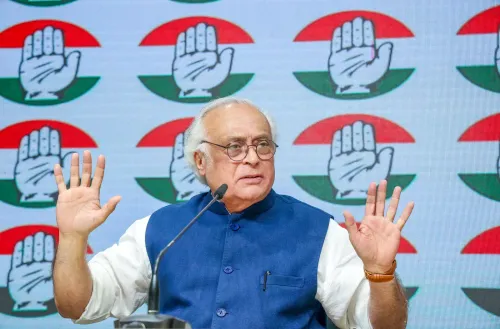
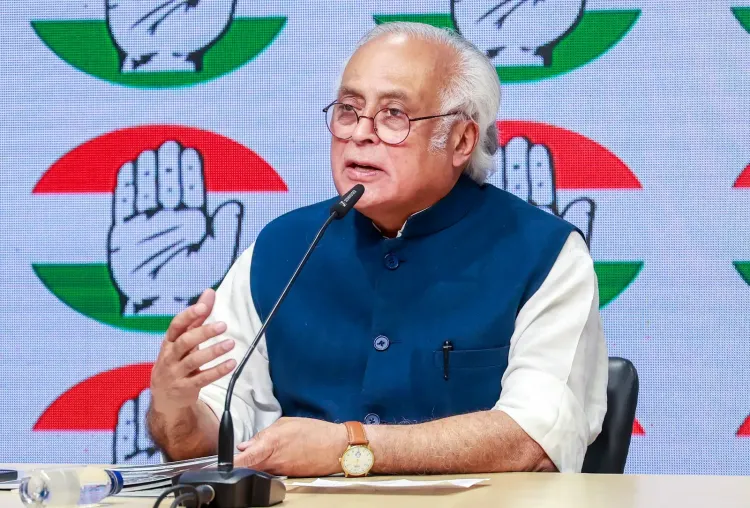
Senior Congress leader Jairam Ramesh on Friday, 27 November 2026, accused the Narendra Modi-led government in New Delhi of trying to manufacture a ‘fraudulent two-thirds majority’ in the Lok Sabha, calling the move an assault on the Constitution of India. The attack comes as the Centre is expected to make another attempt at its contentious delimitation-linked plan to expand the lower house alongside the rollout of women’s reservation. It also lands just days before Parliament reconvenes on 30 November.
What Jairam Ramesh Said
In a post on X, Ramesh linked the government’s economic record to its parliamentary strategy. He wrote: “Unable to get the manufacturing industry moving, the Modi Govt is moving to manufacture a fraudulent two-thirds majority in the Lok Sabha.”
He sharpened the charge in the same post: “This is an assault on the Constitution of India. It must and will be resisted with all might. The Indian National Congress has been clear and consistent.”
The phrase ‘two-thirds majority’ carries constitutional weight. Most constitutional amendments need a special majority in Parliament to pass, so control over the size and make-up of the Lok Sabha is politically decisive.
Congress Party’s Three Key Demands
Ramesh restated the three positions the Indian National Congress (Congress) has held on the issue:
- Keep the existing strength of the Lok Sabha unchanged for another 25 years.
- Keep the current state-wise distribution of parliamentary seats for the same 25-year period.
- Implement one-third reservation for women from the 2029 Lok Sabha elections, including a quota within it for women from Scheduled Castes (SCs) and Scheduled Tribes (STs).
Taken together, the demands show the core of the Congress argument. The party says women’s reservation can be delivered without being tied to an expansion or redrawing of the Lok Sabha.
Parliament Set to Reconvene After 105-Day Gap
The Union government announced on Thursday that Parliament would reconvene on 30 November to transact essential government business. The announcement ended days of uncertainty over the dates of the next sitting.
The sitting comes 105 days after the Monsoon Session was adjourned sine die on 13 August. That makes it the longest gap between parliamentary sittings in the middle of a session.
The upcoming sittings will not count as a separate Winter Session. They are a continuation of the Monsoon Session, which has not yet been prorogued.
Union Parliamentary Affairs Minister Kiren Rijiju said the government had asked the Lok Sabha Speaker to reconvene the lower house on 30 November. It also asked the Rajya Sabha Chairman to convene the upper house on 2 December. Subject to the needs of government business, sittings of both Houses may conclude on 3 December, he said.
DMK’s Conditional Stand on Delimitation
The Dravida Munnetra Kazhagam (DMK) has kept a conditional position. It has said it would consider supporting the proposed delimitation Bill if Tamil Nadu’s existing share of parliamentary representation is protected, irrespective of any increase in the total number of Lok Sabha seats.
The DMK’s stance differs from the Congress line, which seeks to freeze both the House’s size and state-wise seat distribution. This divergence within the Opposition could shape how the numbers play out on the floor.
What Happens Next
All eyes are now on the short sitting window between 30 November and 3 December. Any move to table the delimitation-linked proposal will test the government’s floor management and the Opposition’s cohesion. It will also show whether the Congress can turn its ‘resist with all might’ pledge into votes.
Point of View
But the real fight is arithmetic. Delimitation decides which states gain weight in the Lok Sabha for decades, not just who wins the next vote. The Opposition is not united here: the DMK’s willingness to deal if Tamil Nadu’s share is protected cuts against the Congress demand for a blanket 25-year freeze. Holding a constitutionally consequential debate in a rushed four-day window, after a record 105-day gap, does little for the deliberative legitimacy any change to the House’s structure deserves.
NationPress
27 Nov 2026
Frequently Asked Questions
What did Jairam Ramesh say about the Modi government?
Jairam Ramesh said the Modi government, unable to get manufacturing moving, is trying to manufacture a ‘fraudulent two-thirds majority’ in the Lok Sabha. He called it an assault on the Constitution and said it would be resisted.
What are the Congress party’s demands on delimitation?
The Congress wants the Lok Sabha’s current strength and state-wise seat distribution kept unchanged for 25 years. It also wants one-third women’s reservation, including an SC/ST quota within it, from the 2029 Lok Sabha elections.
When will Parliament reconvene?
The Lok Sabha will reconvene on 30 November and the Rajya Sabha on 2 December. Both Houses may conclude on 3 December, subject to government business, according to Parliamentary Affairs Minister Kiren Rijiju.
Is the upcoming sitting a Winter Session?
No, the sittings are a continuation of the Monsoon Session, which has not been prorogued. They come 105 days after the session was adjourned sine die on 13 August, the longest such mid-session gap.
What is the DMK’s position on the delimitation Bill?
The DMK has said it would consider supporting the proposed delimitation Bill if Tamil Nadu’s existing share of parliamentary representation is protected. This holds regardless of any increase in total Lok Sabha seats.