Operation Clean notice on 250-year-old Jaisalmer shrine sparks faith vs paperwork row
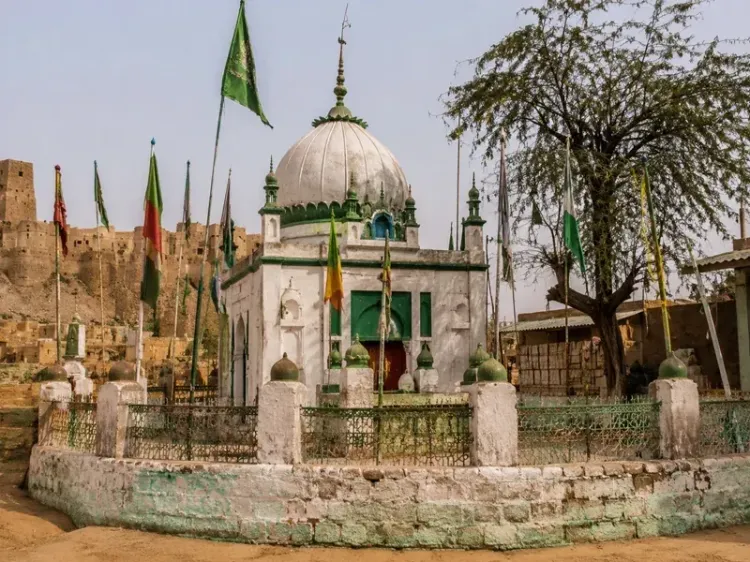
Synopsis
An administrative deadline is forcing a 250-year-old Sufi shrine in Jaisalmer to produce land documents it could never have — exposing a fundamental tension between India's border-security governance and the centuries-old religious heritage that predates modern record-keeping in western Rajasthan.
Key Takeaways
Operation Clean has issued a notice to the Mehmood Shah Peer Jilani shrine in Jaisalmer , demanding land ownership documents by 22 June .
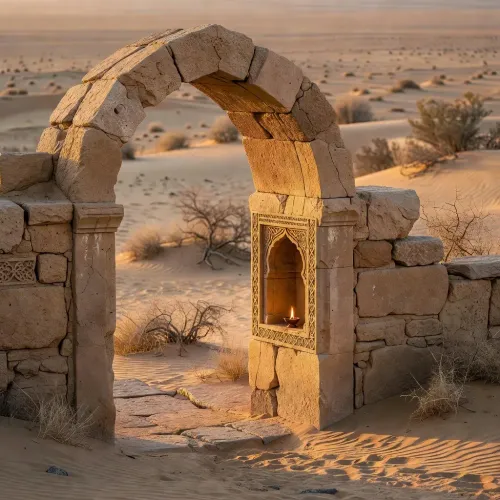
The shrine is nearly 250 years old and draws both Hindu and Muslim devotees, hosting two major annual fairs each year.
Action under the Rajasthan Colonisation Act could begin from 23 June if documents are not submitted.
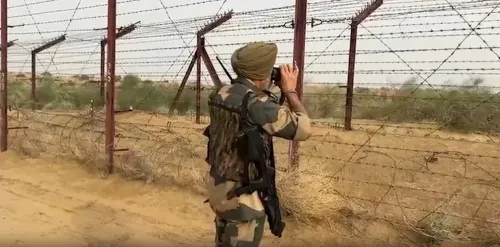
The drive covers a 50-km radius along the India-Pakistan border , affecting a large portion of Jaisalmer's population.
Former Chief Minister Ashok Gehlot has urged the Centre and state to exercise caution to avoid undermining the region's social fabric.
An administrative notice demanding land ownership documents for the nearly 250-year-old Mehmood Shah Peer Jilani shrine in Rajasthan's border district of Jaisalmer has ignited protests and a sharp debate over how heritage, faith, and modern governance can coexist in India's sensitive borderlands. The notice, issued under the administration's ongoing Operation Clean drive, has set a deadline of 22 June, with action threatened from 23 June under the Rajasthan Colonisation Act.
What Operation Clean Demands
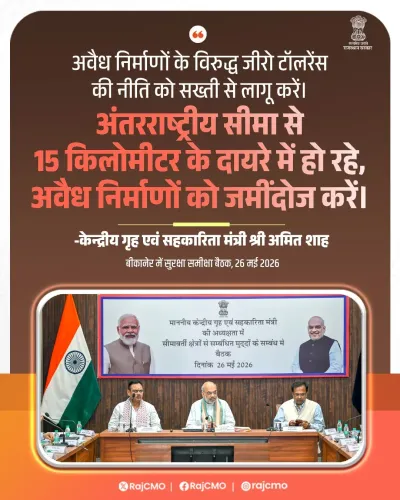
The drive targets alleged illegal constructions within a 50-km radius of the India-Pakistan border. The shrine management has been directed to produce land-related documents by the deadline, failing which demolition or regulatory action could follow. Officials describe the exercise as routine verification in a strategically sensitive zone, stressing that affected parties have been given an opportunity to present their case.
For the community, however, the demand raises a near-impossible question: how does one produce paperwork for a structure that predates formal land-record systems by generations?
Community Voices and Historical Context
Villagers argue that expecting documentary proof for structures established centuries ago ignores the historical realities of western Rajasthan, where shrines, temples, and community spaces often predate organised land records. Jumma Khan, President of the Shrine Committee, said the site holds deep significance for both Hindu and Muslim devotees and hosts two major annual fairs.
'Thousands of people visit every year. The shrine has been maintained through public faith and community support for generations. Obtaining ownership documents for a 250-year-old shrine is not easy,' he said.
Former Ramgarh Sarpanch Govind Bhargava recalled that when the Army was constructing infrastructure in the border region around 1980, officials were informed of the shrine's significance. 'After inspecting the site, the construction was shifted elsewhere. Even then, the shrine's importance was respected,' he claimed.
The Expanding Border Zone Concern
Congress District President Amardin Fakir warned that the issue extends well beyond a single shrine. He noted that restrictions once limited to a 10-km belt along the border were later extended to 15 km and now effectively impact areas up to nearly 50 km. 'A large portion of Jaisalmer's population falls within this zone,' he said.
Fakir added that residents fear the documentation drive could eventually target non-religious sites as well. 'Many religious places here are centuries old. At the time they were established, maintaining formal records was not a priority. It is unfair to interfere with matters of faith merely because documents are unavailable today,' he said.
Political Response
Former Chief Minister Ashok Gehlot urged restraint from both the Centre and the state government. 'Given the region's history of coexistence and mutual respect, both the Central and state governments should exercise caution and ensure that administrative decisions do not give rise to avoidable controversy or undermine the social fabric that has long distinguished these border districts,' he said.
As the 22 June deadline approaches, the dispute has crystallised into a broader national question about whether administrative frameworks designed for contemporary land governance can — or should — be applied uniformly to sites of centuries-old communal and religious significance.
Point of View
Yet no parallel framework exists to verify or protect pre-modern heritage sites. The real risk is not one notice but the precedent: if documentation becomes the sole test of legitimacy, hundreds of shrines, temples, and dargahs across western Rajasthan face the same impossible standard. Governance in borderlands demands security rigour, but it also demands institutional memory — and right now, that balance is missing.
NationPress
19 Sept 2026
Frequently Asked Questions
What is Operation Clean in Jaisalmer?
Operation Clean is an ongoing administrative drive targeting alleged illegal constructions within a 50-km radius of the India-Pakistan border in Rajasthan. As part of this drive, the Mehmood Shah Peer Jilani shrine in Jaisalmer has been issued a notice to submit land ownership documents by 22 June, failing which action under the Rajasthan Colonisation Act could begin from 23 June.
Why is the Mehmood Shah Peer Jilani shrine significant?
The shrine is nearly 250 years old and is venerated by both Hindu and Muslim devotees in Jaisalmer. According to the Shrine Committee, it hosts two major annual fairs and has been maintained through community support for generations, making it a key site of interfaith heritage in western Rajasthan.
What documents has the administration demanded from the shrine?
The notice requires the shrine management to submit land ownership documents by 22 June. Community members argue this is practically impossible for a structure established roughly 250 years ago, well before formal land-record systems existed in the region.
Who has raised concerns about the notice?
Congress District President Amardin Fakir, former Ramgarh Sarpanch Govind Bhargava, and former Chief Minister Ashok Gehlot have all raised concerns. Gehlot urged both the Centre and the state government to exercise caution to avoid undermining the region's history of communal coexistence.
How far does the Operation Clean border zone extend?
The drive currently covers an effective radius of nearly 50 km from the India-Pakistan border. Congress leaders note this has expanded over time — from an initial 10-km belt to 15 km and now close to 50 km — bringing a large portion of Jaisalmer's population and its historic religious sites under its scope.