Jaishankar meets Venezuela FM at UNGA, energy ties gain pace
Synopsis
On the sidelines of UNGA 81, EAM Jaishankar's meeting with Venezuela's foreign minister signals a quiet but significant shift in India's energy strategy. With West Asian supply routes under pressure and the US explicitly backing India-Venezuela oil trade, New Delhi is edging toward the world's largest proven crude reserves — if sanctions, logistics, and financing can be aligned.
Key Takeaways
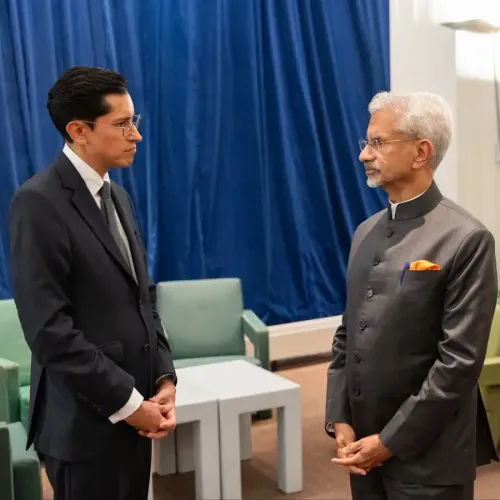
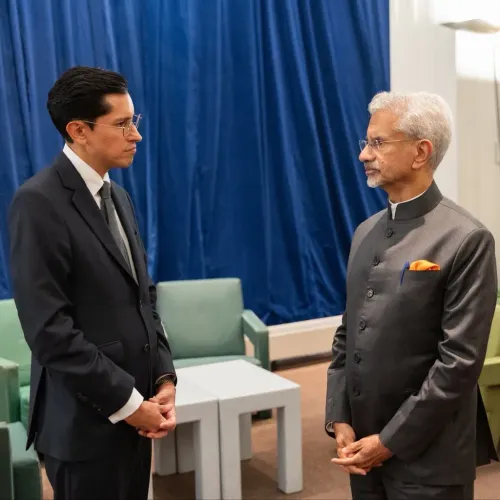
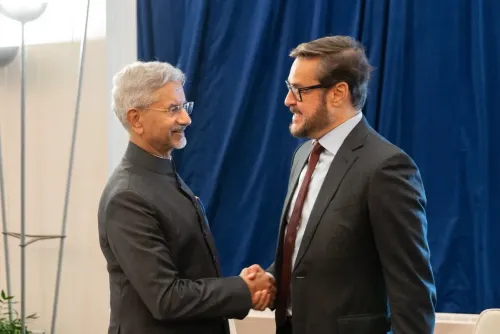
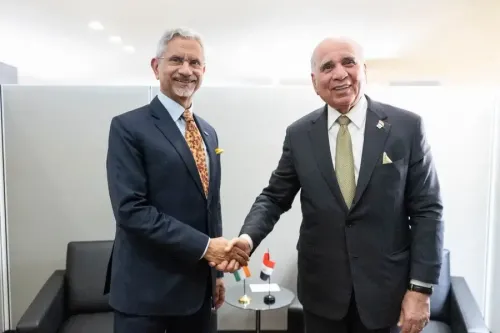
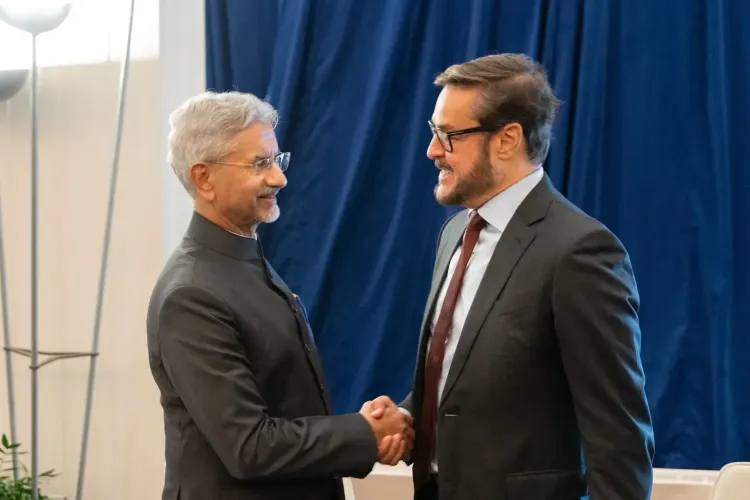
Jaishankar met Venezuelan FM Félix Plasencia González at UN headquarters, New York on 27 September 2026 , on the sidelines of the 81st UNGA session .
Jaishankar said India-Venezuela energy ties are gaining momentum , alongside other areas of bilateral cooperation.
No supply contract, investment figure, or timetable was announced after the meeting.
Venezuela holds approximately 303 billion barrels of proven crude reserves — the world's largest — mostly heavy crude in the Orinoco Belt .
US Secretary of State Marco Rubio had in June explicitly backed India-Venezuela oil trade, noting India's rare refining capability for heavy crude.
US producer Continental Resources signed an MoU with PDVSA this month to develop the Ayacucho 2 Block , estimated to hold 30 billion barrels .
External Affairs Minister S. Jaishankar said on 27 September 2026 that India and Venezuela are accelerating their energy partnership, following talks with Venezuelan Foreign Minister Félix Plasencia González at the United Nations headquarters in New York, on the sidelines of the 81st session of the UN General Assembly.
What Was Said After the Meeting
'A good meeting with FM Félix Plasencia González of Venezuela at UN HQ,' Jaishankar said in a post on social media. 'Our energy ties are gaining momentum, besides other areas of bilateral cooperation. We also discussed current regional issues,' he added. Neither side announced a supply contract, an investment figure, or a specific timetable following the bilateral. The regional issues discussed were not identified by either party.
Why India Is Looking at Venezuela
The talks come as India actively looks beyond its traditional West Asian energy suppliers. Months of disruption linked to the conflict involving Iran and shipping restrictions through the Strait of Hormuz have pushed New Delhi to accelerate supply diversification. Venezuela holds approximately 303 billion barrels of proven crude oil reserves — the largest in the world, according to the US Energy Information Administration — with much of the resource concentrated in heavy and extra-heavy crude in the Orinoco Belt.
India's refining infrastructure gives it a critical commercial edge in this partnership: Indian refineries are among the few globally with the technical capacity to process Venezuela's heavier grades of crude. This capability is at the heart of the bilateral energy fit that both sides have long acknowledged.
US Role in Facilitating the Partnership
The diplomatic backdrop has shifted notably in recent months. US Secretary of State Marco Rubio, in an interview in June, said Washington saw a role for itself in helping India broaden its energy options. 'We certainly would love to be a part of that. We think we have some solutions in that regard,' Rubio said. He specifically identified Venezuela as a potential crude source for Indian refineries, noting that Washington was 'working very closely to increase their production capacity.'
Rubio was explicit about the technical fit: 'India is one of the few countries in the world with the ability to refine the heavy crude that Venezuela produces. So I think that's something we would look to facilitate as well.' The remarks suggested that expanded India-Venezuela oil trade could advance with active US backing, as Washington simultaneously seeks investment to revive Venezuelan output.
Investment Activity and Broader Context
A separate development this month pointed to renewed momentum in Venezuela's energy sector. At the G20 Energy Abundance Ministerial in Houston, US producer Continental Resources signed a memorandum of understanding with Venezuela's state-owned PDVSA to develop and operate the 126,000-acre Ayacucho 2 Block in the Orinoco Belt. Continental estimates the block contains around 30 billion barrels of oil, according to a White House statement. No Indian participant was identified in that project.
India and Venezuela share a long-standing hydrocarbons relationship, with Indian public-sector companies having previously invested in Venezuelan oil projects. Bilateral trade contracted sharply after US sanctions restricted transactions involving PDVSA. Any substantial increase in supplies would depend on production capacity, shipping logistics, financing arrangements, and the applicable sanctions framework — none of which have been formally resolved.
What Comes Next
Jaishankar's meeting signals that India is treating Venezuela as a serious long-term energy option rather than a contingency. Caracas has described New Delhi as an important economic partner, and the two sides have also discussed investment, trade, and cooperation beyond hydrocarbons. Concrete agreements — supply contracts, investment commitments, or financing structures — are likely to be the next benchmark by which the momentum of this relationship will be judged.
Point of View
But momentum without a contract is diplomacy. The real question is whether India can translate strategic intent into actual crude flows — something that has eluded the bilateral relationship for years under the shadow of US sanctions on PDVSA. Washington's unusually explicit endorsement, including Rubio naming Venezuela as a source for Indian refineries, is a structural shift; it removes a key political obstacle but does nothing about the production, shipping, and financing gaps that remain. India's refining edge on heavy crude is real, but the Orinoco Belt's output has collapsed from its peak, and reviving it requires capital commitments that no one at UNGA announced. The bilateral energy story is compelling in theory — the hard work of turning it into barrels is still ahead.
NationPress
27 Sept 2026
Frequently Asked Questions
What did EAM Jaishankar discuss with Venezuela's foreign minister at UNGA?
EAM S. Jaishankar met Venezuelan Foreign Minister Félix Plasencia González at the UN headquarters in New York on 27 September 2026, on the sidelines of the 81st UN General Assembly session. Jaishankar said energy ties were 'gaining momentum' alongside other bilateral cooperation areas, and that regional issues were also discussed, though no specifics were shared.
Why is India pursuing an energy partnership with Venezuela?
India is diversifying away from traditional West Asian suppliers following months of disruption linked to the conflict involving Iran and shipping restrictions in the Strait of Hormuz. Venezuela holds the world's largest proven crude reserves — around 303 billion barrels — and India's refining infrastructure is among the few globally capable of processing Venezuela's heavy crude grades.
What is the US role in India-Venezuela energy talks?
US Secretary of State Marco Rubio said in June that Washington wanted to help India broaden its energy options, specifically naming Venezuela as a potential crude source for Indian refineries. He noted that the US was working to increase Venezuela's production capacity and described India as one of the few countries able to refine Venezuela's heavy crude.
Was any oil supply deal signed between India and Venezuela?
No. Neither side announced a supply contract, investment figure, or timetable following the Jaishankar-Plasencia meeting. Any substantial increase in crude flows would depend on resolving production, shipping, financing, and sanctions-related challenges.
What is the significance of the Continental Resources-PDVSA MoU?
US producer Continental Resources signed a memorandum of understanding with Venezuela's state-owned PDVSA this month at the G20 Energy Abundance Ministerial in Houston to develop the 126,000-acre Ayacucho 2 Block in the Orinoco Belt, estimated to hold around 30 billion barrels of oil. The deal signals renewed Western investment interest in Venezuelan production, which could indirectly support future India-Venezuela crude supply.