Did the Jal Shakti Ministry Expand the ODF Net in Rural India in 2025?
Synopsis
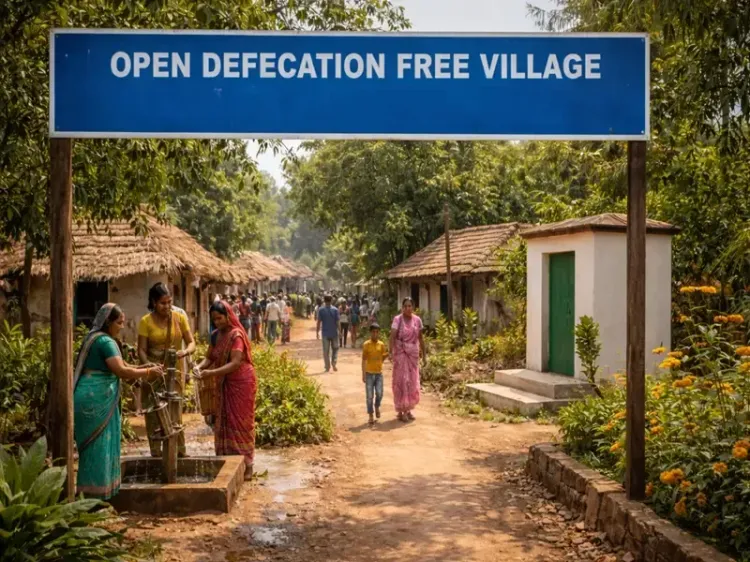
The Jal Shakti Ministry has made significant achievements in 2025 under the Swachh Bharat Mission (Grameen) Phase II, declaring over 83 percent of villages as ODF Plus (Model). This progress includes solid and liquid waste management solutions in more than 5.27 lakh and 5.41 lakh villages, respectively, highlighting the commitment to rural sanitation reforms.
Key Takeaways
Over 83% of villages declared ODF Plus (Model) in 2025.
5.27 lakh villages have solid waste management systems.
5.41 lakh villages have liquid waste management arrangements.
SHS 2025 campaign saw participation from over 18 crore people.
Initiatives focused on sustainability and community engagement.
New Delhi, Jan 1 (NationPress) The Jal Shakti Ministry achieved remarkable progress in 2025 as part of the Swachh Bharat Mission (Grameen) Phase II. Over 83 percent of villages have been designated as ODF Plus (Model), with more than 5.27 lakh villages equipped for solid waste management and 5.41 lakh villages prepared for liquid waste management, an official reported on Thursday.
The Swachhata Hi Seva (SHS) 2025 campaign saw extensive participation from over 18 crore individuals, including more than 13 crore from rural areas, during its execution in September and October.
Motivated by Prime Minister Narendra Modi’s national appeal, Union Minister for Jal Shakti C.R. Patil spearheaded a Shramdaan initiative at Kalindi Kunj as part of the 'Ek Din, Ek Ghanta, Ek Saath' campaign.
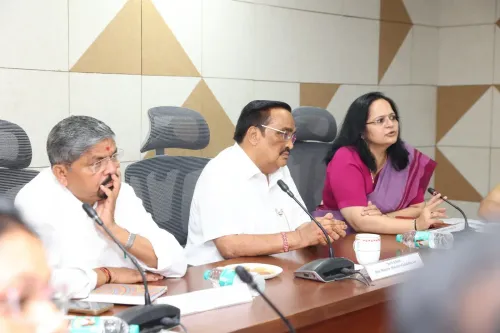
The Minister of State for Jal Shakti also engaged with over 150 sarpanches ahead of the 79th Independence Day celebrations in 2025.
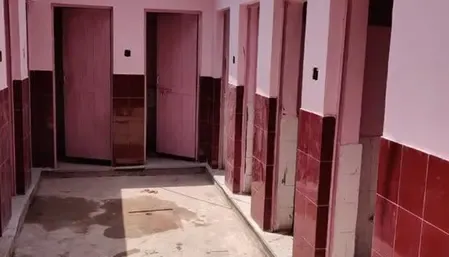
The Department of Drinking Water and Sanitation (DDWS) initiated the ‘Hamara Shauchalay, Hamara Bhavishya’ campaign, leading to the repair and beautification of over one lakh Individual Household Latrines (IHHLs) and more than 550 Community Sanitary Complexes (CSCs).
The campaign also reported more than 49,000 information, education, and communication (IEC) events, with participation exceeding 32 lakh individuals, as per the official.
Providing context on the Swachh Bharat Mission (Grameen), the official noted it is a centrally sponsored initiative launched by Prime Minister Modi on October 2, 2014.
“The mission sought to achieve an Open Defecation Free (ODF) India by October 2, 2019, marking the 150th birth anniversary of Mahatma Gandhi. The initial focus of SBM(G) Phase I was on ensuring toilet access for all rural households,” the official stated.
Consequently, by October 2019, every village across the country had proclaimed itself ODF, with rural sanitation coverage soaring from 39 percent in 2014 to 100 percent in 2019.
SBM(G) Phase II was initiated in 2020 after India was declared ODF, aiming to accomplish Sampoorna Swachhata and ensure comprehensive access to individual household toilets and effective waste management systems while advancing towards ODF Plus (Model) village status.
The primary goal of SBM(G) Phase II is to maintain the ODF status of all villages and progress toward becoming ODF Plus (Model) villages, emphasizing ODF sustainability, solid waste management, liquid waste management, and visual cleanliness.
In 2025, the total financial allocation for SBM(G) Phase II reached over Rs 1.40 lakh crore. According to the SBM(G) IMIS portal as of December 16, 2025, over 12 crore Individual Household Latrines and 2.67 lakh Community Sanitary Complexes have been constructed since October 2, 2014.
Over 4.89 lakh villages have been recognized as ODF Plus (Model), with more than 4.15 lakh villages verified as such. Furthermore, over 5.27 lakh villages have solid waste management systems, over 5,300 blocks have plastic waste management facilities, and more than 5.41 lakh villages are equipped for liquid waste management, as mentioned in the statement.
Under the GOBARdhan initiative, over 970 community biogas plants are currently operational. In addition, 21,306 training programs have been conducted, benefiting 1,15,274 gram panchayats, the official highlighted.
Point of View
I emphasize the importance of the Jal Shakti Ministry's endeavors in expanding sanitation facilities in rural India. The strides made towards achieving ODF Plus (Model) status in villages underscore a commitment to public health and environmental sustainability, aligning with national priorities.
NationPress
20 Sept 2026
Frequently Asked Questions
What is the Swachh Bharat Mission (Grameen)?
The Swachh Bharat Mission (Grameen) is a government initiative launched on October 2, 2014, aimed at achieving an Open Defecation Free India and improving sanitation in rural areas.
What does ODF Plus (Model) mean?
ODF Plus (Model) indicates that a village not only achieves Open Defecation Free status but also implements effective waste management systems for both solid and liquid waste.
How many villages have been declared ODF Plus (Model) in 2025?
As of 2025, over 83% of villages have been declared ODF Plus (Model) under the Swachh Bharat Mission (Grameen) Phase II.
What is the GOBARdhan initiative?
The GOBARdhan initiative promotes the establishment of biogas plants in rural areas, aiming to convert waste into energy and enhance waste management practices.
What is the significance of the SHS 2025 campaign?
The SHS 2025 campaign emphasizes community participation in sanitation efforts, engaging over 18 crore individuals to foster a cleaner and healthier environment.