Did Jammu City Just Experience Its 4th Coldest Maximum Temperature Ever at 7.4 Degrees Celsius?
Synopsis
Jammu experiences an unprecedented drop in temperature, recording 7.4 degrees Celsius, marking the fourth lowest maximum ever. As residents adapt to extreme cold, concerns mount over the absence of snowfall during the harsh winter period known as 'Chillai Kalan.'
Key Takeaways
Jammu recorded a maximum temperature of 7.4 degrees Celsius .
This is the 4th lowest maximum temperature ever recorded in the city.
The temperature is 10.1 degrees below normal .
Residents are experiencing unprecedented cold conditions.
Concerns are rising due to the lack of snowfall during the 'Chillai Kalan' .
Jammu, Jan 14 (NationPress) - On Wednesday, Jammu reported a maximum temperature of 7.4 degrees Celsius, which is 10.1 degrees below the normal range and lower than any maximum temperature recorded in the Kashmir Valley that day.
According to local Met Department Director Mukhtar Ahmad, "This temperature marks the 4th lowest ever recorded in Jammu." He further noted that the previous low maximums were 5 degrees Celsius in January 1986, 6.7 degrees in 2013, and 7.1 degrees in 2016.
On the same day, Srinagar recorded a maximum of 13.3 degrees Celsius, while Pahalgam and Gulmarg had maximums of 10.6 and 8.2 degrees Celsius respectively, as reported by officials.
Additionally, Jammu saw a minimum temperature of 4 degrees Celsius on Wednesday, with residents expressing concern over the significant drop in temperatures, which has narrowed the gap between minimum and maximum readings to slightly over 3 degrees.
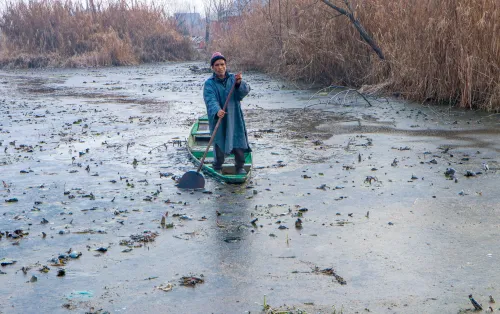
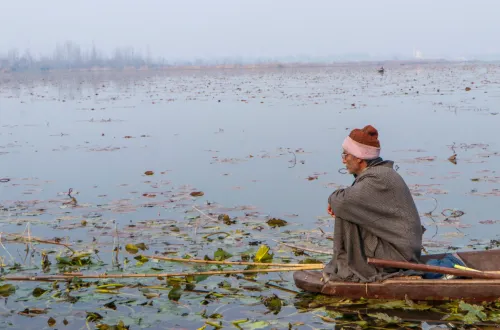
One resident, Manzoor Ahmad Bhat, shared his experience: "I’m bundled up in a 'pheran' and carrying a 'kangri' under it to stay warm. I've relied on the kangri throughout the day." Bhat, who has lived in Jammu for three decades, enjoys these winter traditions, unlike many original residents of the city.
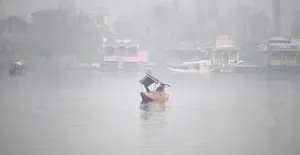
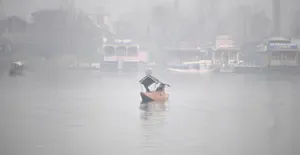
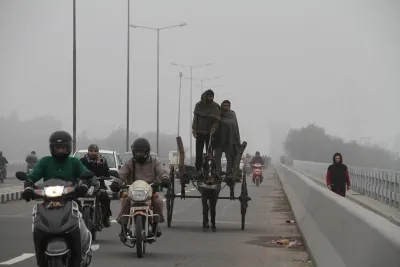
Throughout the day, fog lingered in Jammu, intensifying the chill, whereas Srinagar enjoyed bright sunshine, prompting many to step outside and soak up the warmth.
However, nights in the Valley remain extremely cold, with temperatures dropping due to clear skies. The absence of significant snowfall this winter has heightened concerns among the local populace.
The harsh winter period known as 'Chillai Kalan', which began on December 21 and will conclude on January 30, is traditionally characterized by heavy snowfall that replenishes water reservoirs in the mountains, providing essential water resources during the summer months.
The Met Department indicated that a weak Western Disturbance is expected to bring some precipitation to J&K on January 16, although snowfall in the plains is unlikely. However, there is a possibility of two consecutive disturbances between January 20 and January 24 that may finally yield the season's first snowfall in the plains.
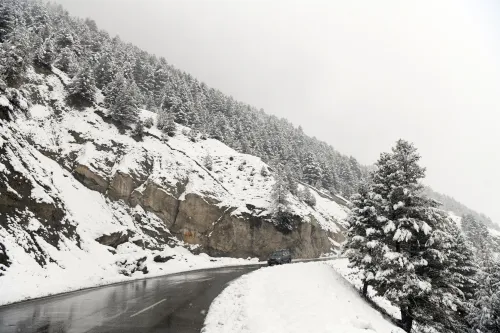
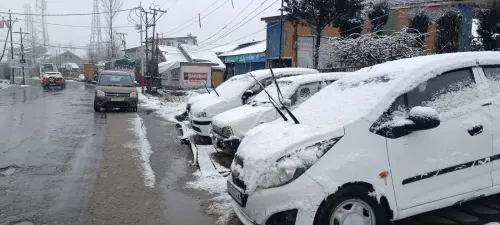
Despite some snowfall in the mountains, it has not been substantial, as evidenced by the open status of the Srinagar-Leh highway through the Zojila Pass, indicating that heavier snowfall is still anticipated in the higher elevations of J&K.
Point of View
This unusual cold snap in Jammu highlights the pressing issues surrounding climate variability and its impact on local communities. The absence of expected snowfall raises valid concerns not just for immediate comfort but for long-term water resources in the region. Monitoring these weather patterns is crucial for both environmental and humanitarian reasons.
NationPress
10 Oct 2026
Frequently Asked Questions
What is the maximum temperature recorded in Jammu on January 14?
The maximum temperature recorded in Jammu on January 14 was 7.4 degrees Celsius.
Is this temperature significant compared to previous records?
Yes, 7.4 degrees Celsius is the fourth lowest maximum temperature ever recorded in Jammu.
How does Jammu's weather compare to the Kashmir Valley?
Jammu's maximum temperature was lower than any maximum temperature recorded in the Kashmir Valley on that day.
What traditional practices are residents using to cope with the cold?
Residents are using traditional clothing like 'pheran' and heating pots called 'kangri' to stay warm.
What is 'Chillai Kalan'?
'Chillai Kalan' is a 40-day period of severe cold in Kashmir, traditionally associated with heavy snowfall.