Jamnagar Home Guards craft 12,000 seed balls to mark 12 years of Modi govt
Synopsis
Jamnagar's Home Guards turned a government anniversary into a green gesture — 12,000 seed balls, one for every year of the Modi administration, crafted from ten native species and set to be deployed by the Forest Department before the monsoon. It is a small but tangible civic action in a district where tree cover has faced sustained pressure.
Key Takeaways
The Jamnagar District Home Guards prepared more than 12,000 seed balls on 14 June to mark 12 years of the Modi government.
Seeds used include Banyan , Peepal , Jamun , Gulmohar , Tamarind , and five other native species .
Seed balls were made with natural black soil and cow dung manure ; the Jamnagar Municipal Corporation (JMC) contributed to the effort.
The balls will be handed to the Jamnagar Forest Department for deployment at suitable sites before the monsoon season.
Commandant Girish Sarvaiya said the drive aligns with PM Modi's vision of a 'Green Revolution' .
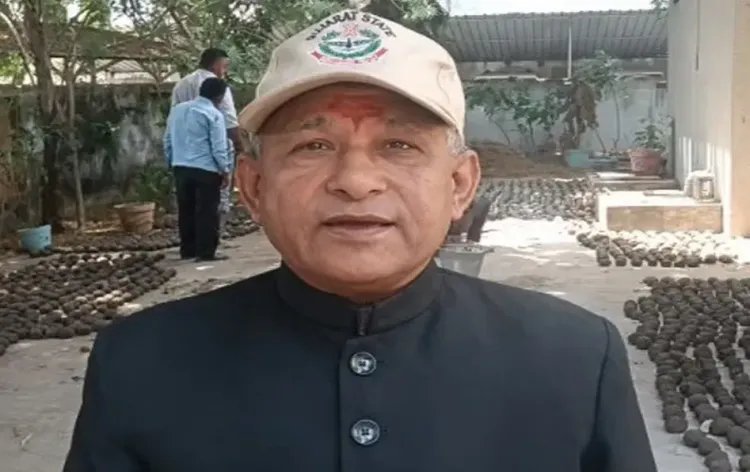
The Jamnagar District Home Guards on 14 June prepared more than 12,000 seed balls as part of an environmental conservation initiative timed to mark twelve years of the Narendra Modi government. The seed balls, made from seeds of native and ecologically significant tree species, will be handed over to the Jamnagar Forest Department for planting ahead of the monsoon season.
What the Initiative Involves
The seed balls were crafted using seeds of ten tree species — including Drumstick (Sahjan/Sargava), Lemon, Khair, Goras, Tamarind, Harmo, Banyan, Jamun, Peepal, and Gulmohar. The preparation method involved mixing tree seeds with natural black soil and cow dung manure, then shaping the mixture into small round balls — a technique that locals describe as resembling laddus. The Jamnagar Municipal Corporation (JMC) also contributed to the effort.
What Happens Next
The completed seed balls will be transferred to the Jamnagar Forest Department, which will deploy them across suitable locations before the arrival of the monsoon rains. Once rainfall triggers germination, the seeds are expected to sprout and eventually grow into full-sized trees, expanding the district's green cover over time.
What Officials Said
Girish Sarvaiya, Jamnagar District Home Guards Commandant, said the Home Guards participated in the celebrations marking the long tenure of Prime Minister Modi, whose governance has been shaped by 'development, trust, and public welfare.' He noted that the Jamnagar Home Guards family, in collaboration with the Forest Department, is contributing to what he described as PM Modi's vision of a 'Green Revolution'. Sarvaiya added that the number 12,000 was chosen deliberately to commemorate the 12 years of the current government.
Broader Context
The initiative is one of several symbolic civic actions undertaken across Gujarat to mark the anniversary. Seed-ball afforestation — sometimes called 'guerrilla gardening' — has gained traction in Indian forest departments as a low-cost, pre-monsoon planting method that requires minimal ground preparation. Notably, Jamnagar district has faced recurring pressure on its tree cover owing to industrial and urban expansion, making pre-monsoon greening drives particularly relevant to the region's ecology.
Point of View
But the Jamnagar initiative at least produces something tangible — 12,000 deployable seed balls with a clear handover mechanism to the Forest Department. The real measure of impact will be germination rates and survival counts post-monsoon, data that rarely surfaces in follow-up reporting. Jamnagar's industrial footprint makes pre-monsoon afforestation drives genuinely useful, but the symbolic framing risks overshadowing the ecological rigour needed to make seed-ball programmes work at scale.
NationPress
15 Sept 2026
Frequently Asked Questions
What are the 12,000 seed balls prepared by Jamnagar Home Guards?
They are small round balls made by mixing seeds of ten native tree species with natural black soil and cow dung manure. The Jamnagar District Home Guards prepared them as part of an environmental conservation drive timed to mark twelve years of the Modi government.
Which tree species were used in the seed balls?
The seed balls contain seeds of Drumstick (Sahjan/Sargava), Lemon, Khair, Goras, Tamarind, Harmo, Banyan, Jamun, Peepal, and Gulmohar — ten species in total.
What will happen to the seed balls after they are prepared?
The seed balls will be handed over to the Jamnagar Forest Department, which will plant them at suitable locations before the monsoon season. Rainfall is expected to trigger germination, with the seedlings eventually growing into full-sized trees.
Who organised the seed ball initiative in Jamnagar?
The initiative was organised by the Jamnagar District Home Guards, with support from the Jamnagar Municipal Corporation (JMC). Commandant Girish Sarvaiya led the effort and described it as a contribution to PM Modi's vision of a 'Green Revolution'.
Why were 12,000 seed balls chosen as the target number?
The figure of 12,000 was chosen deliberately to correspond with the twelve years of the Modi government, making the environmental effort a symbolic commemoration of the anniversary.