J&K ACB launches law student internship to boost anti-corruption awareness

Synopsis
J&K's Anti-Corruption Bureau is embedding law students directly inside government departments as part of its Vigilance Awareness campaign — tasking them not with clerical work, but with assessing transparency in public dealings. It is a quiet but meaningful shift from enforcement-first to awareness-first anti-corruption strategy in a Union Territory under direct Centre administration.
Key Takeaways
The J&K Anti-Corruption Bureau (ACB) launched a law student internship programme on 26 September 2026 under its Vigilance Awareness campaign .
Interns from reputed J&K universities will be placed in government departments to observe and assess transparency in public service delivery .
The ACB Director personally briefed students in separate sessions in Srinagar and Jammu .
The ACB was originally founded in 1962 and operates across eight territorial branches managed by SSP-rank officers.
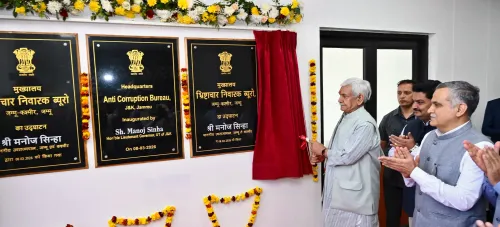
The newly inaugurated ACB Headquarters at Sidhra, Jammu anchors the Jammu division's operations.
The Jammu & Kashmir Anti-Corruption Bureau (ACB) has launched a structured internship programme, embedding law students from reputed universities across J&K in various government departments as part of its ongoing Vigilance Awareness campaign. The initiative, announced on 26 September 2026, is designed to give the next generation of legal professionals first-hand exposure to public administration and transparency mechanisms.
What the Programme Entails
Under the scheme, selected interns will be posted in different government departments, with a particular focus on offices involved in public service delivery. The placement is intended to give students a ground-level understanding of how state institutions function — and, critically, where they may fall short on accountability.
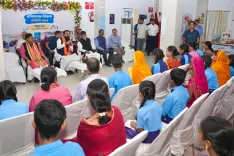
The Director, ACB, personally briefed participating students in separate sessions held in both Srinagar and Jammu, outlining process guidelines, roles, and responsibilities expected during the internship period.
The Objective: Transparency and Ethical Governance
According to the ACB, the programme aims to raise awareness among young law students about transparency, accountability, and ethical governance. Interns will be expected to assess and comment on the transparency of public dealings within their assigned departments — effectively functioning as informed observers, rather than mere administrative support.
Notably, the initiative reflects a broader strategy of co-opting civic actors into the anti-corruption apparatus, rather than relying solely on enforcement machinery. This comes amid sustained national focus on improving governance standards in Union Territories under direct Centre administration.
About the ACB: Structure and History
The ACB is the premier government body in J&K tasked with investigating bribery, financial irregularities, and official misconduct among public servants. Originally constituted as the Anti-Corruption Organisation in 1962, it later operated as the State Vigilance Organisation (SVO) before being rebranded as the Anti-Corruption Bureau to modernise its operational capacity.
The Bureau operates under the Director, ACB J&K, and distributes its work across eight territorial branches, each managed by a Superintendent of Police (SSP). The Kashmir division includes units such as Police Station ACB Srinagar — covering Srinagar, Budgam, and Ganderbal — and Police Station ACB Anantnag. The Jammu division is administered through regional hubs, including the newly inaugurated ACB Headquarters at Sidhra, Jammu.
Wider Significance
The internship model is not entirely new in India's anti-corruption landscape, but its formalisation within J&K signals an institutional shift toward preventive, awareness-led governance rather than purely reactive investigation. Engaging law students also creates a pipeline of legally trained professionals sensitised to public-sector ethics — a demographic that will eventually populate courts, government offices, and civil services across the region.
The ACB has not yet disclosed the number of students enrolled in the inaugural cohort or the duration of individual postings; further details are expected to be released as the programme progresses.
Point of View
Which is the crucial missing detail. If the exercise is purely pedagogical, it benefits the students; if it is genuinely evaluative, it could generate useful pressure on departments with opaque service delivery. The distinction matters, and the Bureau would do well to clarify it publicly.
NationPress
26 Sept 2026
Frequently Asked Questions
What is the J&K ACB law student internship programme?
It is an initiative by the Jammu & Kashmir Anti-Corruption Bureau under its Vigilance Awareness campaign, in which law students from J&K universities are placed in government departments to observe their functioning and assess transparency in public dealings. The programme was launched on 26 September 2026.
What will the law student interns do in government departments?
Interns will gain first-hand exposure to how public institutions function, particularly in areas related to service delivery. They are also expected to assess and comment on the transparency of public dealings within their assigned departments.
Who briefed the interns about the programme?
The Director, ACB, personally conducted briefing sessions for the interns in both Srinagar and Jammu, explaining the process, guidelines, roles, and responsibilities to be followed during the internship.
What is the Anti-Corruption Bureau in J&K?
The ACB is J&K's premier agency tasked with investigating bribery, financial irregularities, and official misconduct by public servants. Founded in 1962 as the Anti-Corruption Organisation, it operates across eight territorial branches under SSP-rank officers.
Why does this internship matter for J&K governance?
The programme signals a shift toward preventive, awareness-led anti-corruption work rather than purely reactive investigation. Engaging law students creates a pool of professionals sensitised to public-sector ethics who will eventually serve in courts, government offices, and civil services across the region.