J&K marks 79th Accession Day amid fresh 'Free Kashmir' slogan row at Jamia
Synopsis
On the eve of J&K's 79th Accession Day, 'Free Kashmir' graffiti at Jamia Millia Islamia has reignited a familiar controversy — raising the uncomfortable question of who keeps financing and organising a slogan that challenges a legal decision made in 1947, and why it keeps surfacing at protests that have nothing to do with Kashmir.
Key Takeaways
Jammu and Kashmir marks the 79th anniversary of its accession to India on 26 October 2025 . 'Free Kashmir' graffiti appeared at Jamia Millia Islamia University during a student hunger strike over union elections, triggering a BJP-Congress political row.
Maharaja Hari Singh signed the Instrument of Accession on 26 October 1947 after Pakistan-backed tribal raiders invaded the state on 22 October 1947 .
Post-2019 data cited by the Ministry of Home Affairs shows organised stone-pelting fell from 1,328 in 2018 to zero in 2023 ; terrorist incidents dropped from 228 to approximately 35 in 2025 .
Farooq Abdullah made pointed remarks at a party convention in Baramullah , referencing international pressure on India over the Kashmir issue.
The return and security of displaced Kashmiri Pandits remains an outstanding issue despite overall improvements in the UT.
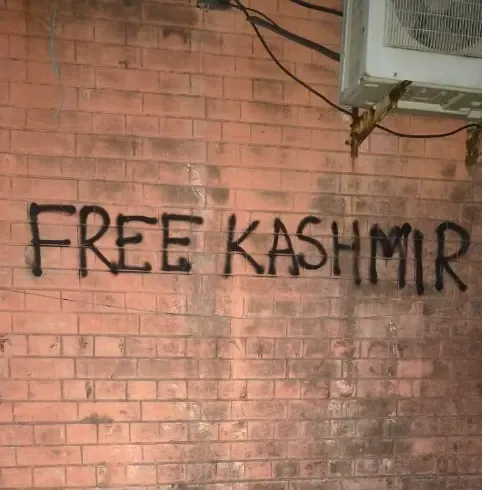
As Jammu and Kashmir prepares to mark the 79th anniversary of its accession to India on 26 October, a fresh controversy has erupted over 'Free Kashmir' slogans that appeared on the walls of Jamia Millia Islamia University in New Delhi, reigniting a debate about who keeps this demand alive and why. The episode has drawn sharp political responses and raised renewed questions about the persistent resurgence of a slogan that challenges the settled constitutional status of the Union Territory.
The Jamia Incident and Political Fallout
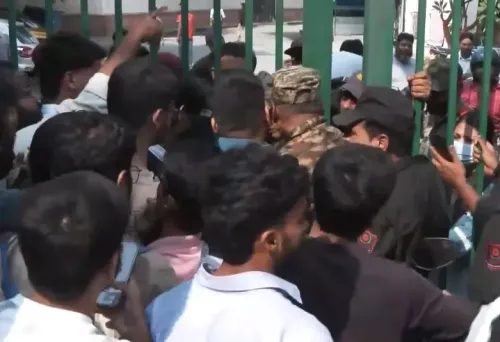
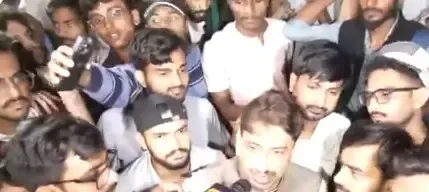
Students at Jamia Millia Islamia had been on a hunger strike demanding restoration of student union elections when graffiti reading 'Free Kashmir' and 'Free Sharjeel Imam' appeared on campus walls, turning the agitation into a separate political flashpoint. The Indian National Congress (INC) distanced itself from the slogans, calling them unrelated to the student protest and demanding action against those responsible. The Bharatiya Janata Party (BJP), however, alleged that opposition leaders were shielding individuals facing serious charges and pointed to what it described as a larger conspiracy behind the episode.
This is not the first time such slogans have surfaced at Indian universities. Similar incidents have been reported at Jawaharlal Nehru University (JNU) and Jadavpur University in recent years, often appearing alongside 'Free Palestine' messaging. Critics argue the pattern suggests organised effort rather than spontaneous expression.
The History Behind the Accession
Maharaja Hari Singh signed the Instrument of Accession on 26 October 1947, following a tribal invasion that began on 22 October 1947, carried out by raiders backed by Pakistan. Faced with looting, violence and the rapid advance of these forces, the Maharaja sought India's military assistance. India accepted the accession the following day, and troops were airlifted to Srinagar to repel the invaders.
Significantly, Sheikh Mohammad Abdullah — who later became the state's Prime Minister and is the father of National Conference President and former Chief Minister Farooq Abdullah — also supported the accession at the time, lending it broad political legitimacy.
Post-2019 Changes and Security Improvements
The political landscape of Jammu and Kashmir changed fundamentally on 5 August 2019, when the Narendra Modi-led government abrogated Article 370, revoked the region's special constitutional status and reorganised it into the Union Territories of Jammu and Kashmir and Ladakh. The decision drew strong reactions but has since been followed by measurable changes on the ground.
According to data cited by the Union Ministry of Home Affairs in July 2024, organised stone-pelting incidents fell from 1,328 in 2018 to zero in 2023. Organised hartals declined from 52 to zero over the same period. Terrorist-initiated incidents dropped from 228 in 2018 to approximately 35 in 2025. Tourist footfall reportedly crossed 1.77 crore visitors in 2025. Notably, the threat of terrorism has not been eliminated, and analysts caution against reading these figures as grounds for complacency.
Infrastructure and Development Push
The post-2019 period has also seen major infrastructure investments in the region. The Udhampur-Srinagar-Baramulla Rail Link, the Vande Bharat Express service and the Zojila Tunnel project are among the flagship connectivity initiatives underway. The UT now hosts an AIIMS, an IIT and an IIM, expanding educational opportunities for local youth. Tourism has become an increasingly significant pillar of the regional economy.
The return and safety of displaced Kashmiri Pandits to their ancestral homes remains an unresolved and sensitive issue that continues to draw attention from policymakers and civil society alike.
Farooq Abdullah's Remarks and the Broader Context
Adding to the political temperature, National Conference President Farooq Abdullah made pointed remarks at his party's workers' convention in Baramullah. 'They (the Indian state) are silent today due to pressure from the world. Our neighbour goes everywhere and says that the Kashmir issue has not been resolved. They are protecting us. Otherwise, their intentions are not right,' he said, according to reports.
The remarks, coming on the eve of the 79th Accession Day, have added fresh fuel to the political debate. There is a recognised distinction, analysts note, between legitimate questions about governance and slogans that challenge the legal and historical basis of Jammu and Kashmir's accession to India — a demand that was settled by the Maharaja's own decision in 1947.
As the anniversary arrives, the question of who continues to give these slogans a platform — and why — is likely to remain at the centre of India's political conversation in the days ahead.
Point of View
While not without caveats, are significant enough to demand an honest reckoning with why certain actors outside the UT invest in keeping the region's image frozen in the 1990s.
NationPress
25 Oct 2026
Frequently Asked Questions
Why is 26 October significant for Jammu and Kashmir?
26 October marks the day in 1947 when Maharaja Hari Singh signed the Instrument of Accession , formally bringing Jammu and Kashmir into the Indian Union. The decision followed a Pakistan-backed tribal invasion that began on 22 October 1947 , forcing the Maharaja to seek India's military assistance.
What happened at Jamia Millia Islamia that triggered the latest controversy?
During a student hunger strike at Jamia Millia Islamia University in New Delhi demanding restoration of student union elections, graffiti reading 'Free Kashmir' and 'Free Sharjeel Imam' appeared on campus walls. Congress distanced itself from the slogans and demanded action, while the BJP alleged a broader conspiracy and accused opposition figures of shielding those facing serious charges.
What changes have taken place in Jammu and Kashmir since Article 370 was abrogated?
Since the abrogation of Article 370 on 5 August 2019 , the region has recorded significant security improvements, according to data cited by the Union Ministry of Home Affairs in July 2024 . Organised stone-pelting dropped from 1,328 incidents in 2018 to zero in 2023 , and terrorist-initiated incidents fell from 228 to around 35 by 2025 . The UT also received major infrastructure investments and now hosts an AIIMS , an IIT and an IIM .
What did Farooq Abdullah say ahead of the Accession Day?
National Conference President Farooq Abdullah , speaking at a party workers' convention in Baramullah , reportedly said: 'They (the Indian state) are silent today due to pressure from the world. Our neighbour goes everywhere and says that the Kashmir issue has not been resolved. They are protecting us. Otherwise, their intentions are not right.' The remarks were made on the eve of the 79th Accession Day anniversary .
Why does the 'Free Kashmir' slogan keep resurfacing on Indian university campuses?
According to analysts and political commentators, the slogan's recurrence — at JNU , Jadavpur University and now Jamia Millia Islamia — points to organised groups and political lobbies with varying motivations, including political, financial and religious interests. Critics argue the slogan is strategically inserted into unrelated protests to maintain an international narrative questioning Jammu and Kashmir's accession to India, a matter legally settled in 1947 .