Jawed Ashraf briefs defence officers on India's foreign policy challenges
Synopsis
Three developments in a single day capture the breadth of India's defence posture: a former ambassador briefing top military officers on navigating a multipolar world, the Army Chief conducting a frontline LoC review in Poonch and Rajouri, and Southern Command deploying rescue teams after a Pune building collapse. Each signals a military increasingly integrated into India's diplomatic and civil-response architecture.
Key Takeaways
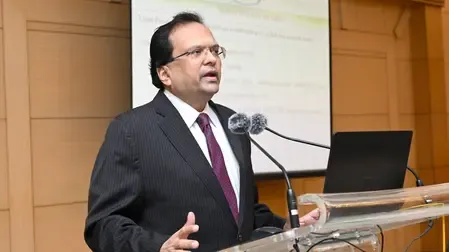
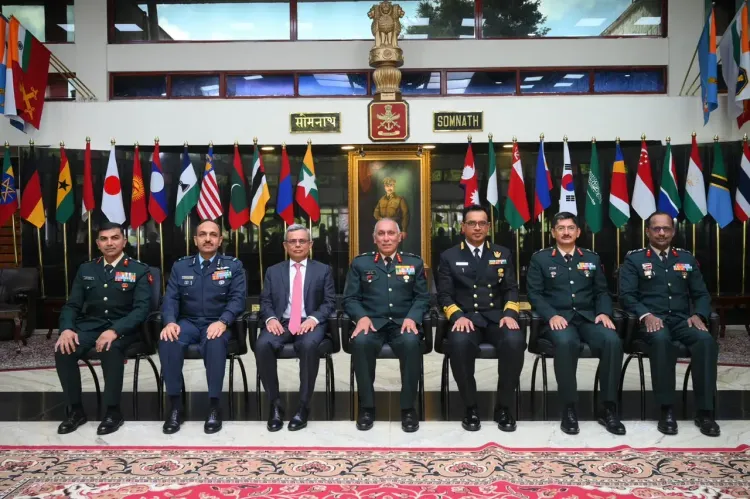
Jawed Ashraf , former Ambassador and ITPO Chairman , addressed senior defence officers at the 82nd Staff Course in Wellington on 9 July under the Ministry of External Affairs' Public Outreach Programme .
Ashraf emphasised India's need to pursue national interests, maintain strategic autonomy , and enable regional stability amid complex global dynamics.
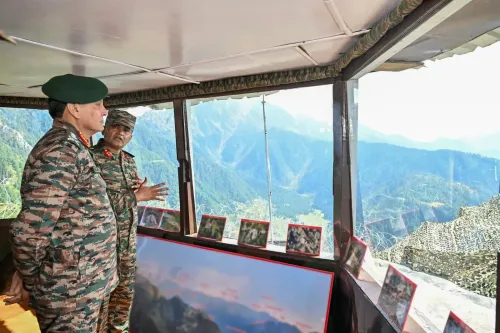
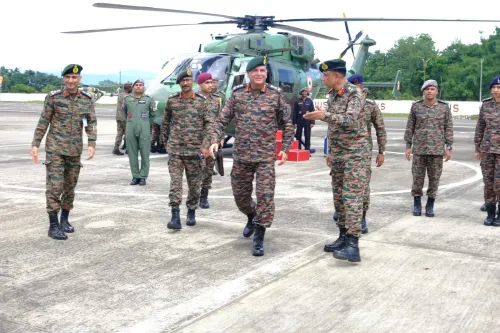
Chief of Army Staff General Dhiraj Seth visited forward areas along the Line of Control in Poonch , Rajouri , and Sunderbani , reviewing security deployments and counter-insurgency readiness.
The Indian Army's Southern Command deployed rescue, engineer, and medical teams following a building collapse at a Waste-to-Energy project site in Moshi, Pune .
Army teams operated alongside NDRF , Fire Service, and Police for debris clearance, search-and-rescue, and on-site medical aid.
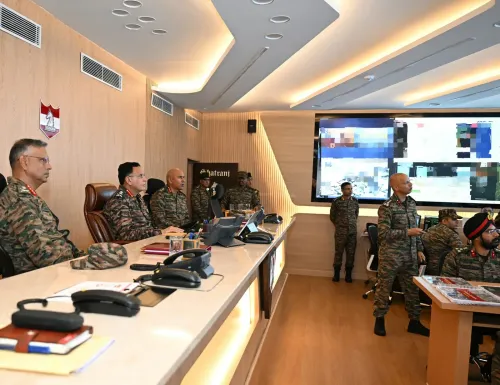
Former Ambassador and Chairman of the India Trade Promotion Organisation (ITPO), Jawed Ashraf, delivered a strategic address to senior defence officers at the 82nd Staff Course at the Defence Services Staff College in Wellington on Thursday, 9 July, outlining India's foreign policy priorities, challenges, and the road ahead. The session was conducted under the Ministry of External Affairs' Public Outreach Programme.
Key Insights from the Address
The Indian Foreign Service (IFS) officer stressed that the purposeful pursuit of national interests amid complex global dynamics is neither simple nor optional. Ashraf underscored the imperative for India to foster regional stability, safeguard its strategic autonomy, and calibrate its global engagements while navigating an increasingly contested geopolitical landscape. His remarks come at a time when India's foreign policy is being stress-tested across multiple theatres — from the Indo-Pacific to West Asia and the neighbourhood.
Army Chief Reviews LoC Security in Poonch, Rajouri and Sunderbani
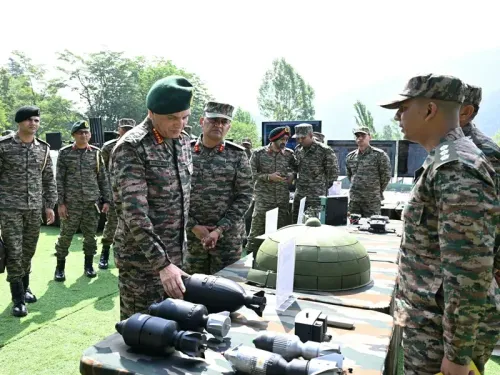
In a separate development, Chief of Army Staff General Dhiraj Seth visited forward areas along the Line of Control (LoC) in Poonch, Rajouri, and Sunderbani. He reviewed the prevailing security situation along the LoC and assessed the counter-insurgency grid, according to a statement shared on social media platform X. General Seth was briefed on the evolving security environment, operational deployments, surveillance architecture, field innovations, and integrated operational readiness. He also reviewed ongoing infrastructure development and community-centric initiatives aimed at empowering residents of India's first villages along the border. General Seth commended all ranks for their operational excellence and urged them to remain mission-focused and operationally agile.
Army Joins Rescue Ops After Pune Building Collapse
The Indian Army also joined rescue operations following a building collapse at a Waste-to-Energy project site in Moshi, Pimpri Chinchwad, Pune, on Wednesday, according to a Defence Ministry official. The Southern Command responded swiftly to a requisition from the state administration, deploying Army rescue, engineer, and medical teams to the site. Operating in close coordination with the National Disaster Response Force (NDRF), Fire Service, Police, and civil administration, Army teams supported search-and-rescue efforts, debris clearance, and on-site medical assistance under challenging conditions, even as rescuers continued to search for victims beneath the rubble.
Broader Significance
The convergence of these developments — a high-level foreign policy briefing for defence officers, an Army Chief's frontline LoC visit, and a rapid disaster response deployment — reflects the expanding operational and strategic footprint of India's armed forces. Notably, the Ministry of External Affairs' outreach to defence institutions signals a deliberate effort to align military leadership with the nuances of India's diplomatic posture in a multipolar world. As geopolitical pressures mount, the integration of foreign policy literacy within defence establishments is likely to deepen.
Point of View
Ensuring that military commanders understand the foreign policy calculus is operationally relevant, not just ceremonial. The Army Chief's LoC visit, coming in the context of ongoing tensions post-Operation Sindoor, underscores that the security situation along the western border remains a live variable. Meanwhile, the Southern Command's rapid response in Pune is a reminder that the Army's domestic utility continues to grow — a trend that raises legitimate questions about civilian capacity and disaster-preparedness infrastructure.
NationPress
8 Oct 2026
Frequently Asked Questions
Who is Jawed Ashraf and why did he address defence officers?
Jawed Ashraf is a former Indian Ambassador and the current Chairman of the India Trade Promotion Organisation (ITPO). He addressed senior officers at the 82nd Staff Course in Wellington under the Ministry of External Affairs' Public Outreach Programme to brief them on India's foreign policy priorities, challenges, and strategic direction.
What did Army Chief General Dhiraj Seth review during his LoC visit?
General Dhiraj Seth visited forward areas in Poonch, Rajouri, and Sunderbani along the Line of Control, where he reviewed the security situation, counter-insurgency grid, operational deployments, surveillance architecture, and ongoing infrastructure development. He also assessed community-outreach initiatives in border villages.
What happened at the Moshi building collapse in Pune?
A building collapsed at a Waste-to-Energy project site in Moshi, Pimpri Chinchwad, Pune on Wednesday. The Indian Army's Southern Command deployed rescue, engineer, and medical teams in response to a requisition from the state administration, working alongside NDRF, Fire Service, and Police to conduct search-and-rescue and debris clearance operations.
What is the Ministry of External Affairs' Public Outreach Programme?
It is a programme under which the Ministry of External Affairs engages with institutions — including defence establishments — to share diplomatic perspectives and foreign policy insights. The 82nd Staff Course at the Defence Services Staff College in Wellington is one such platform where senior officials address military officers.
Why does India's strategic autonomy matter in the current geopolitical context?
India's strategic autonomy refers to its ability to pursue independent foreign policy without being locked into any single power bloc. With rising US-China competition, regional instability, and evolving alliances, maintaining this balance is increasingly complex — and briefings like Ashraf's aim to ensure military leadership understands the diplomatic constraints and opportunities shaping India's decisions.