JSW Infrastructure Q2 FY27 profit drops 12% to ₹318 crore on forex losses
Synopsis
JSW Infrastructure's Q2 FY27 profit slipped 12% to ₹318 crore as unrealised forex losses from a weaker rupee overshadowed a 17% revenue surge. The real story is the logistics segment, where margins nearly doubled to 28.9%, signalling that rail-led logistics could reshape the company's earnings mix in coming quarters.
Key Takeaways
JSW Infrastructure reported a net profit of ₹318 crore in Q2 FY27 , down 12% from ₹361 crore a year earlier.
Revenue from operations rose 17% year-on-year to ₹1,481 crore , driven by ports and logistics growth.
EBITDA grew 11% to ₹675 crore , but margin narrowed to 45.58% from 48.17% .
Total cargo volumes reached 29.4 million tonnes ; India operations volumes grew 8% year-on-year.
Logistics segment revenue surged to ₹279 crore from ₹163 crore , with EBITDA margin expanding to 28.9% from 15.2% .
Net cash position stood at ₹1,693 crore , with gross debt of ₹7,292 crore and cash balances of ₹8,985 crore .
JSW Infrastructure reported a 12% decline in consolidated net profit to ₹318 crore for the quarter ended September 2026 (Q2 FY27), down from ₹361 crore in the same period last year. The company attributed the fall primarily to unrealised foreign exchange losses stemming from rupee depreciation, even as its core operations delivered double-digit revenue growth.
Revenue and EBITDA Performance
Revenue from operations climbed 17% year-on-year to ₹1,481 crore in Q2 FY27, compared with ₹1,266 crore in Q2 FY26, according to the company's stock exchange filing. EBITDA rose 11% to ₹675 crore from ₹610 crore a year earlier. However, the EBITDA margin narrowed to 45.58% from 48.17% in the corresponding quarter of FY26, reflecting higher operating costs and forex headwinds.
Balance Sheet and Cargo Volumes
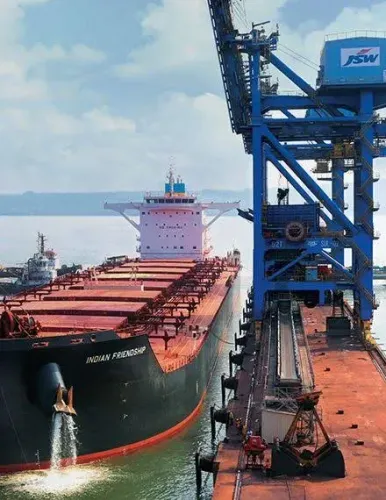
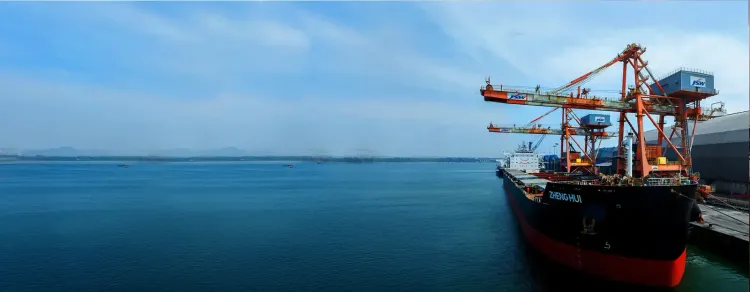
The company maintained a net cash position of ₹1,693 crore at the end of the quarter, with gross debt at ₹7,292 crore and cash and bank balances of ₹8,985 crore. Total cargo volumes reached 29.4 million tonnes during the quarter, while India operations registered an 8% year-on-year volume increase. Growth was supported by improved capacity utilisation at the Paradip Coal, Ennore Bulk, and Mangalore Coal terminals, as well as interim contributions from the Tuticorin Bulk Terminal and Kolkata Container Terminal. Volumes were partially offset by a challenging environment at the Fujairah Liquid Terminal and softer throughput at Jaigarh Port and the Paradip Iron Ore Terminal.
Ports Segment Drives Revenue
The ports business remained the largest revenue contributor, with operational revenue rising 9% year-on-year to ₹1,202 crore, supported by volume growth, higher ancillary services revenue, and a weaker rupee. Segment EBITDA edged up 2% to ₹594 crore, as per the regulatory filing.
Logistics Emerges as Growth Driver
The logistics segment posted a sharp revenue jump, with operations surging to ₹279 crore from ₹163 crore in the year-ago quarter — a rise of over 71%. EBITDA margin in the segment expanded significantly to 28.9% from 15.2%, aided by the increasing contribution of the rail logistics business. This comes amid a broader industry shift toward integrated port-logistics models, where companies with captive rail connectivity are capturing margin advantages unavailable to standalone terminal operators.
With forex volatility remaining a key risk and capacity additions at multiple terminals in progress, the company's near-term profit trajectory will be closely watched by investors tracking India's port infrastructure buildout.
Point of View
With revenue up 17% and logistics margins nearly doubling. The forex loss is an accounting artefact of rupee depreciation rather than an operational failure, and stripping it out would likely show a healthier earnings picture. The more significant signal is the logistics segment's margin expansion to 28.9%, which suggests rail-led integrated logistics is moving from a supporting act to a structural earnings driver. For investors tracking India's port capex story, the EBITDA margin compression — from 48.17% to 45.58% — is the number worth scrutinising, as it flags rising costs even in a high-revenue quarter.
NationPress
27 Oct 2026
Frequently Asked Questions
Why did JSW Infrastructure's Q2 FY27 profit fall?
JSW Infrastructure's net profit fell 12% to ₹318 crore in Q2 FY27 primarily due to unrealised foreign exchange losses caused by the depreciation of the Indian rupee. The company's core revenue and EBITDA both grew during the same period.
How did JSW Infrastructure's revenue perform in Q2 FY27?
Revenue from operations rose 17% year-on-year to ₹1,481 crore in Q2 FY27, up from ₹1,266 crore in Q2 FY26. Growth was driven by both the ports and logistics segments.
What was JSW Infrastructure's cargo volume in Q2 FY27?
Total cargo volumes reached 29.4 million tonnes in Q2 FY27, with India operations recording an 8% year-on-year increase. Key growth contributors included the Paradip Coal, Ennore Bulk, and Mangalore Coal terminals.
How did the logistics segment perform?
The logistics segment was a standout performer, with revenue surging to ₹279 crore from ₹163 crore in the year-ago quarter, and EBITDA margin expanding sharply to 28.9% from 15.2%, driven by the growing rail logistics business.
What is JSW Infrastructure's financial position?
As of the end of Q2 FY27, JSW Infrastructure held a net cash position of ₹1,693 crore, with gross debt of ₹7,292 crore offset by cash and bank balances of ₹8,985 crore, indicating a healthy balance sheet.