How Can Judges Stay Calm in Complex Situations, As Advised by SC Judge?
Synopsis
Justice Prashant Kumar Mishra highlights the significance of the district judiciary and encourages judges to maintain composure in challenging circumstances, emphasizing the role of the Constitution in upholding justice. Discover insights from a recent seminar that aims to fortify public trust in the judicial system.
Key Takeaways
District judiciary is essential for public access to justice.
Judges must remain calm and composed in all situations.
Integrity in judgments is crucial for public trust.
The Constitution guides the judicial system's operations.
Judges should strive for excellence and continuous learning.
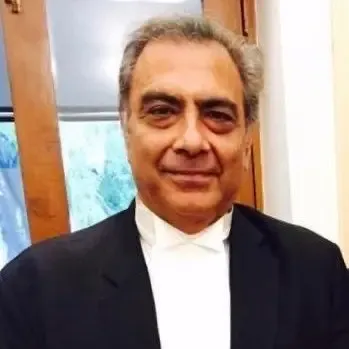
Amaravati, Dec 21 (NationPress) Supreme Court judge, Justice Prashant Kumar Mishra, emphasized on Sunday that the district judiciary serves as a cornerstone of the judicial framework. He urged judges to remain calm, peaceful, and composed in even the most challenging circumstances.
Justice Mishra highlighted that all elements of the justice system should operate in alignment with the principles established by the Constitution.
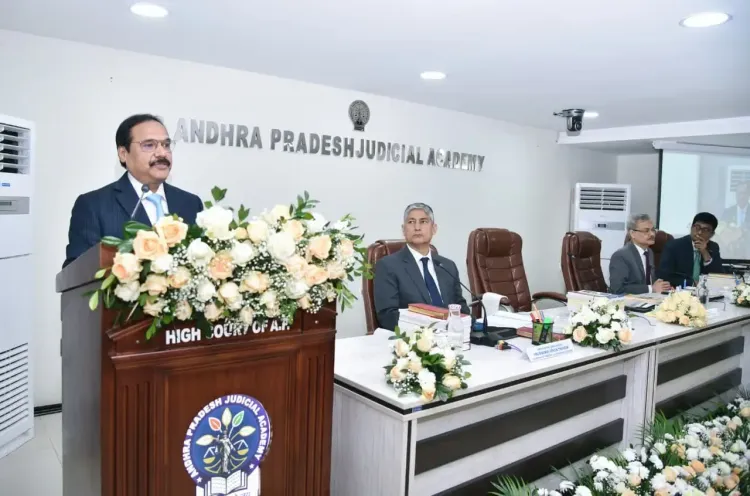
While addressing the seminar titled "Upholding the Constitutional Vision – The Role of the District Judiciary" at the Judicial Academy in Guntur, Andhra Pradesh, he noted that India boasts one of the largest judicial systems globally, with the Indian Constitution containing superior attributes compared to various other constitutions worldwide.
He pointed out that the Constitution grants a prominent role to the district judiciary, underlining that the delivery of quality justice is the judiciary's foremost duty. Access to justice for the average citizen, he asserted, is predominantly dependent on the judiciary's performance. He mentioned that court proceedings should be easily comprehensible to ordinary people, which would foster public trust and confidence in the justice system.
Justice Mishra stated that the judiciary ought to act as a link between law and justice, and judges must uphold values and responsibilities with discipline and proficient legal knowledge. He encouraged judges to pursue excellence in a competitive landscape and to continuously expand their knowledge. Protecting constitutional values, he remarked, is not confined to a single task but should permeate every aspect of judicial operations.
In addition to fulfilling current duties, he observed that reviewing past records provides valuable insights. He remarked that delivering judgments alone does not encompass the judicial process, and integrity should be demonstrated in those judgments. The demeanor of a judge during the delivery of judgments is paramount. He clarified that the Constitution is not just a legal document; rather, the legislature, judiciary, and executive must operate within its framework.
The apex court judge asserted that the Constitution affords equal opportunities to all, with the district judiciary holding a pivotal role in this framework, as every individual approaches it first. He noted that several judgments have garnered the trust and confidence of the populace. Case hearings traverse multiple stages, and protecting individuals' rights is essential. Despite technological advancements, justice fundamentally relies on a humanitarian perspective.
He further elaborated that merely delivering landmark judgments is not the only measure of performance; addressing daily matters with integrity and in a manner that earns public trust is immensely rewarding. Although judgments may not always capture public attention, they can provide significant relief to individuals. Judges must maintain calmness, restraint, patience, and composure in all situations to deliver honest and impartial judgments.
In his remarks, Justice Dheeraj Singh Thakur, Chief Justice of the Andhra Pradesh High Court and Patron-in-Chief of the State Judicial Academy, remarked that the district judiciary holds a crucial role in the justice system. He clarified that the right to life entails more than mere existence; it signifies a life of quality.
Any negligence in judicial operations, he warned, would hinder the proper delivery of justice under Articles 14 and 15 of the Constitution. He called on everyone to assume their responsibilities in maintaining a steadfast justice system and asserted that effectively safeguarding the Constitution is the true honor accorded to it.
Justice Ravinath Tilhari, an Andhra Pradesh HC judge and Chairman of the Board of Governors of the academy, remarked that the Constitution endows civil rights to every citizen and that the district judiciary must robustly safeguard these rights. He pointed out that disputes involving women and children are particularly sensitive and should be resolved through appropriate processes. By establishing clear practices at the grassroots level, cases can be adjudicated in line with constitutional guidelines. He added that the Preamble of the Constitution promises economic, social, and fraternal values for every citizen.
Point of View
It's crucial to acknowledge the foundational role of the district judiciary. Justice Prashant Kumar Mishra's insights serve as a reminder that calmness and integrity in judicial proceedings are vital for maintaining public trust. This perspective aligns with our commitment to uphold the Constitution and ensure justice for all citizens.
NationPress
25 Sept 2026
Frequently Asked Questions
What is the importance of the district judiciary?
The district judiciary is vital as it serves as the first point of contact for citizens seeking justice, ensuring access and quality in legal proceedings.
How can judges maintain composure?
Judges can maintain composure by upholding professional values, enhancing their legal knowledge, and adopting a calm demeanor during court proceedings.
What role does the Constitution play in the judiciary?
The Constitution provides the framework that guides the judiciary, ensuring that justice is delivered fairly and equitably to all individuals.
Why is public trust important in the judiciary?
Public trust is essential for the effective functioning of the judiciary, as it encourages citizens to engage with the legal system and rely on its decisions.
What are the main responsibilities of judges?
Judges are responsible for delivering fair judgments, maintaining courtroom decorum, and ensuring that the rights of individuals are protected.