Women's Reservation Bill: Shobha Karandlaje Slams Congress at Bengaluru Protest
Synopsis
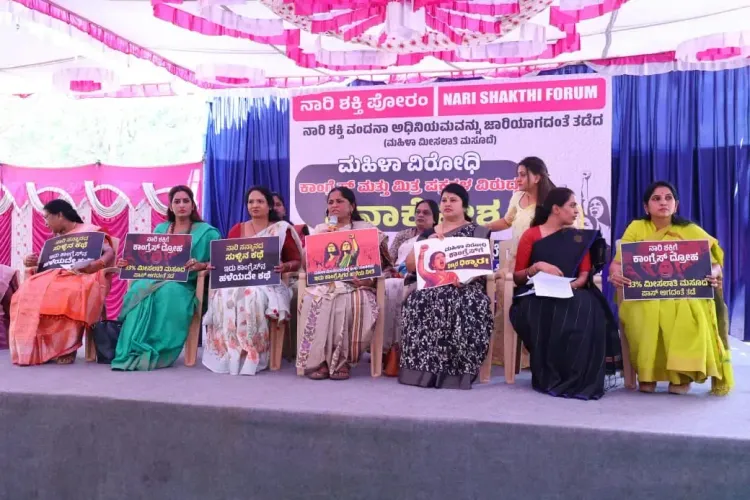
Hundreds of women rallied at Bengaluru's Freedom Park under the Nari Shakti Forum banner, with Union Minister Shobha Karandlaje accusing Congress of blocking the Women's Reservation Bill. The protest reveals a deepening political battle over women's legislative representation — with BJP framing Congress as the obstacle and Karnataka as the frontline.
Key Takeaways
Nari Shakti Forum organised a major women's protest at Freedom Park, Bengaluru on April 25, 2025 , targeting Congress over the Women's Reservation Bill .
Union Minister Shobha Karandlaje alleged that Congress and INDIA alliance partners deliberately blocked the Bill's passage and implementation.
The BJP's version of the Bill proposes increasing Lok Sabha seats by up to 50 per cent per state, rather than carving reservation from existing seats.
Former State Women's Commission Chairperson C.
Manjula called for a national movement, warning that Sonia Gandhi, Priyanka Gandhi, and Rahul Gandhi would face political consequences.
Padma Shri awardee S.G.
Sushilamma , founder of Sumangali Seva Ashram , demanded greater legislative representation for educated and aware modern Indian women.
The Women's Reservation Bill was passed in September 2023 but remains unimplemented, pending a national census and delimitation — a delay that has become a key political flashpoint.
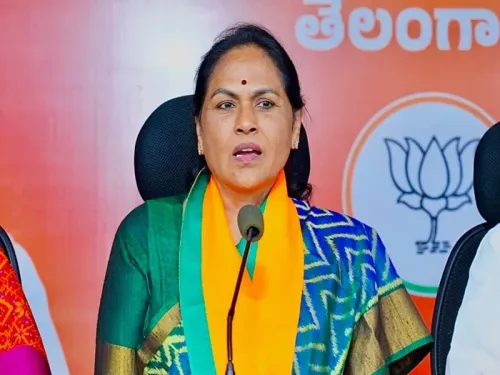
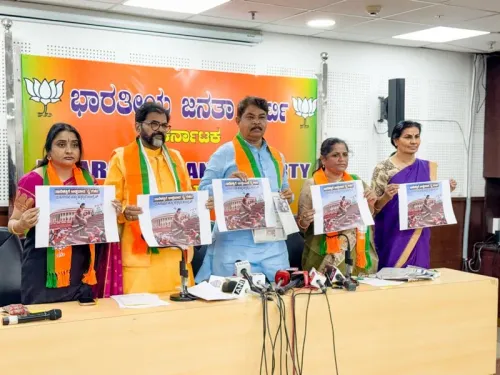
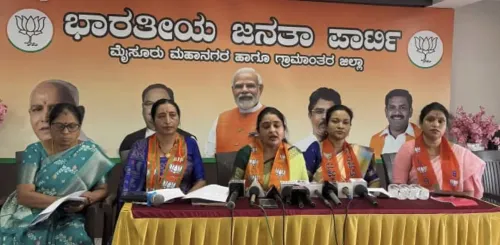
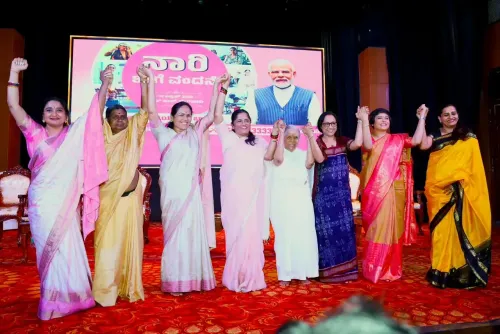
Bengaluru, April 25: Hundreds of women gathered at Freedom Park, Bengaluru on Saturday, April 25, under the banner of the Nari Shakti Forum to protest against the Congress party and its INDIA alliance partners, accusing them of deliberately obstructing the passage of the Women's Reservation Bill. Union Minister of State Shobha Karandlaje led the charge, calling out the opposition for what she described as a betrayal of India's women. The demonstration drew participants from across Karnataka, signalling growing grassroots pressure on the issue of female political representation.
Karandlaje Targets Congress, Defends Modi Government's Vision
Shobha Karandlaje addressed the crowd with sharp political messaging, asserting that Prime Minister Narendra Modi had envisioned meaningful representation for women in both the Lok Sabha and State Legislative Assemblies. She stressed that laws governing the nation are framed in Parliament, and women must have a decisive role in shaping those policies.
She alleged that Congress and its allies actively worked against the Bill, leading to its failure to gain traction. "Women must be given the opportunity to participate in law-making — the Congress denied them that chance," she said, drawing loud applause from the crowd.
Karandlaje highlighted that the current BJP-led central government had already demonstrated its commitment to women's empowerment — pointing to Nirmala Sitharaman serving as Finance Minister after previously holding the Defence portfolio, and to women now piloting fighter jets and leading major national operations.
The Bill's Key Difference: More Seats, Not Fewer for Men
Karandlaje drew a clear distinction between earlier reservation proposals and the current Bill. She noted that previous proposals for women's reservation were confined to the existing 543 Lok Sabha seats, which would have reduced the number of seats available to male candidates.
The present Bill, she explained, is designed to increase the total number of Lok Sabha seats by up to 50 per cent across states — ensuring women gain representation without displacing men. This framing is central to the BJP's political argument and is aimed at neutralising the opposition's counter-narrative.
She also addressed Congress's demand for delimitation tied to a census, warning that such an approach could result in southern states losing parliamentary seats — a politically sensitive point in Karnataka, Tamil Nadu, Kerala, Andhra Pradesh, and Telangana, all of which have lower population growth rates compared to northern states.
Other Speakers Amplify the Call for Women's Political Power
C. Manjula, former Chairperson of the State Women's Commission and practising advocate, delivered a fiery address, calling for a large-scale national movement. She warned that if women mobilise strongly, leaders like Sonia Gandhi, Priyanka Gandhi, and Rahul Gandhi would feel the political consequences.
"Indian women are not just flowers — they are flames," she declared, urging women across Bengaluru and beyond to rise against what she termed irresponsible politics. She alleged that Congress had insulted women by opposing the Bill and called for sustained public protests.
Padma Shri awardee S.G. Sushilamma, founder of Sumangali Seva Ashram, also addressed the gathering. She argued that today's women are better educated and more socially aware than any previous generation, making their exclusion from legislative bodies both unjust and counterproductive. She too called for united action against the Congress's stance.
Broader Context: Why This Protest Matters Now
The Women's Reservation Bill, also known as the Nari Shakti Vandan Adhiniyam, was passed by Parliament in September 2023 — a historic moment that reserved 33 per cent of seats in the Lok Sabha and State Assemblies for women. However, its implementation is linked to the completion of a national census and delimitation exercise, both of which remain pending, effectively delaying actual reservation by potentially a decade.
This delay has become a flashpoint. The BJP frames it as a structural necessity while critics — including Congress — argue it was a deliberate design to promise without delivering. The Nari Shakti Forum protest reflects the BJP's strategy of keeping the issue alive at the grassroots level, particularly in politically crucial states like Karnataka, where the party is in opposition and seeking to regain lost ground ahead of future elections.
Notably, Karnataka currently has one of the lower percentages of women legislators among major Indian states — a fact that adds urgency to the local resonance of this protest. With Assembly elections in several states approaching and the 2029 Lok Sabha election cycle beginning to take shape, the Women's Reservation Bill is set to remain a central electoral battleground between the BJP and Congress.
What to Watch Next
The Nari Shakti Forum has indicated that protests will continue and may expand to other cities across Karnataka. Political observers will be watching whether Congress responds with a counter-mobilisation or a policy rebuttal on the delimitation-census linkage. The broader national conversation on women's political representation — and who truly owns that agenda — is far from settled.
Point of View
Meaning the BJP can claim credit without delivering results. Congress, meanwhile, finds itself in a no-win position — opposing the Bill's current structure hands the BJP a potent narrative of being anti-women. What the mainstream coverage misses is that both sides are playing politics with a reform that India's women genuinely need — and the women at Freedom Park deserve better than being props in that game.
NationPress
2 Oct 2026
Frequently Asked Questions
What is the Women's Reservation Bill and why are women protesting in Bengaluru?
The Women's Reservation Bill, officially called the Nari Shakti Vandan Adhiniyam, reserves 33 per cent of seats in the Lok Sabha and State Assemblies for women. Women protested in Bengaluru on April 25, 2025, accusing Congress of blocking the Bill's implementation and demanding faster action on women's political representation.
What did Shobha Karandlaje say at the Bengaluru protest?
Union Minister of State Shobha Karandlaje alleged that Congress and its INDIA alliance partners opposed the Women's Reservation Bill, causing it to stall. She defended the BJP's version of the Bill, saying it would increase total Lok Sabha seats by up to 50 per cent rather than reducing men's representation.
When was the Women's Reservation Bill passed and when will it be implemented?
The Women's Reservation Bill was passed by Parliament in September 2023. However, its implementation is linked to the completion of a national census and delimitation exercise, both of which are pending, potentially delaying actual reservation by several years.
Why does Congress oppose the Women's Reservation Bill?
Congress has not opposed the Bill outright but has demanded that reservation be implemented after a census and delimitation exercise, arguing this ensures fair representation. Critics, including BJP leaders, say this condition effectively delays the Bill indefinitely.
How could delimitation affect southern states like Karnataka under the Women's Reservation Bill?
Shobha Karandlaje warned that linking the Bill to delimitation could reduce the number of Lok Sabha seats for southern states like Karnataka, which have lower population growth rates compared to northern states. The BJP's version of the Bill proposes increasing total seats by up to 50 per cent to avoid this outcome.