Karnataka Dy CM writes to Modi on MMDR Amendment Bill, flags state fiscal rights
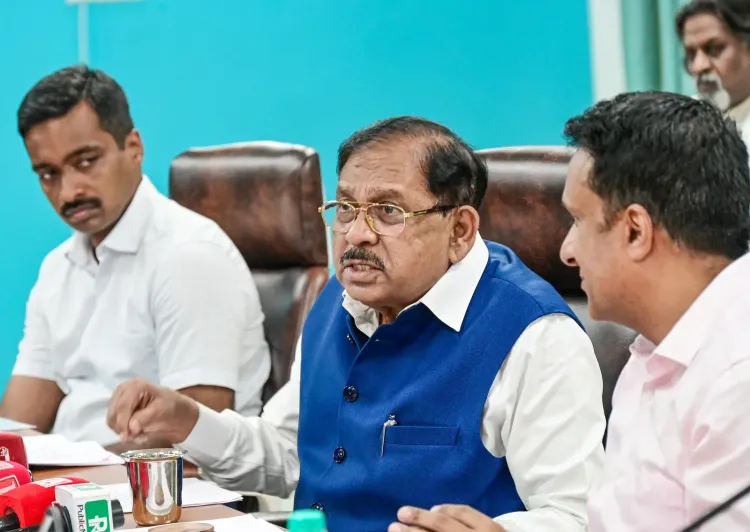
Synopsis
Karnataka Deputy Chief Minister G. Parameshwara has formally written to PM Modi demanding a rollback of the MMDR Amendment Bill 2026, warning it overrides a Supreme Court ruling from 2024 that secured states' mineral taxation powers — and could set a dangerous precedent for fiscal federalism at a time when states are already squeezed by GST.
Key Takeaways
Karnataka Deputy Chief Minister G.
Parameshwara wrote to PM Modi and Union Minister G.
Kishan Reddy on 18 August seeking reconsideration of the MMDR Amendment Bill, 2026 .
The Bill, he argued, restricts states' constitutional powers to tax mineral rights and mineral-bearing lands under Entries 49 and 50 of the State List.
The Supreme Court's 2024 landmark judgment had explicitly affirmed these state powers — making the amendment's timing particularly contentious.
Parameshwara proposed five measures including withdrawal of the Bill, structured Centre-State consultations, and recognition of Karnataka's 2024 Mineral Rights and Mineral Bearing Land Tax Bill .
He warned that states already face shrinking fiscal space following GST , even as their spending responsibilities in health, infrastructure, and welfare continue to grow.
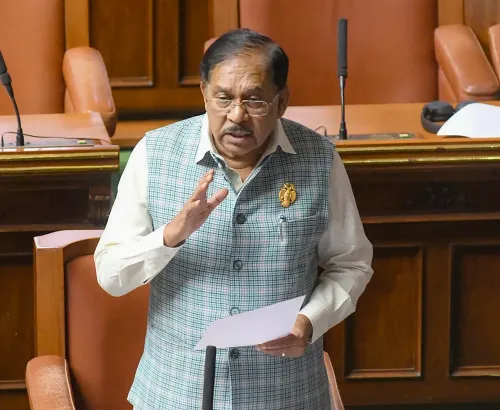
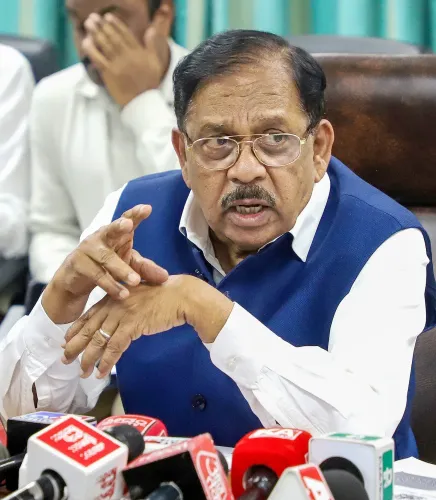
Karnataka Deputy Chief Minister G. Parameshwara on Tuesday, 18 August wrote to Prime Minister Narendra Modi and Union Minister for Coal and Mines G. Kishan Reddy, urging the Centre to reconsider the Mines and Minerals (Development and Regulation) Amendment Bill, 2026. Parameshwara argued that key provisions of the Bill would curtail the constitutional authority of states to levy taxes on mineral rights and mineral-bearing lands — powers that the Supreme Court explicitly affirmed in a landmark 2024 ruling.
The Constitutional Flashpoint
At the heart of the dispute is the Supreme Court's 2024 judgment, which upheld the legislative and fiscal powers of states under Entries 49 and 50 of the State List — covering taxation of mineral-bearing lands and mineral rights respectively. Parameshwara contended that the proposed MMDR amendments would directly override a constitutional position that the country's highest court had only recently clarified.
'The proposed amendment to the MMDR Act has direct implications not merely for a theoretical future source of revenue but for a legislative field which the State Legislature has already exercised pursuant to the constitutional position clarified by the highest court of the country,' he stated in the letter.
Federalism Concerns at the Core
The Deputy Chief Minister described the Centre's approach as 'unilateral' and warned that it raised serious questions about India's federal structure. He called for structured, time-bound consultations with all state governments — particularly mineral-producing states — before any legislation affecting their taxation powers is advanced.
Parameshwara also flagged the broader fiscal squeeze facing states. He argued that states had already surrendered significant taxation powers following the rollout of the Goods and Services Tax (GST), even as their spending responsibilities in public infrastructure, education, healthcare, drinking water, agriculture, urbanisation, and welfare programmes have continued to expand. 'States are carrying growing responsibilities with shrinking fiscal space,' he said.
What Karnataka Is Proposing
Parameshwara put forward five specific measures for the Centre's consideration: withdrawing the MMDR Amendment Bill in its present form; holding structured consultations with state governments; establishing a permanent Centre-State consultative mechanism; accounting for existing and proposed state legislation — including Karnataka's own 2024 Mineral Rights and Mineral Bearing Land Tax Bill; and building a consensus-based national framework that balances investment, mineral development, and critical-mineral security without extinguishing state fiscal autonomy.
He also cautioned that rolling back a constitutionally recognised taxation field immediately after the Supreme Court had clarified its scope could set a precedent with implications well beyond mineral taxation alone.
The Bigger Picture
The dispute sits within a long-running tension between the Centre's drive to streamline mineral governance — particularly for critical minerals essential to India's clean-energy transition — and states' insistence on retaining fiscal control over their natural resources. Mineral-producing states, Parameshwara noted, also bear substantial social, environmental, and infrastructure costs associated with mining activity.
'The Union Government must therefore consider not merely whether Parliament possesses a power, but also how that power ought to be exercised within the spirit of cooperative federalism,' he said. 'A developed India requires developed States. An Atmanirbhar Bharat requires financially self-reliant states. And cooperative federalism requires states that are empowered partners, not financially dependent implementing agencies.'
With Karnataka's Congress-led government formally placing its objections on record, the Centre now faces mounting pressure from mineral-rich states to pause and consult before the Bill advances further.
Point of View
Arriving just as the Supreme Court's 2024 mineral-rights ruling is fresh law. The Centre's move to legislate around that judgment, without state consultation, risks being read as a workaround of judicial authority, not just a policy disagreement. The deeper problem is structural: GST compressed state revenue bases, and mineral taxation was emerging as one of the few remaining autonomous fiscal levers for resource-rich states. If the MMDR amendments pass in their current form, they will not just affect Karnataka — they will signal to every mineral-producing state that cooperative federalism has limits the Centre sets unilaterally.
NationPress
2 Oct 2026
Frequently Asked Questions
What is the MMDR Amendment Bill 2026 and why is Karnataka opposing it?
The Mines and Minerals (Development and Regulation) Amendment Bill, 2026 proposes changes to India's mineral governance framework. Karnataka opposes it because its provisions would restrict states' constitutional authority to levy taxes on mineral rights and mineral-bearing lands — powers the Supreme Court affirmed in a 2024 judgment.
What did the Supreme Court's 2024 judgment say about mineral taxation?
The Supreme Court's 2024 landmark ruling upheld the legislative and fiscal powers of states under Entries 49 and 50 of the State List, which cover taxation of mineral-bearing lands and mineral rights. Parameshwara argued the MMDR Amendment Bill directly contradicts this settled constitutional position.
What has Karnataka's Deputy Chief Minister asked the Centre to do?
G. Parameshwara has asked the Centre to withdraw the MMDR Amendment Bill in its current form, hold structured consultations with state governments, establish a permanent Centre-State consultative mechanism, account for Karnataka's own 2024 Mineral Rights and Mineral Bearing Land Tax Bill, and build a consensus-based national mineral taxation framework.
Why does Parameshwara say states have shrinking fiscal space?
Parameshwara argued that states surrendered significant taxation powers when the Goods and Services Tax (GST) was introduced, while their spending responsibilities in infrastructure, education, healthcare, and welfare have continued to grow. He said mineral taxation is one of the few remaining autonomous fiscal tools for mineral-producing states.
Which other states could be affected by the MMDR Amendment Bill?
While Karnataka has formally raised objections, the Bill's implications extend to all mineral-producing states across India, as it would restrict their constitutional authority to tax mineral rights and mineral-bearing lands. Parameshwara specifically called for consultations with all mineral-producing states before the legislation proceeds.