ISI's Covert Strategy: Human Rights Groups in Kashmir's Disinformation Campaign

Synopsis
Intelligence agencies are on high alert as individuals in Jammu and Kashmir attempt to form human rights organizations funded by the ISI. These groups aim to fabricate narratives against Indian security forces, while the region witnesses a significant decline in violence.
Key Takeaways
Human Rights Groups: Suspected to be funded by ISI to spread disinformation.
Decreased Violence: Significant drop in violence in the region.
Tourism Growth: Tourism significantly contributes to the local economy.
Changing Tactics: Shift from violence to soft terror through disinformation.
International Narrative: Aiming to create a negative portrayal of Indian agencies globally.
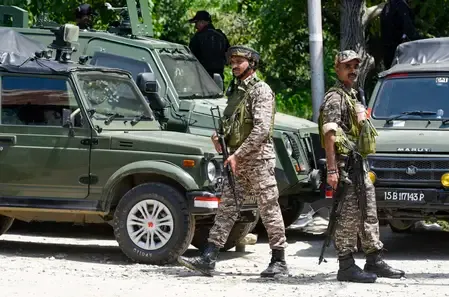
New Delhi, March 23 (NationPress) Intelligence agencies are closely monitoring certain individuals in Jammu and Kashmir who are trying to establish human rights organizations aimed at disseminating a misleading narrative against the Indian government. Numerous journalists suspected of being funded by the ISI are also under scrutiny. According to an official, these individuals are directed to produce negative articles about the Indian security forces.
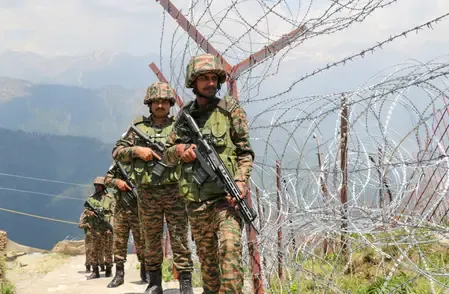
These organizations are being created to generate false data intended to portray the Indian armed forces as aggressors in Jammu and Kashmir. It is noteworthy that violence has significantly decreased in the region, with several months passing without a single reported incident.
As per an Intelligence Bureau official, these rights groups aim to circulate fabricated statistics and promote a narrative against India on global platforms.
The agencies have warned that these groups are likely to launch publications that will further propagate a distorted view of the situation in Jammu and Kashmir.
Recently, there has been a surge in online conferences featuring international participants, with some local Kashmiris attending to voice their criticisms of the Indian establishment. They attempt to convince global audiences that the abrogation of Article 370 has suppressed Kashmiri voices, while falsely alleging rampant human rights violations in the Union Territory.
Another official remarked that this campaign represents a significant shift from the previous approach of street violence that the ISI employed in Jammu and Kashmir. It is well-documented that stone-pelting, which was a regular occurrence following Friday prayers, has virtually ceased.
The establishment has successfully persuaded the youth in Kashmir that tourism, rather than terrorism, is the path forward. This strategy has proven effective, with tourism now serving as a crucial economic driver, contributing around 7% to the Gross State Domestic Product (GSDP), translating to an estimated value of Rs 18,550 crore. In 2024, a record 2.35 crore tourists visited Jammu and Kashmir, supporting 5 lakh jobs in the region.
The ISI and the Pakistan Army orchestrated the Pahalgam attack specifically to undermine the tourism sector and provoke India into a military confrontation. Despite a temporary setback, officials state that the tourism industry has rebounded.
Since 2016, there has been a dramatic decline in terrorist incidents. While the number of terror-related activities has diminished, the ISI is particularly concerned about the significant drop in local recruitment into terror organizations. In 2019, 143 locals joined terror groups, whereas only 7 did so in 2024.
Another official noted that hardcore terrorism in the Union Territory has lost its appeal. Consequently, the ISI has decided to invest heavily in soft terror, focusing on creating a disinformation narrative.
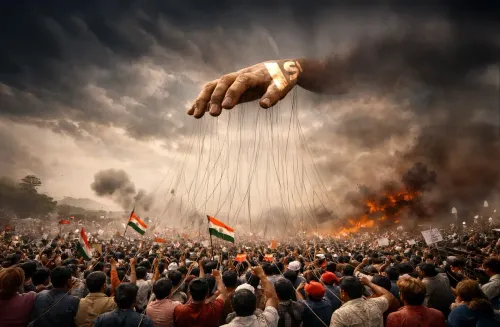
Officials indicate that these so-called human rights groups will attempt to manipulate data while also utilizing deep fake videos and artificially generated content extensively. This could involve fabricated videos depicting alleged atrocities. Images created for this purpose will also be disseminated by these factions, as per the official.
The ISI has pinpointed several individuals for this initiative, many of whom have previously been linked to separatist groups. Some have even shown support for organizations like The Resistance Front, an offshoot of Lashkar-e-Taiba.
These individuals have been tasked with identifying locals throughout Jammu and Kashmir, who will then form smaller groups to engage with the community and spread a false narrative. The overarching goal is to bring the Jammu and Kashmir issue to international attention and portray Indian agencies and the government in a negative light, officials report.
Point of View
This situation underscores the ongoing challenges posed by disinformation campaigns. The establishment must navigate these narratives while maintaining transparency and truth in its communications with both domestic and international audiences.
NationPress
23 Sept 2026
Frequently Asked Questions
What is the role of the ISI in Kashmir's current situation?
The ISI is allegedly funding individuals to create human rights groups aimed at spreading false narratives against the Indian government and security forces.
How has violence changed in Jammu and Kashmir?
Violence in Jammu and Kashmir has drastically decreased, with several months passing without any reported incidents.
Why is tourism important to Jammu and Kashmir?
Tourism has become a vital economic pillar in Jammu and Kashmir, contributing approximately 7% to the region's Gross State Domestic Product.
What is the significance of Article 370's abrogation?
The abrogation of Article 370 is portrayed by critics as having suppressed Kashmiri voices, although officials argue it has led to a more peaceful environment.
What tactics are these groups using?
These groups are expected to manipulate statistics and utilize deep fake videos to create a false narrative about human rights violations in Jammu and Kashmir.