Significant Drop in Naxalism and Kashmir Militancy Over 12 Years: New Insights
Synopsis
Discover how India has successfully navigated a significant decline in Naxalism and Kashmir militancy over the past 12 years through strategic security measures and developmental initiatives.
Key Takeaways
Naxalism and Kashmir militancy have significantly declined in the last 12 years.
Enhanced security measures have played a crucial role in this reduction.
Development initiatives have integrated tribal areas into the mainstream.
Cross-border infiltration has been curtailed due to improved border management.
Local recruitment and operational capabilities of militants have been diminished.
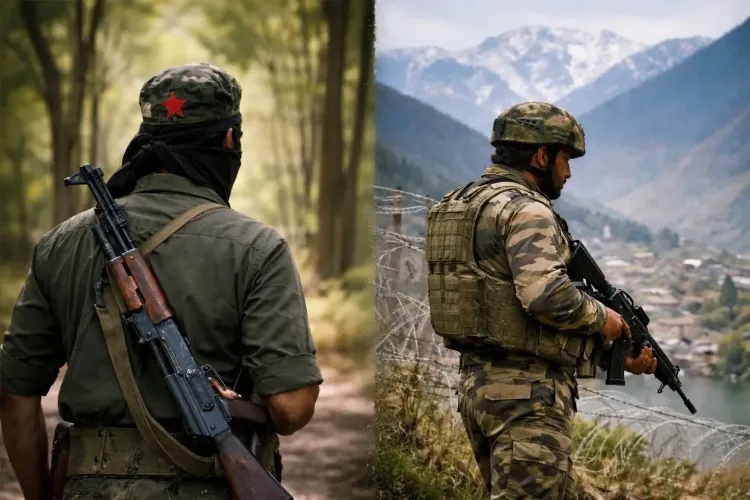
New Delhi, April 5 (NationPress) A recent report reveals that India has seen a notable reduction in two of its longstanding internal security threats: Left Wing Extremism (LWE) and militancy in Jammu and Kashmir. This positive trend has emerged over the last 12 years, driven by consistent security measures, improved intelligence sharing, and development-focused initiatives.
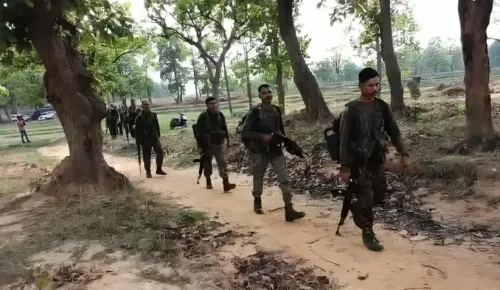
Regarding Naxalism, the report indicates a significant decrease in both the operational reach and strength of Maoist factions.
Previously widespread across a vast "Red Corridor" in central and eastern India, the Maoist presence is now largely restricted to a few districts.
Security forces have successfully neutralized numerous high-ranking Maoist leaders, dismantled crucial logistical frameworks, and disrupted supply chains that previously allowed insurgents to function with relative ease.
A pivotal change in strategy — shifting from territorial control to intelligence-led, targeted operations — has been critical to this achievement.
The utilization of technology, enhanced coordination among state police and central agencies, and the establishment of fortified security bases in remote areas have markedly decreased the mobility and operational capabilities of Maoist fighters.
Equally vital has been the government's emphasis on development within LWE-affected zones.
Improvements in road networks, mobile connectivity, banking services, and welfare programs have facilitated the integration of remote tribal communities into the larger society, thereby eroding the ideological and logistical support systems of Maoist groups. Policies encouraging surrender and rehabilitation have also motivated Maoist fighters to abandon their arms, further contributing to the decline.
In Jammu and Kashmir, the report notes a steady decline in militancy, particularly following a series of strategic policy and security initiatives implemented over the last decade.
The security apparatus has been fortified through better collaboration among the Army, paramilitary forces, and local law enforcement, resulting in more frequent and precise counter-terror operations.
A key aspect of this shift has been the prioritization of dismantling terror networks, including overground worker (OGW) groups, funding channels, and recruitment processes. Security agencies have intensified surveillance and enforcement efforts, making it increasingly challenging for militant organizations to sustain their operations or recruit new members.
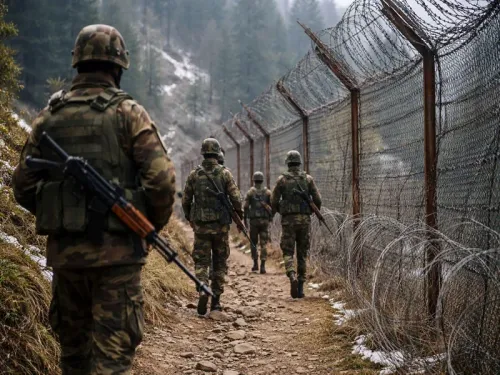
The Sunday Guardian report indicates that cross-border infiltration has been significantly diminished due to enhanced border security, fencing, and the use of advanced surveillance technologies, which has adversely affected the operational capabilities of Pakistan-backed groups.
While local recruitment had previously posed a significant challenge, sustained pressure on militant leadership and proactive community engagement have led to a decrease in new recruits.
Moreover, targeted operations have shortened the active lifespan of militants, thereby limiting their operational impact.
The cumulative effects of these efforts are evident in the decrease of large-scale attacks and improved stability metrics in the affected regions.
There are signs of revival in civilian life, tourism, and local governance, though the report warns that sporadic incidents and residual threats persist.
Authored by Abhinandan Mishra and published in The Sunday Guardian, the report concludes that the decline in both Naxalism and Kashmir militancy illustrates a well-calibrated approach that combines stringent security measures with governance and development, resulting in a gradual but sustained reinstatement of state authority in previously impacted areas.
Point of View
It is essential to acknowledge the positive developments in India's internal security landscape. The decline in Naxalism and militancy in Jammu and Kashmir underscores a multifaceted approach that blends security and community development, fostering stability while addressing the roots of conflict.
NationPress
6 Oct 2026
Frequently Asked Questions
What is the current status of Naxalism in India?
Naxalism has seen a significant reduction in both operational strength and geographical presence over the past 12 years, largely confined to a limited number of districts.
How has Jammu and Kashmir's militancy level changed?
Militancy in Jammu and Kashmir has steadily weakened, thanks to effective security measures and better coordination among law enforcement agencies.
What strategies have been implemented to combat these threats?
Strategies include intelligence-driven operations, dismantling of terror networks, and development initiatives to integrate affected communities.
What role does development play in reducing extremism?
Development initiatives such as improved infrastructure, connectivity, and welfare programs help undermine the support base for extremist groups.
Are there still risks of violence despite the decline?
Yes, while overall violence has decreased, sporadic incidents and residual threats remain a concern.