Kerala Governor Mathur's veg-only kitchen row sparks BJP-CPI(M) clash
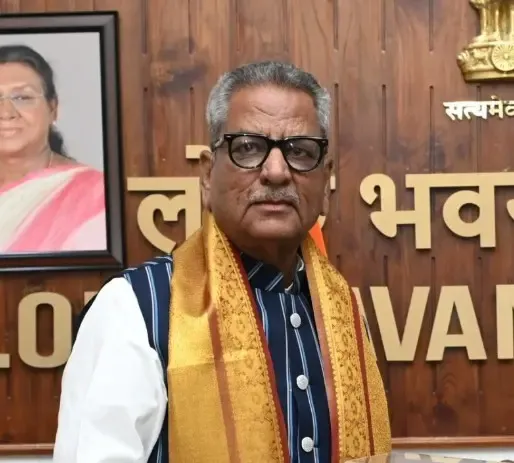
Synopsis
On his very first day as Kerala's 29th Governor, Om Prakash Mathur reportedly ordered that Lok Bhavan's kitchen go vegetarian-only — and within hours, the BJP was defending personal dietary freedom while a CPI(M) MP called the directive 'horrible' and a Congress leader alleged an overreach. A food order has become a flashpoint for the deeper, enduring tension between Raj Bhavan and Kerala's Left government.
Key Takeaways
Kerala Governor Om Prakash Mathur reportedly directed that non-vegetarian food not be cooked or served in the Lok Bhavan kitchen on his first day in office .
Sources in the governor's office said Mathur is a strict vegetarian and clarified that no restriction was placed on employees' personal food choices.
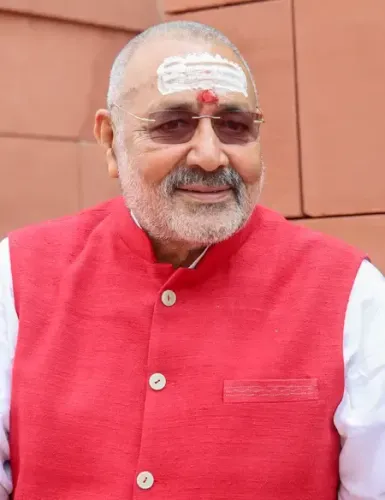
BJP MP Praveen Khandelwal and Bihar Minister Ram Kripal Yadav defended the move as the governor's right to decide arrangements at his own residence.
Sivadasan called the reported directive 'horrible', arguing it conflicted with India's multicultural diversity.
AICC General Secretary K.C.
Venugopal alleged the governor overstepped by imposing a dietary directive at Lok Bhavan.
Mathur is the 29th Governor of Kerala ; no formal written order has been made public as of 24 October 2026 .
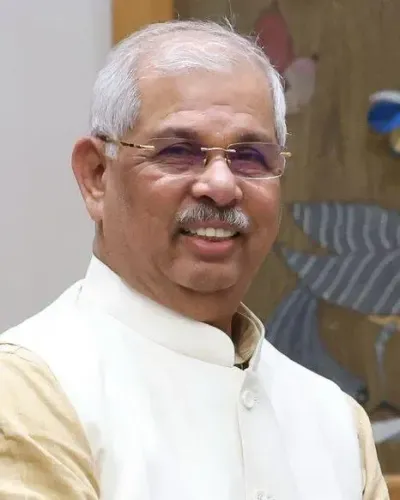
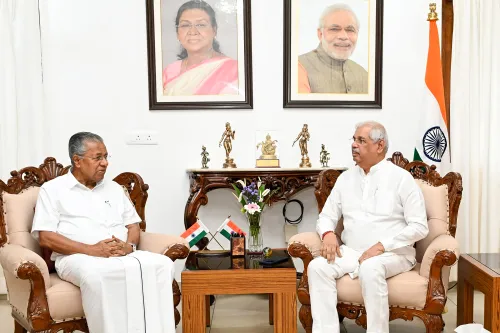
A political row erupted on 24 October 2026 over Kerala Governor Om Prakash Mathur's reported decision to make the kitchen at Lok Bhavan — the governor's official residence in Thiruvananthapuram — strictly vegetarian, drawing sharp reactions from the Bharatiya Janata Party (BJP), Indian National Congress, and the Communist Party of India (Marxist). The controversy broke on Mathur's first day in office as the 29th Governor of Kerala, with media reports indicating he had directed that non-vegetarian food not be prepared or served in the Lok Bhavan kitchen.
What the Governor's Office Said
Sources in the governor's office clarified that Mathur is a strict vegetarian and issued the instruction on that personal basis. Crucially, they stressed that there was no restriction on the food choices of Lok Bhavan employees — the order reportedly applied only to what is cooked within the official kitchen, not to what staff may eat elsewhere.
BJP Defends the Governor's Right to Choose
Bihar Minister Ram Kripal Yadav came out firmly in Mathur's defence, framing the decision as an exercise of individual liberty. 'Everyone has the freedom to express themselves and to eat and cook what they want. This is part of Indian civilisation and culture. Everyone is free to live according to their own choices, speak their language and practise their religion... Venugopal is trying to unnecessarily target the Lok Bhavan because he has no issue to raise. This is unfortunate,' Yadav said.
BJP MP Praveen Khandelwal echoed the sentiment, directing pointed criticism at All India Congress Committee (AICC) General Secretary K.C. Venugopal. 'Every individual has the right to decide the arrangements for food at their residence. Lok Bhavan is the residence of the Hon'ble Governor, so he has the right to decide what food arrangements will be followed there. Since the Congress has no issues to raise and is a party without any real issues, if K.C. Venugopal turns even a non-issue into an issue, it clearly reflects the disruption and decline in the Congress' political mindset,' Khandelwal said.
CPI(M) and Congress Push Back
CPI(M) MP V. Sivadasan did not mince words in his objection. 'Kerala represents the multicultural character of our nation. India reflects the strength of diversity and the unity that connects us despite our differences. I heard that the Governor of Kerala issued an order allowing only vegetarian food at Lok Bhavan. Everyone has the right to choose their food. How can the Governor direct his employees or staff to consume only vegetarian food? It is a horrible thing,' he said. Notably, Sivadasan's characterisation — that the order extended to staff consumption — appears to contradict the governor's office clarification that no such restriction was placed on employees.
AICC General Secretary K.C. Venugopal had earlier alleged that the governor overstepped by directing that only vegetarian food be prepared in the kitchen, framing it as an imposition on those who work at Lok Bhavan.
Why This Controversy Has a Wider Dimension
The row is not merely about food — it sits at the intersection of gubernatorial authority, individual rights, and Kerala's distinctly pluralist food culture, where non-vegetarian cuisine is deeply embedded across communities. This comes amid a broader pattern of friction between Kerala's Left-led state government and governors appointed by the Centre, a tension that has played out in several southern and eastern states in recent years. Mathur's appointment itself was closely watched given the history of contestation between Raj Bhavan and the state government in Kerala. The speed with which political parties mobilised around a dietary directive on the governor's very first day in office underscores how charged that relationship remains.
What Happens Next
No formal order has been made public by the governor's office, and the controversy rests on media reports and unnamed sourcing. It remains to be seen whether Mathur will publicly clarify the scope of the directive. The episode is likely to feed into ongoing debates about the role and conduct of governors in Opposition-ruled states, a subject that has attracted scrutiny from the Supreme Court in recent years.
Point of View
But the moment an official residence's kitchen becomes the instrument, the line between personal preference and institutional directive blurs. CPI(M) and Congress are right to interrogate that line, even if their framing exaggerates the scope of the order. The deeper problem is structural: in states where governor-government relations are adversarial, even a vegetable cutlet becomes a constitutional flashpoint.
NationPress
24 Oct 2026
Frequently Asked Questions
What is the Kerala Governor vegetarian kitchen controversy?
It refers to reports that Kerala Governor Om Prakash Mathur directed on his first day in office — 24 October 2026 — that non-vegetarian food not be cooked or served in the Lok Bhavan kitchen. The governor's office attributed the decision to Mathur being a strict vegetarian and clarified it did not restrict employees' personal food choices.
What did CPI(M) MP V. Sivadasan say about the order?
CPI(M) MP V. Sivadasan called the reported directive 'a horrible thing', arguing that Kerala represents India's multicultural character and that no one — including the Governor — can direct employees on what food to consume. His characterisation appeared broader than the governor's office clarification, which stated no such restriction applied to staff.
How did the BJP respond to the controversy?
BJP MP Praveen Khandelwal and Bihar Minister Ram Kripal Yadav defended the governor's right to decide food arrangements at his own residence. They argued that the Congress was manufacturing a controversy where none existed and accused AICC General Secretary K.C. Venugopal of raising a non-issue for political reasons.
Who is Om Prakash Mathur and when did he take charge?
Om Prakash Mathur was sworn in as the 29th Governor of Kerala , with the reported kitchen directive emerging on his very first day in office. The controversy broke on 24 October 2026 , drawing immediate reactions from multiple political parties.
Does the order restrict Lok Bhavan employees from eating non-vegetarian food?
According to sources in the governor's office, the order applies only to what is prepared in the Lok Bhavan kitchen and does not restrict employees' personal food choices. However, CPI(M) and Congress leaders have questioned whether the distinction is meaningful in practice, arguing it still imposes dietary preferences within an official government space.