Kerala HC questions RTI exemption for VACB vigilance sections
Synopsis
The Kerala High Court has put the state government on notice over a 22 October notification that exempts two VACB sections from the RTI Act — a move the petitioner says converts a criminal investigation agency into an 'intelligence organisation' on paper, effectively shielding corruption probes from public scrutiny. A 2016 precedent, where a similar notification was withdrawn after judicial challenge, looms large over the case.
Key Takeaways
The Kerala High Court on 28 October 2026 sought an affidavit from the state on an RTI Act exemption granted to the VACB's T1 and T2 sections via a 22 October notification.
A Division Bench of Chief Justice Soumen Sen and Justice V.M.
Syam Kumar directed the government to detail what categories of information the two sections handle.
The petitioner argues the VACB is a criminal investigation agency and cannot be reclassified as an intelligence body through an administrative order under Section 24(4) of the RTI Act.
VACB information officers have reportedly already begun rejecting RTI requests citing the notification, according to the plea.
A similar notification was withdrawn by the Kerala government in 2016 after a High Court challenge — a precedent cited in the current case.
The matter will be heard again after three weeks ; the High Court has not yet ruled on the notification's validity.
The Kerala High Court on Wednesday, 28 October 2026, sought clarification from the state government on whether vigilance inquiries against public officials fall within the scope of an exemption granted to two sections of the Directorate of Vigilance and Anti-Corruption Bureau (VACB) under the Right to Information (RTI) Act. The court's intervention follows a public interest litigation challenging a government notification issued on 22 October that brought the VACB's T1 and T2 sections under the exemption.
What the Court Directed
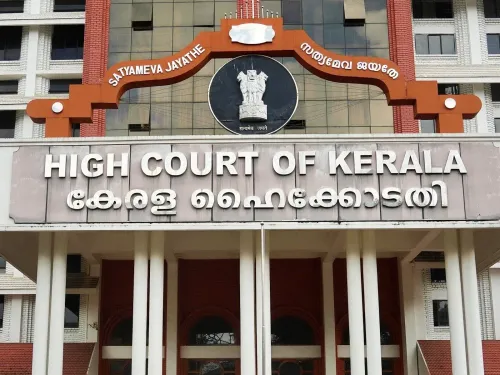
A Division Bench comprising Chief Justice Soumen Sen and Justice V.M. Syam Kumar directed the state government to file an affidavit detailing the categories of information handled by the T1 and T2 sections. The bench observed that the two units deal with vigilance inquiries, intelligence inputs, search reports, and other material relating to vigilance proceedings. While acknowledging that some of this information could be sensitive, the court specifically sought clarity on whether inquiries against public officials fall within the sections' remit. The matter is scheduled to be taken up again after three weeks.
The Petitioner's Challenge
The petitioner contends that the VACB is primarily a criminal investigation agency that probes corruption offences involving public servants and therefore cannot be classified as an intelligence or security organisation merely through an administrative notification. The plea points out that the VACB was not among the eight organisations originally exempted under a government order dated 7 February 2006. The petitioner further submitted that a similar notification had been withdrawn by the state government in 2016 after it was challenged before the High Court — a precedent the bench is likely to weigh.
On-Ground Impact of the Notification
According to the petitioner, VACB information officers have already begun rejecting RTI requests concerning vigilance inquiries, preliminary verifications, closure reports, and sanctions for prosecution, citing the 22 October notification. The plea argues that a blanket exemption for the two sections could effectively shield the state's anti-corruption machinery from public scrutiny, even though the RTI Act already provides targeted exemptions to protect material whose disclosure could impede investigations or endanger individuals.
Key Legal Arguments
The petitioner cited a recent Supreme Court ruling in Special Police Establishment vs Kamta Prasad Mishra and Others, arguing that an agency that investigates corruption cannot automatically be treated as an intelligence and security organisation under Section 24(4) of the RTI Act. Section 24(4) permits state governments to exempt specified intelligence and security organisations through notifications published in the Official Gazette. The plea seeks the quashing of the 22 October notification and the continued application of the RTI Act to the two sections for information not otherwise exempt under law. The High Court has not yet ruled on the validity of the notification.
What Happens Next
The state government now has approximately three weeks to file its affidavit before the Division Bench reconvenes. The outcome could set a significant precedent on the boundaries of RTI exemptions for anti-corruption bodies across India, particularly given the Supreme Court ruling the petitioner has invoked.
Point of View
Meaning the exemption is operational before any court has validated it. If the VACB can be labelled an 'intelligence organisation' by notification alone, any state government could insulate its anti-corruption apparatus from citizen oversight with a single gazette entry — a precedent with consequences far beyond Kerala.
NationPress
28 Oct 2026
Frequently Asked Questions
Why has the Kerala High Court intervened in the VACB RTI exemption case?
The Kerala High Court intervened after a public interest litigation challenged a 22 October 2026 government notification that brought the VACB's T1 and T2 sections under an RTI Act exemption reserved for intelligence and security organisations. The court has directed the state to file an affidavit explaining what information the two sections handle, and the matter will be heard again after three weeks.
What is Section 24(4) of the RTI Act and why does it matter here?
Section 24(4) of the RTI Act allows state governments to exempt specified intelligence and security organisations from the Act's disclosure obligations through notifications published in the Official Gazette. The petitioner argues the VACB does not qualify as an intelligence or security organisation — it is a criminal investigation agency that probes corruption — and therefore cannot be brought under this exemption by administrative order alone.
Has the VACB been exempted from the RTI Act before?
The VACB was not among the eight organisations originally exempted under a Kerala government order dated 7 February 2006. A similar exemption notification was subsequently issued but was withdrawn in 2016 after it was challenged before the Kerala High Court — a precedent the petitioner has cited in the current case.
What is the practical impact of the 22 October notification on citizens?
According to the petitioner, VACB information officers have already begun rejecting RTI applications relating to vigilance inquiries, preliminary verifications, closure reports, and sanctions for prosecution, citing the 22 October notification. This effectively removes public oversight of the state's primary anti-corruption body while the court challenge is pending.
What will the Kerala High Court decide next?
The High Court has not yet ruled on the validity of the 22 October notification. It has asked the state government to file an affidavit detailing the functions of the T1 and T2 sections, after which the Division Bench will reconsider the matter — scheduled approximately three weeks from the 28 October hearing.