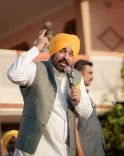
CM Samrat Choudhary Backs ₹1,857 Cr Sports Goods Scheme
Synopsis
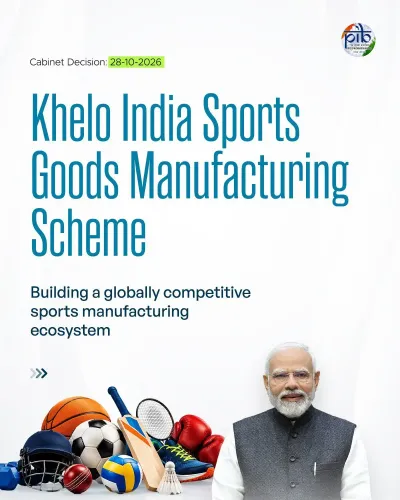
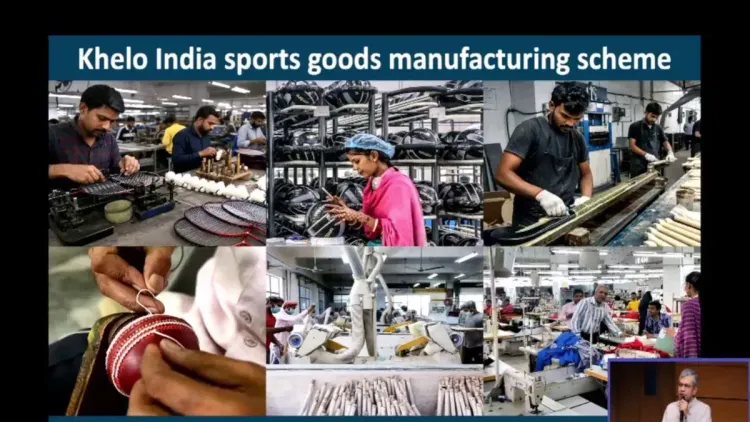
Bihar CM Samrat Choudhary has welcomed the Union Cabinet's approval of the ₹1,856.67 crore Khelo India Sports Goods Manufacturing Scheme, aimed at boosting domestic production, cutting import dependence, and making India globally competitive in sports equipment manufacturing.
Key Takeaways
The Union Cabinet, under PM Narendra Modi , approved the Khelo India Sports Goods Manufacturing Scheme with a financial outlay of ₹1,856.67 crore .
Bihar Chief Minister Samrat Choudhary endorsed the scheme as a pivotal step toward establishing India's identity in global sports manufacturing.
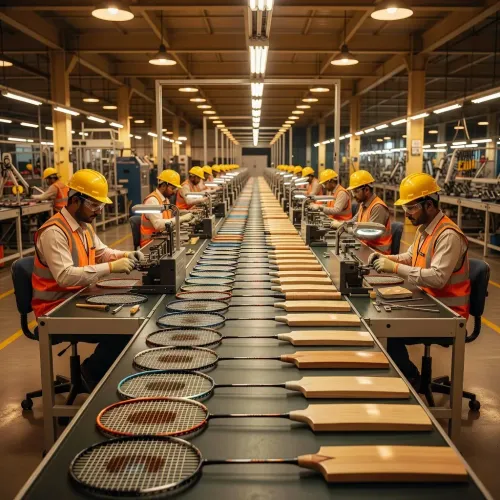
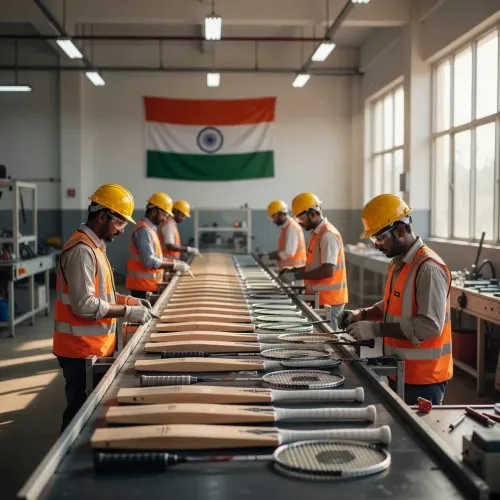
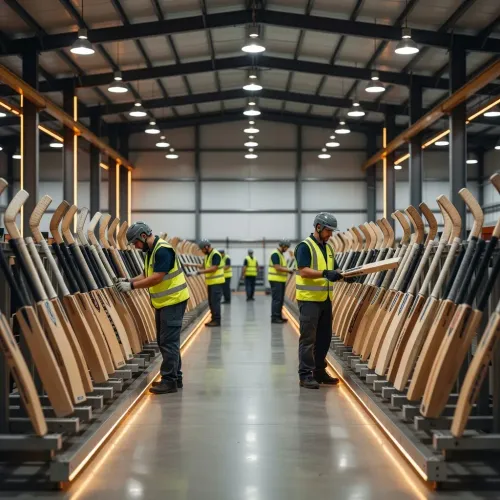
The scheme aims to incentivise domestic production of sports equipment through modern technology, innovation, and industrial development support.
It extends the Khelo India programme (launched 2017 ) into the manufacturing supply chain, building on the Make in India framework from 2014 .
MSMEs in traditional sports goods clusters are expected to be among the primary beneficiaries.
The Ministry of Youth Affairs and Sports is expected to release operational guidelines and fund utilisation details in the next parliamentary session.
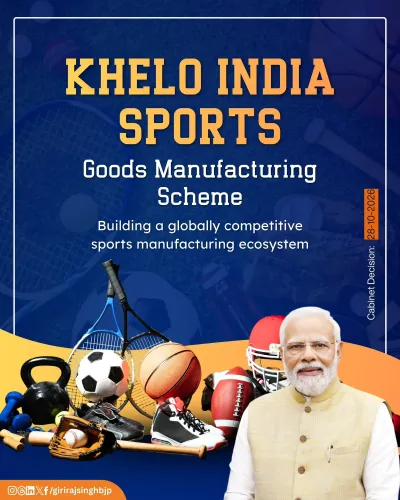
India's ambition to become a global sports manufacturing hub just got a serious budget line behind it. Bihar Chief Minister Samrat Choudhary on Wednesday, 28 October 2026, welcomed the Union Cabinet's approval of the 'Khelo India Sports Goods Manufacturing Scheme' — a ₹1,856.67 crore initiative aimed at reshaping where the world's sports equipment comes from.
Posting on X in Hindi, CM Choudhary described the decision as 'vैश्विक खेल विनिर्माण के क्षेत्र में भारत को नई पहचान दिलाने की दिशा में एक महत्वपूर्ण पहल' — 'an important initiative to give India a new identity in global sports manufacturing.' The scheme, approved under Prime Minister Narendra Modi's leadership, is designed to push domestic production of sports equipment, harness modern technology and innovation, and make Indian manufacturers price- and quality-competitive on the world stage.
What the ₹1,856.67 crore scheme sets out to do
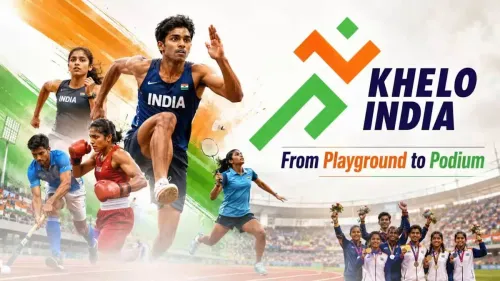
The scheme is an extension of the broader Khelo India programme — launched in 2017 to rebuild grassroots sports infrastructure and talent pipelines across the country. Where earlier Khelo India interventions focused on arenas, academies and athlete scholarships, this new manufacturing arm turns the lens to the supply chain. The logic is blunt: India trains champions on imported gear, and that dependency costs both foreign exchange and industrial jobs.
The cabinet's move slots squarely into the Atmanirbhar Bharat framework, which has pushed sector after sector — from semiconductors to defence equipment — to build domestic capacity and cut import reliance. Sports goods, long dominated by clusters in Jalandhar and Meerut, now have a dedicated policy vehicle with a named financial outlay behind them. MSMEs in those clusters stand to be among the earliest and most direct beneficiaries.
Manufacturing meets the medal count
The timing carries its own logic. India's podium ambitions have grown sharply through successive Olympic and Commonwealth cycles, and elite performance increasingly demands precision equipment — custom track spikes, high-compression balls, aerodynamic cycles — that domestic factories have struggled to produce at international standard. A scheme that weds industrial incentives with technology upgrades could, over time, close that gap.
The Make in India initiative, launched in 2014, created the policy architecture; Khelo India provided the sports-specific branding. The new scheme is where those two strands finally converge with real rupees attached. What to watch next: the Ministry of Youth Affairs and Sports is expected to release scheme guidelines, manufacturing unit eligibility criteria, and fund utilisation frameworks in the coming parliamentary session.
India set itself a 'sporting superpower' target years ago. Today's cabinet decision is, at minimum, proof that the bill for getting there is now being written.
Point of View
The scheme serves a dual narrative: it reinforces PM Modi's governance-through-schemes brand while giving state leaders like CM Choudhary a concrete development win to amplify. The deeper policy test will be execution — whether scheme funds reach MSME clusters in Jalandhar and Meerut or stall in guideline-writing — and that question will only be answered when the Ministry releases its operational framework.
NationPress
28 Oct 2026
Frequently Asked Questions
What is the Khelo India Sports Goods Manufacturing Scheme?
It is a central government scheme approved by the Union Cabinet with a financial outlay of ₹1,856.67 crore, aimed at promoting domestic manufacturing of sports equipment in India through technology upgrades, innovation support, and industrial development incentives.
How much money has been allocated to the Khelo India Sports Goods Manufacturing Scheme?
The cabinet has approved a financial outlay of ₹1,856.67 crore for the scheme.
Who approved the Khelo India Sports Goods Manufacturing Scheme?
The Union Cabinet, led by Prime Minister Narendra Modi, approved the scheme.
How does the new scheme relate to the existing Khelo India programme?
The Khelo India programme was launched in 2017 to promote grassroots sports and infrastructure. The new manufacturing scheme extends that initiative into the supply chain, focusing on building domestic capacity to produce sports goods rather than importing them.
What did Bihar CM Samrat Choudhary say about the sports goods manufacturing scheme?
CM Samrat Choudhary described the cabinet approval as an important initiative to give India a new identity in global sports manufacturing, saying it will encourage domestic production and make India globally competitive through modern technology and innovation.