BJP slams Kerala RTI exemption for Vigilance Dept T Sections
Synopsis
Kerala's Satheesan government has exempted the Vigilance Department's T Sections — which handle corruption cases against the CM, ministers, and senior officials — from the RTI Act. BJP's K. Surendran says it is a cover-up move and notes the Kerala High Court had stayed an identical order in 2016. Both the UDF and LDF have now attempted this exemption, raising cross-party accountability questions.
Key Takeaways
BJP national secretary K.
Surendran on 23 October 2026 accused the V.D.
Satheesan government of exempting the Vigilance Department's T1 and T2 sections from the RTI Act .
The T Sections handle confidential corruption files related to the Chief Minister , ministers, political leaders, and senior officials.
Home Minister Ramesh Chennithala defended the move, citing the confidential nature of Vigilance investigations.
Surendran alleged the exemption could be linked to protecting the ongoing Vigilance probe against Pinarayi Vijayan , now Leader of the Opposition.
The Kerala High Court had stayed a similar RTI exemption order in 2016 ; analogous attempts were made by both the UDF in 2016 and the LDF in 2025 .
The Vigilance Director has been granted discretionary authority to classify files under T Sections, a power Surendran warns could be misused.
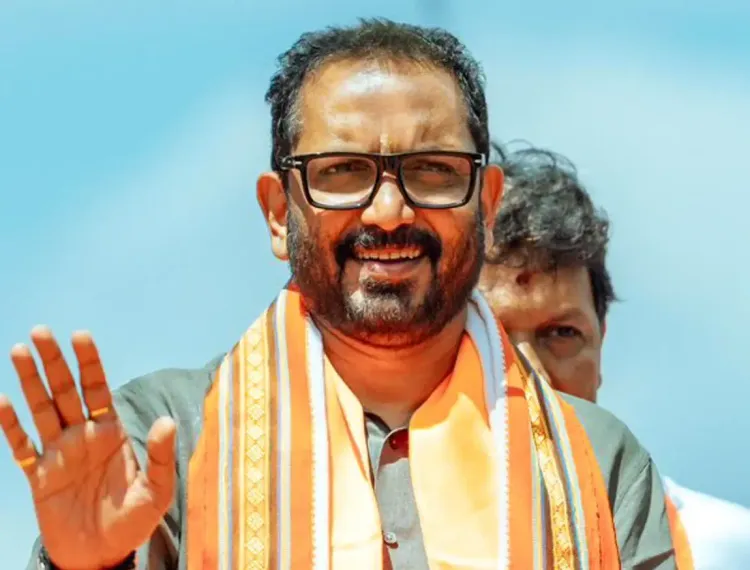
Bharatiya Janata Party (BJP) national secretary K. Surendran on Friday, 23 October accused the V.D. Satheesan-led United Democratic Front (UDF) government in Kerala of shielding politicians and officials facing corruption allegations by exempting the Vigilance Department's T Sections (T1 and T2) from the Right to Information (RTI) Act. The move, Surendran alleged, is designed to keep sensitive corruption-related files beyond public scrutiny.
What the T Sections Handle
The T Sections of the Kerala Vigilance Department manage confidential files connected to corruption cases involving the Chief Minister, cabinet ministers, political leaders, and senior government officials. By exempting these sections from the RTI Act, information requests relating to such cases would no longer be entertainable under the transparency law.
Surendran described the notification as 'undemocratic' and argued it amounted to an institutionalised mechanism to promote corruption by placing those in power beyond accountability.
Government's Defence
Responding to the criticism, Home Minister Ramesh Chennithala defended the exemption, stating that Vigilance investigations were confidential by nature and that maintaining that confidentiality was essential to the department's functioning and effectiveness.
Chennithala further argued that the previous government had brought the T Sections under the RTI Act despite those sections not legitimately falling within its purview, framing the current notification as a correction rather than a regression.
Political Targeting Alleged
Surendran questioned the timing of the decision, asking whether the exemption was intended to derail the ongoing Vigilance investigation against former Chief Minister and Communist Party of India (Marxist) (CPI(M)) leader Pinarayi Vijayan, who currently serves as Leader of the Opposition.
He also alleged that the government had reasons to protect certain ministers within the present UDF administration from scrutiny, and expressed concern over the Vigilance Director being granted full discretionary authority to decide which files are classified under the T Sections. Such unchecked power, he warned, could be misused to conceal cases that the political leadership wished to keep away from public view.
A Pattern Across Governments
Surendran pointed out that this is not the first time such an attempt has been made. In 2016, a similar move to exempt the T Sections from the RTI Act prompted the Kerala High Court to intervene and stay the government order. He noted that the Oommen Chandy-led UDF government made a comparable attempt in 2016, while the Pinarayi Vijayan-led Left Democratic Front (LDF) government followed suit in 2025.
'Both the UDF and the LDF have repeatedly shown they are alike when it comes to protecting those facing corruption allegations,' Surendran said, accusing both political fronts of a shared instinct to keep sensitive cases shielded from public accountability.
What Comes Next
The controversy is likely to intensify as opposition parties press for a rollback or judicial review of the notification. Given the Kerala High Court's prior intervention on an identical issue in 2016, legal challenges to the current exemption cannot be ruled out. Civil society groups and RTI activists are expected to scrutinise the order closely in the coming days.
Point of View
And the Kerala High Court struck a similar order down in 2016. That bipartisan instinct to shield Vigilance files from public access speaks to a structural problem in Kerala politics, not merely a partisan one. Granting the Vigilance Director unchecked discretion over file classification adds an administrative layer of opacity on top of an already opaque process. The government's defence — that these files never legitimately fell under the RTI Act — deserves judicial scrutiny, not just political debate.
NationPress
23 Oct 2026
Frequently Asked Questions
What are the T Sections of Kerala's Vigilance Department?
The T Sections (T1 and T2) are divisions within the Kerala Vigilance Department that handle confidential files relating to corruption cases against the Chief Minister, cabinet ministers, political leaders, and senior government officials. The recent government notification exempts these sections from the Right to Information (RTI) Act, meaning RTI requests for documents in these sections can now be denied.
Why is the BJP opposing Kerala's RTI exemption for the Vigilance Department?
BJP national secretary K. Surendran has called the exemption 'undemocratic,' arguing it shields those in power from accountability and could specifically undermine the Vigilance investigation against former Chief Minister Pinarayi Vijayan. He also warns that giving the Vigilance Director sole discretion over file classification creates scope for political misuse.
What did the Kerala High Court do when a similar exemption was attempted before?
In 2016, when the Oommen Chandy-led UDF government attempted a comparable exemption of the T Sections from the RTI Act, the Kerala High Court intervened and stayed the government order. That precedent makes the current notification potentially vulnerable to fresh legal challenge.
How has the Kerala government defended the RTI exemption?
Home Minister Ramesh Chennithala defended the notification by arguing that Vigilance investigations are inherently confidential, and that confidentiality is essential to the department's effective functioning. He also claimed the previous government had incorrectly brought the T Sections under the RTI Act in the first place.
Have both UDF and LDF governments attempted this exemption?
Yes. According to BJP leader K. Surendran, the Oommen Chandy-led UDF government attempted a similar exemption in 2016, and the Pinarayi Vijayan-led LDF government made a comparable move in 2025. Surendran argues this pattern shows both political fronts share an interest in keeping Vigilance files out of public scrutiny.