Kerala minister C.P. John defends Priyadarshini scheme remarks amid opposition row

Synopsis
Kerala Transport Minister C.P. John is refusing to back down over remarks on the Priyadarshini free bus travel scheme — insisting he was highlighting women's poverty, not mocking it. The row has reignited debate over welfare optics in a state that prides itself on social development, and put a spotlight on one of Kerala's most outspoken politicians.
Key Takeaways
State Transport Minister C.P.
John on 4 August stood by his remarks on the Priyadarshini free bus travel scheme for women in Kerala.
John said he was highlighting the poverty of women who cannot afford travel, and that his comments were taken out of context.
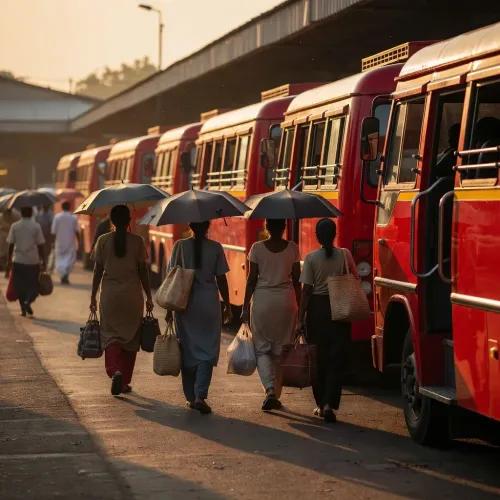
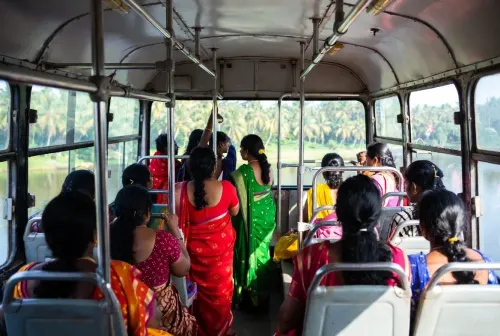
The controversy began after he remarked that women were crowding onto loss-making KSRTC buses because travel was free under the scheme.
Opposition parties and social media critics accused him of insensitivity; supporters said he was flagging genuine economic distress.
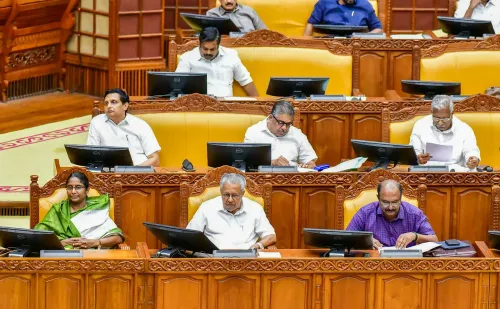
John entered the Kerala Legislative Assembly this year after two previous defeats, winning from a prestigious constituency in Thiruvananthapuram .
He has a decades-long political career spanning the CPI(M) , the Communist Marxist Party (CMP) , and the UDF .
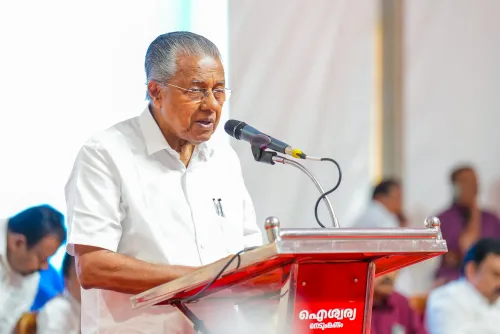
Kerala's State Transport Minister C.P. John on Tuesday, 4 August refused to retract his controversial remarks on the Priyadarshini free bus travel scheme for women, asserting that he was drawing attention to the depth of poverty among women in the state — not undermining the welfare programme itself. The remarks, made at a Kerala Bus Transport Association State conference in Thiruvananthapuram, have triggered a sharp political row.
What the Minister Said
'There are women who do not have the financial means even to travel. The tragedy is that the political leadership, including myself, failed to understand their poverty. That was the point I was making,' John said, insisting his words had been taken out of context.
He maintained he had never suggested that people in Kerala were merely pretending to be poor, and argued that critics should have sought a clarification before amplifying the controversy. 'I stand by my remarks,' he said, doubling down on his position.
What Sparked the Controversy
The row erupted after John, while addressing the transport association's State conference, observed that women were crowding onto loss-making KSRTC buses because travel had become free under the Priyadarshini scheme. He also noted that many families availing free public transport continued to spend heavily on private schooling and preferred government hospitals over private healthcare — remarks critics read as questioning the choices of ordinary households.
Opposition parties and social media commentators accused the minister of insensitivity towards women and of making sweeping generalisations about families navigating economic hardship. Supporters, however, argued he was spotlighting persistent economic distress that exists even amid Kerala's otherwise strong social indicators.
The Political Background
The controversy has also cast fresh light on C.P. John's long and winding political career. In his student years, he was a prominent Students' Federation of India (SFI) leader and a leading face of the Communist Party of India (Marxist) (CPI(M)).
In 1986, he walked out of the party alongside his political mentor M.V. Raghavan — then one of the CPI(M)'s most influential figures — following ideological differences. When Raghavan launched the Communist Marxist Party (CMP) and aligned it with the Congress-led United Democratic Front (UDF), John remained his closest political associate and emerged as one of the party's principal organisers.
Electoral success eluded him for years, with two Assembly election defeats on record. He finally entered the Kerala Legislative Assembly this year, winning from one of the state capital's most competitive constituencies and earning a cabinet berth in the V.D. Satheesan ministry.
What This Signals
This is not the first time John's frank speaking style has placed him at the centre of a political storm. Notably, his willingness to speak bluntly — a trait that has defined his journey from Left student activism to a senior UDF cabinet post — appears unchanged. Whether the current controversy subsides or intensifies, it has brought renewed scrutiny to the Priyadarshini scheme's political optics and the UDF government's communication on welfare policy. The opposition is unlikely to let the issue rest easily.
Point of View
Not mocking it — is plausible, but the framing at a transport industry conference was always going to land badly. More telling is that the UDF government, which runs the Priyadarshini scheme, now finds itself defending a minister whose comments appear to question the very constituency the scheme was built to serve. In a state where welfare optics matter enormously, the political cost of such candour is rarely zero.
NationPress
18 Sept 2026
Frequently Asked Questions
What is the Priyadarshini free bus travel scheme in Kerala?
The Priyadarshini scheme is a Kerala government initiative that provides free bus travel for women on KSRTC and other state-run buses. It is a flagship welfare measure aimed at easing the commuting burden on women across the state.
What did Kerala Transport Minister C.P. John say that sparked the controversy?
John remarked at a Kerala Bus Transport Association conference that women were crowding onto loss-making KSRTC buses because travel had become free under the Priyadarshini scheme. He also observed that many families using free public transport continued to spend on private schooling and preferred government hospitals, which critics read as insensitive.
Why is C.P. John defending his remarks?
John says he was drawing attention to the poverty of women who lack even the means to pay for travel, and that his words were taken out of context. He has insisted he was not questioning the Priyadarshini scheme itself and that critics should have sought clarification before fuelling the row.
Who has criticised C.P. John over his remarks?
Opposition parties and social media commentators have accused John of insensitivity towards women and of making sweeping generalisations about ordinary families. Supporters, however, contend he was highlighting real economic distress that persists despite Kerala's strong social indicators.
What is C.P. John's political background?
C.P. John began his political career as an SFI leader and CPI(M) member, walking out of the party in 1986 with mentor M.V. Raghavan over ideological differences. He has since been a senior figure in the UDF, and entered the Kerala Legislative Assembly for the first time this year after two previous electoral defeats.