Ro Khanna: India can't dodge global responsibility as world power
Synopsis
At the Capitol Hill Summit 2026, US Congressman Ro Khanna issued a pointed challenge to India: you cannot claim world-power status while avoiding the obligations that come with it. His call for India to leverage its Russia ties to help end the Ukraine war — and his naming of Peter Navarro as an anti-Indian voice inside the Trump administration — gave the summit remarks unusual diplomatic bite.
Key Takeaways
US Congressman Ro Khanna urged India to embrace global leadership responsibilities at the Capitol Hill Summit 2026 on 19 May 2026 .
Khanna argued India should leverage its Russia ties to play a constructive diplomatic role in ending the Ukraine war .
He maintained that US-India strategic interests remain fundamentally unchanged despite trade tensions under the Trump administration .
Khanna named Peter Navarro as among those inside the Trump administration he described as ‘very anti-Indian.’ He called for the US-India partnership to be grounded in shared democratic values rather than nationalist convenience.
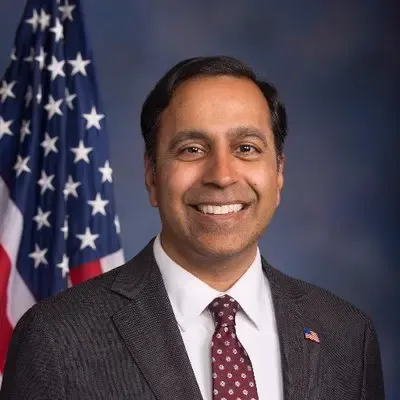
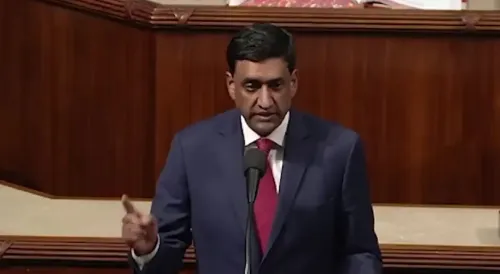
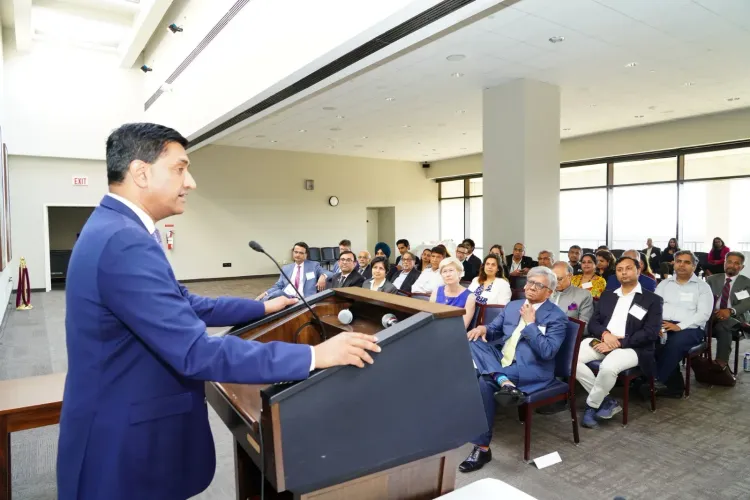
US Congressman Ro Khanna on 19 May 2026 called on India to embrace the full weight of global leadership, arguing that a nation seeking world-power status cannot selectively opt out of international responsibilities. Speaking at the Capitol Hill Summit 2026 organised by the US-India Friendship Council in Washington, Khanna framed the challenge in direct terms: economic and strategic ascent must come with diplomatic accountability.
The Core Challenge Khanna Laid Out
“India has to decide who it wants to be as it enters this place of world leadership,” Khanna said during a panel discussion on defence, technology and energy cooperation. “You can’t say you want to be a world leader, but then shrink away from responsibility.”
Khanna pointed to India’s status as the world’s fastest-growing major economy as precisely the reason New Delhi faces heightened expectations on the global stage. He suggested that the 21st-century geopolitical order demands clearer positions from India on international crises — a departure from the non-aligned posture that historically defined Indian foreign policy.
India’s Role in the Ukraine Conflict
The congressman specifically highlighted the Russia-Ukraine war as an arena where India’s unique diplomatic positioning could be constructive. India’s longstanding ties with Moscow, he argued, give New Delhi a channel that few other democracies possess.
“I’ve been very vocal in India as well as here that India can play a very constructive role in helping bring the war in Ukraine to an end,” Khanna said. “It has lines of communications with Russia.”
This comes amid sustained international pressure on India to take a firmer stance on the conflict, a call New Delhi has largely deflected by emphasising dialogue and abstaining from key UN votes on the war.
US-India Strategic Ties: Durable Despite Trade Friction
Despite recent turbulence over tariffs and trade policy under President Donald Trump’s administration, Khanna maintained that the foundational logic of the bilateral relationship remained intact. “Nothing fundamentally has changed about our long-term strategic interest,” he said.
He noted that both Democrats and Republicans in Congress continue to back deeper engagement with India, particularly on defence, technology, and Indo-Pacific security cooperation. Notably, Khanna also criticised what he described as anti-Indian voices within sections of the Trump administration, naming Peter Navarro as an example. “I do think there’s folks like Peter Navarro and others inside the administration that are very anti-Indian,” he said.
A Values-Based Partnership, Not Mere Convenience
Earlier in the summit, Khanna delivered a broader philosophical case for the US-India relationship, warning against alliances rooted purely in nationalism or transactional convenience. “It is what are the values that will undergird the US-India relationship,” he said. “Are we going to form an alliance of convenience based on nationalism?”
He called on both nations — as multiracial democracies — to champion pluralism, democratic governance, and multilateral cooperation. “We must, as the United States, build a multiracial democracy and work with India as a multiracial democracy,” he said.
Khanna’s Personal Reflection and Background
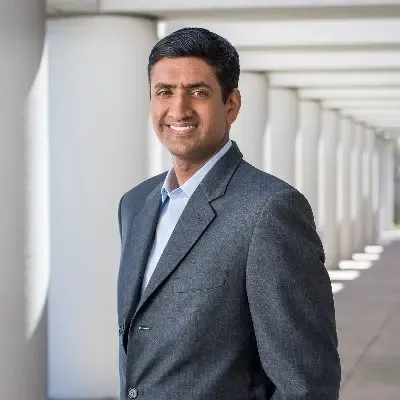
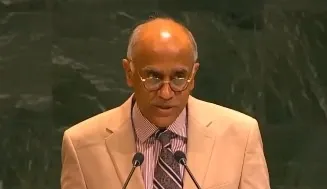
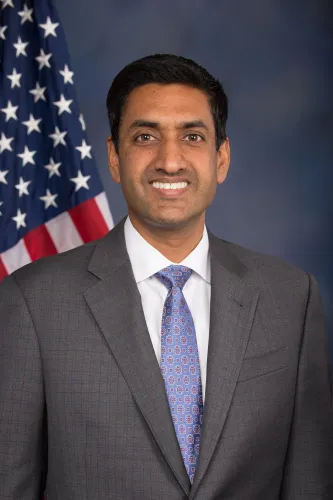
The congressman also drew on his own journey as an Indian American of Hindu faith, recalling early scepticism about his electability. He credited US-India Friendship Council chairman Swadesh Chatterjee as one of the few early voices of encouragement. Khanna represents California’s 17th Congressional District — the heart of Silicon Valley — and has become one of the most prominent Indian American lawmakers on technology, democracy and foreign policy.
As India’s global profile continues to rise, the pressure from allied legislatures for New Delhi to move beyond strategic ambiguity is likely to intensify in the months ahead.
Point of View
Not a liability — is a more nuanced position than the standard Western line, and one New Delhi may find easier to engage with. What mainstream coverage underplays is the domestic political subtext: Khanna is signalling to Indian American constituencies that he remains a credible bridge, even as the Trump administration’s trade posture strains the relationship. The naming of Navarro is the sharpest edge of the speech — a rare instance of a sitting congressman publicly identifying a White House official as hostile to a key partner nation.
NationPress
3 Oct 2026
Frequently Asked Questions
What did Congressman Ro Khanna say about India at the Capitol Hill Summit 2026?
Khanna argued that India cannot pursue world-power status while avoiding the responsibilities that come with it, urging New Delhi to take clearer positions on global crises. He specifically called on India to use its ties with Russia to help bring the Ukraine war to an end.
Why does Khanna believe India can help resolve the Ukraine conflict?
Khanna argued that India’s longstanding diplomatic and economic ties with Russia give it a channel of communication that most Western democracies lack. He said India could play a ‘very constructive role’ in peace efforts precisely because of those lines of communication.
What did Khanna say about US-India relations under the Trump administration?
Despite recent tariff and trade tensions, Khanna said nothing fundamental had changed about the long-term US-India strategic interest. He added that both Democrats and Republicans in Congress remain strongly supportive of closer defence, technology and Indo-Pacific cooperation with India.
Who did Khanna criticise inside the Trump administration?
Khanna named Peter Navarro as among those he described as ‘very anti-Indian’ within sections of the Trump administration, though he maintained that bipartisan congressional support for India remained strong.
What is the US-India Friendship Council and what was the Capitol Hill Summit 2026?
The US-India Friendship Council is a bilateral advocacy organisation chaired by Swadesh Chatterjee. The Capitol Hill Summit 2026 was a conference held in Washington focused on defence, technology and energy cooperation between the United States and India.