Why Does Kritika Kamra Feel 'The Great Shamsuddin Family' Is Like Coming Home?

Synopsis
Actress Kritika Kamra opens up about her profound connection to Delhi while filming 'The Great Shamsuddin Family.' This personal relationship with the city allowed her to authentically portray her character in a narrative rich with humor and warmth. Discover how her roots influenced her performance in this heartwarming story.
Key Takeaways
Kritika Kamra's connection to Delhi enriches her performance.
The film celebrates middle-class family dynamics.
Authentic storytelling resonates with audiences.
Collaboration with talented women enhances the narrative.
Set in a single day, the film captures vibrant city life.
Mumbai, Dec 12 (NationPress) Actress Kritika Kamra, who has spent a significant portion of her life in Delhi, attributes her profound bond with the city to her ability to fully embody her role in the upcoming film 'The Great Shamsuddin Family'.
Filmed entirely in Delhi, this Anusha Rizvi-directed slice-of-life drama captures the city’s everyday humor, warmth, and chaos—elements that Kritika feels resonate with her due to her background.
Reflecting on her experience, Kritika shared with IANS: “This film felt like coming home in so many ways. Delhi is where I grew up, and that sense of familiarity—the language, the tone, the humor, even the way people interact—it's all deeply embedded in me.”
“Portraying a character from a typical Delhi middle-class family didn’t seem like acting; it felt like a lived experience. Every location we filmed at held a memory, and every street resonated with something from my own life. That’s what made this journey so enjoyable and genuine.”
She emphasized that filming in Delhi was especially meaningful for her.
“The vibrancy of the city, the cuisine, the people—everything enriched the experience. I felt at ease on set due to the authentic and relatable atmosphere.”
Kritika remarked: “Anusha Rizvi has crafted a world that feels incredibly real and inviting, and collaborating with such a wonderful ensemble of women made the process even more unforgettable. There was an immediate connection with the story and the city that nurtured me.”
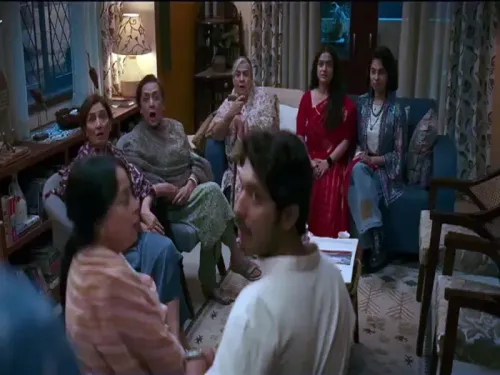
The film encapsulates the spirit of a middle-class Delhi household, featuring notable performances from Juhi Babbar, veteran actress Farida Jalal, and Shreya Dhanwanthary.
Set across a single day in Delhi, the plot follows Bani as her mothers, aunts, cousins, and past love interests converge on her apartment, each bringing their own crises.
As the lead navigates interfaith intricacies, generational conflicts, and familial expectations, she must choose between chasing international career aspirations or staying with her family.
Point of View
It's essential to highlight the cultural significance of Kritika Kamra's reflections on her roots in Delhi. Her experiences not only enrich her portrayal in 'The Great Shamsuddin Family' but also resonate with a broader audience, emphasizing the importance of personal connections in the storytelling process.
NationPress
21 Sept 2026
Frequently Asked Questions
What is 'The Great Shamsuddin Family' about?
The film is a slice-of-life drama set in Delhi, following Bani as she navigates familial complexities and personal aspirations within a day.
Who directed the film?
The film is directed by Anusha Rizvi, known for her engaging storytelling.
What themes does the film explore?
It explores themes of family dynamics, generational conflicts, and the balance between personal ambitions and family expectations.
Which actresses star alongside Kritika Kamra?
The film features performances from Juhi Babbar, Farida Jalal, and Shreya Dhanwanthary.
Why did Kritika Kamra find filming in Delhi special?
Kritika found it special due to her deep connection with the city, which helped her bring authenticity to her character.