Ashok Lahiri Named NITI Aayog Vice-Chairman; Gobardhan Das Joins as Member
Synopsis
Economist Ashok Kumar Lahiri, former Chief Economic Adviser and BJP MLA from Balurghat, is set to become NITI Aayog's next Vice-Chairman, while tuberculosis researcher Gobardhan Das joins as Member — a historic double appointment that puts Bengal at the centre of India's national policy architecture.
Key Takeaways
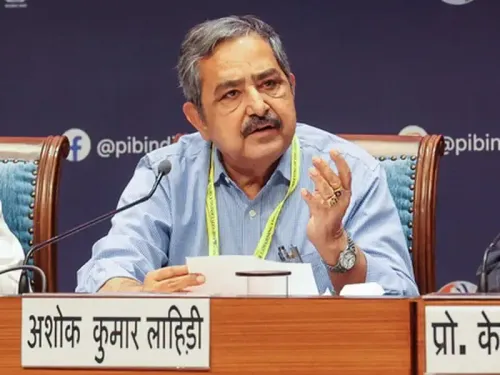
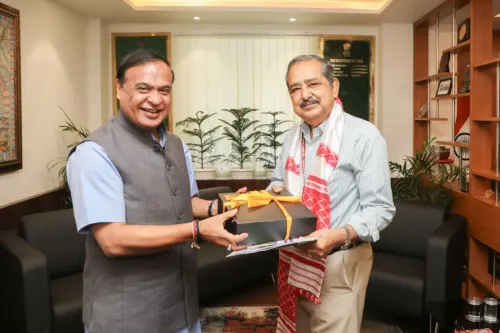
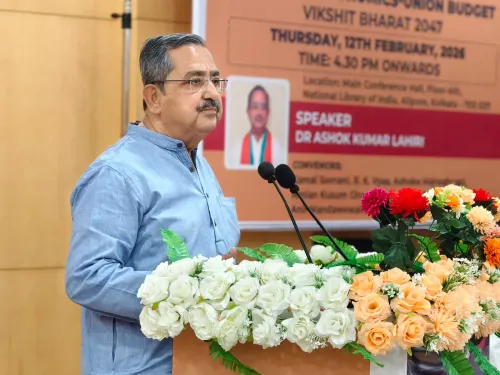
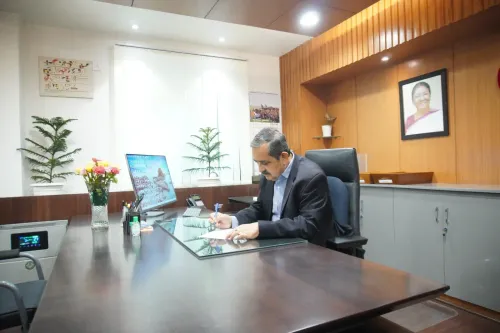
Ashok Kumar Lahiri , former 12th Chief Economic Adviser of India and sitting BJP MLA from Balurghat , is set to become the next Vice-Chairman of NITI Aayog .
Lahiri will succeed Suman Bery , who has served as NITI Aayog Vice-Chairman since May 2022 .
Renowned immunologist Gobardhan Das , Director of IISER Bhopal and former JNU faculty member , is set to join NITI Aayog as a Member .
Gobardhan Das is internationally recognised for his research on tuberculosis pathogenesis and has worked at Yale University and Houston Methodist Hospital .
Both appointees are Bengalis , marking a significant representation of West Bengal in India's top policy body amid ongoing state elections.
Formal announcements are pending; the appointments align with India's Viksit Bharat 2047 policy agenda.
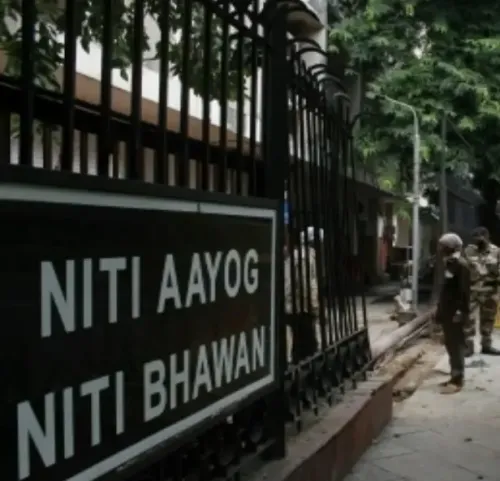
New Delhi/Kolkata, April 25: In a major policy reshuffle, veteran economist and outgoing West Bengal BJP MLA Ashok Kumar Lahiri has been selected as the next Vice-Chairman of NITI Aayog, according to sources familiar with the development. Simultaneously, renowned immunologist and academic Gobardhan Das is set to join the premier policy think tank as a Member. The appointments, once formally announced, will mark a significant Bengal imprint on India's highest policy-making institution.
Lahiri to Succeed Suman Bery as NITI Aayog's Effective Head
As the Chairpersonship of NITI Aayog is constitutionally vested in the Prime Minister, the Vice-Chairman functions as the institution's operational and administrative head. Lahiri will succeed Suman Bery, who has held the position since May 2022.
Ashok Kumar Lahiri brings over four decades of distinguished experience in economics and public policy. He served as the 12th Chief Economic Adviser to the Government of India — one of the most consequential roles in India's economic policymaking architecture.
His career spans premier institutions including the Delhi School of Economics, the Asian Development Bank, Bandhan Bank, and the National Institute of Public Finance and Policy (NIPFP). He has also worked with global bodies such as the World Bank and the International Monetary Fund (IMF), lending him rare international credibility.
An alumnus of the storied Presidency University, Kolkata, Lahiri currently represents the Balurghat constituency in the West Bengal Legislative Assembly but is not contesting the ongoing state elections, signalling his transition to the national policy domain.
Gobardhan Das: A Scientist of Global Standing Joins Policy Mainstream
Gobardhan Das, a molecular scientist and immunologist with nearly three decades of research experience, is set to join NITI Aayog as a Member. He is internationally recognised for his pioneering research on the pathogenesis of tuberculosis — a disease that continues to claim over 2 lakh lives annually in India, making his inclusion particularly significant from a public health policy standpoint.
Das has led research at globally acclaimed institutions including Yale University, Houston Methodist Hospital in the United States, the University of KwaZulu-Natal, and the National Research Foundation in South Africa. His return to India reflects a broader push to integrate globally experienced scientists into domestic policy and institution-building.
He currently serves as Director of the Indian Institute of Science Education and Research (IISER), Bhopal, and has previously been a faculty member at Jawaharlal Nehru University (JNU). Das had contested the 2021 West Bengal Assembly elections from Purbasthali Uttar on a BJP ticket, though he was unsuccessful in that bid.
An alumnus of Visva-Bharati University — the institution founded by Rabindranath Tagore — Das's academic journey from Santiniketan to global research labs and now to India's apex policy body is a remarkable arc.
Strategic Significance: Bengal in India's Policy Cockpit
The simultaneous elevation of two Bengalis to NITI Aayog is not merely symbolic. It comes at a time when West Bengal is in the middle of a politically charged election cycle, with the BJP seeking to consolidate its narrative of national recognition for the state's intellectual and academic heritage.
This comes amid the BJP's ongoing struggle to counter the Trinamool Congress's dominance in Bengal. By positioning two high-profile Bengali intellectuals at the heart of national policymaking, the party signals that it can offer Bengal's talent a platform far beyond the state's borders — a counter-narrative to TMC's regional identity politics.
Notably, NITI Aayog — which replaced the Planning Commission in January 2015 — has faced criticism from opposition-ruled states for allegedly favouring certain regions in policy design and resource allocation. The inclusion of Bengal-origin experts could be read as an attempt to address such perceptions, at least optics-wise.
What This Means for India's Policy Direction
Lahiri's appointment as Vice-Chairman is expected to bring a macroeconomic and fiscal discipline lens to NITI Aayog's agenda. His experience with multilateral development banks and his tenure as Chief Economic Adviser suggest a policy orientation aligned with structural reforms, fiscal consolidation, and investment-led growth.
Das's presence, on the other hand, could accelerate NITI Aayog's work on health innovation, biomedical research, and science education policy — areas that have gained urgency post the COVID-19 pandemic and amid India's ambitions to become a global bioeconomy hub.
Together, the duo represents a blend of economic rigour and scientific expertise that could reshape the think tank's advisory outputs on everything from Union Budget recommendations to national health missions.
Formal Announcement Awaited; Appointments Expected Soon
While formal notifications are yet to be issued, sources indicate the appointments are imminent. Once confirmed, Lahiri and Das will join an institution that advises the Union Cabinet on long-term strategy, monitors state-level development indicators, and coordinates India's Sustainable Development Goals (SDG) framework.
The broader implication: as India accelerates toward its Viksit Bharat 2047 vision, the composition of NITI Aayog's leadership will significantly influence which policy levers are pulled — and who benefits from them. All eyes are now on the formal gazette notification.
Point of View
The substance matters: Lahiri's macroeconomic depth and Das's globally validated scientific credentials could genuinely elevate NITI Aayog's advisory quality at a time when India needs serious policy architecture for its 2047 ambitions. The real test, however, will be whether NITI Aayog — long criticised as a body with influence but no teeth — can translate this intellectual capital into binding policy change. Symbolism without structural power is just another photo opportunity.
NationPress
21 Oct 2026
Frequently Asked Questions
Who is the new Vice-Chairman of NITI Aayog?
Ashok Kumar Lahiri , a veteran economist and outgoing BJP MLA from Balurghat, West Bengal , has been selected as the next Vice-Chairman of NITI Aayog . He will succeed Suman Bery , who has held the position since May 2022.
Who is Gobardhan Das and why is he joining NITI Aayog?
Gobardhan Das is a molecular biologist and immunologist known for his research on tuberculosis , currently serving as Director of IISER Bhopal . He is set to join NITI Aayog as a Member , bringing scientific and biomedical expertise to India's apex policy body.
What is the role of NITI Aayog's Vice-Chairman?
The Vice-Chairman of NITI Aayog functions as the institution's effective operational head, since the Prime Minister holds the Chairpersonship by default. The Vice-Chairman oversees policy research, state engagement, and long-term development strategy.
What is Ashok Lahiri's background and experience?
Ashok Kumar Lahiri served as India's 12th Chief Economic Adviser and has held senior roles at the Delhi School of Economics, Asian Development Bank, World Bank, IMF , and Bandhan Bank . He is an alumnus of Presidency University, Kolkata with over four decades of economic expertise.
Why is the appointment of Lahiri and Das politically significant?
The dual appointment of two Bengali intellectuals to NITI Aayog comes during West Bengal elections , allowing the BJP to project national recognition of Bengal's talent as a counter-narrative to Trinamool Congress's regional dominance. It signals the party's intent to leverage policy appointments for political messaging in the state.