Viksit Bharat 2047: NITI Aayog's Lahiri flags education, healthcare, infra, entrepreneurship as four pillars
Synopsis
NITI Aayog Vice Chairman Ashok Kumar Lahiri used the Pathway to Viksit Bharat event to crystallise the four pillars of India's 2047 developed-nation vision: education, healthcare, infrastructure, and entrepreneurship. His sharpest message — India needs job creators, not just job seekers — and his citation of Jamsetji Tata and Lala Shri Ram as benchmarks signal an ideological pivot toward enterprise-led growth at the heart of state planning.
Key Takeaways
NITI Aayog Vice Chairman Ashok Kumar Lahiri on 16 October 2026 named education, healthcare, infrastructure, and entrepreneurship as the four pillars of Viksit Bharat 2047.
Lahiri called for more job creators , saying India cannot rely solely on job-seekers to solve its employment challenge.
He cited Jamsetji Tata and Lala Shri Ram as historical models of transformative entrepreneurship.
India's startup ecosystem was flagged as a bright spot, with multiple companies reaching unicorn status and strong growth in IT and AI sectors.
Lahiri linked productivity growth to the effective combination of human capital, physical capital, and entrepreneurship.
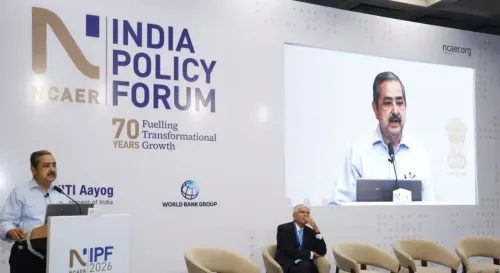
The remarks were made on the sidelines of the Pathway to Viksit Bharat event in New Delhi .
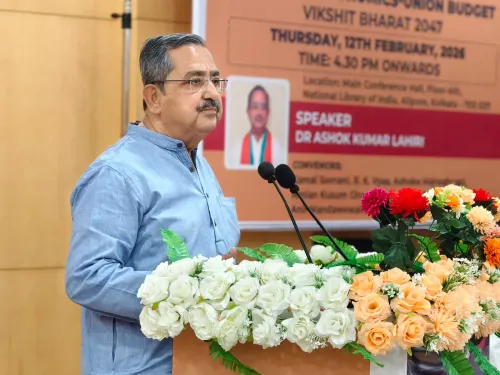
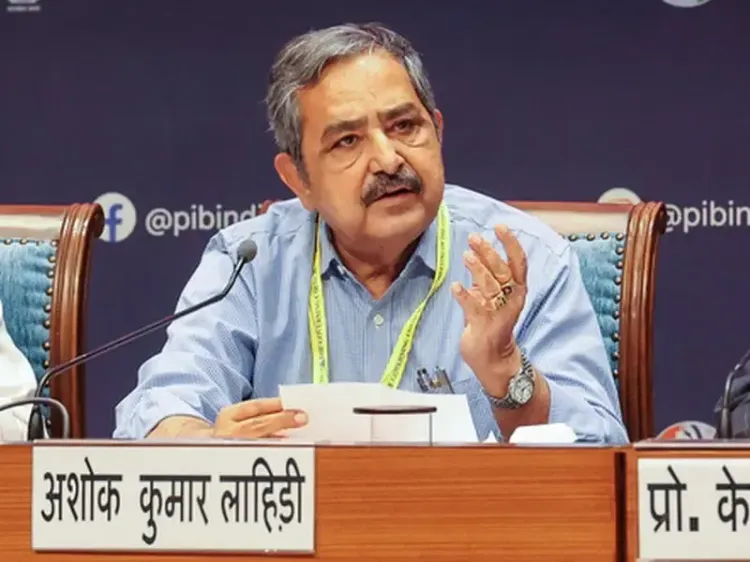
NITI Aayog Vice Chairman Ashok Kumar Lahiri on Friday, 16 October 2026, identified education, healthcare, infrastructure, and entrepreneurship as the four foundational pillars necessary to realise the vision of Viksit Bharat 2047. Speaking on the sidelines of the Pathway to Viksit Bharat event in New Delhi, Lahiri stressed that building a developed India by the centenary of independence demands progress on all four fronts simultaneously.
Entrepreneurship at the Core of Job Creation
Lahiri placed special emphasis on entrepreneurship, arguing that India's employment challenge cannot be solved by job-seekers alone. 'Entrepreneurship is very important. If everyone is looking for a job, we also need people who can create jobs for others,' he said. He directly urged students present at the event to consider entrepreneurship as a primary career path, stating: 'I encourage these young students to become entrepreneurs themselves.'
Lahiri expressed confidence in India's startup ecosystem, noting that it was growing rapidly, with several startups already achieving unicorn status. He also highlighted the strong performance of Indian companies in the information technology (IT) and artificial intelligence (AI) sectors as evidence of what domestic entrepreneurship can deliver at scale.
Historical Icons Cited as Entrepreneurial Benchmarks
To illustrate the transformative power of entrepreneurship, Lahiri invoked two towering figures from India's industrial history — Lala Shri Ram and Jamsetji Tata — as pioneers who demonstrated what visionary business-building could achieve for a nation. The reference underscored his broader point that job creation and productivity improvement are inseparable goals.
'There are so many of these pioneers who showed what entrepreneurship can be. So job creation and productivity, very important. Now productivity is basically, you have to combine human capital with physical capital and entrepreneurship,' he noted.
Infrastructure: The Non-Negotiable Enabler
On infrastructure, Lahiri was categorical: without it, even agricultural productivity cannot translate into economic gains. 'If you cannot go from your village with your fruits to the city or you can't commute to the towns, then you can't develop. So you need this,' he said. The remark reflects a recurring theme in India's development discourse — that last-mile connectivity remains a persistent bottleneck for rural economic participation.
Productivity Linked to Human and Physical Capital
Lahiri also addressed the mechanics of productivity growth, arguing that it depends on how effectively human capital, physical capital, and entrepreneurship are combined. This framing connects education and healthcare — which build human capital — with infrastructure and enterprise creation, presenting the four pillars not as independent priorities but as an interlocking system. This comes amid the government's broader push to position India as a developed economy by 2047, a goal that requires sustained 8–9% annual GDP growth over the next two decades, according to multiple policy assessments.
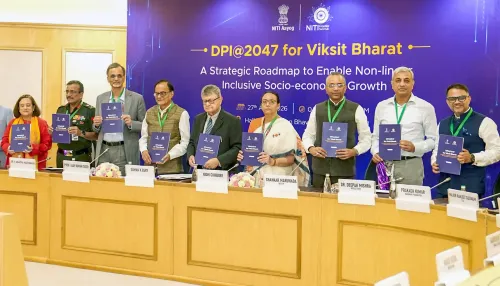
The Pathway to Viksit Bharat event signals an intensifying policy conversation around what structural reforms and investments will be needed to close the gap between India's current development trajectory and its 2047 ambitions.
Point of View
But the hard question is sequencing and accountability — India has articulated versions of this vision before without a credible measurement architecture to track progress. The entrepreneurship push is particularly notable coming from a planning body, signalling a deliberate ideological shift away from government-as-employer toward ecosystem-as-employer. Yet unicorn counts and IT exports, while impressive, remain concentrated in urban clusters; the village-to-city infrastructure gap Lahiri himself flagged is precisely what has kept rural entrepreneurship subscale. The 2047 deadline creates political urgency, but without sectoral targets, timelines, and independent auditing, the Viksit Bharat framing risks becoming aspirational branding rather than operational strategy.
NationPress
16 Oct 2026
Frequently Asked Questions
What are the four pillars of Viksit Bharat 2047 according to NITI Aayog?
NITI Aayog Vice Chairman Ashok Kumar Lahiri identified education, healthcare, infrastructure, and entrepreneurship as the four pillars essential to achieving the Viksit Bharat 2047 vision. He made the remarks at the Pathway to Viksit Bharat event in New Delhi on 16 October 2026.
Why did Lahiri emphasise entrepreneurship for India's development?
Lahiri argued that India's employment challenge requires people who create jobs, not just those who seek them. He urged students to consider entrepreneurship as a career and pointed to the growth of unicorn startups and India's IT and AI sectors as proof of the ecosystem's potential.
Who did Lahiri cite as examples of entrepreneurial success in India?
He cited Lala Shri Ram and Jamsetji Tata as historical pioneers who demonstrated the transformative power of entrepreneurship. The references were used to inspire students and illustrate how enterprise-driven thinking can reshape economies.
What did Lahiri say about infrastructure's role in development?
Lahiri described infrastructure as a non-negotiable enabler, noting that without it, farmers and producers cannot transport goods from villages to cities, stalling economic progress. He called it fundamental to a country's overall development.
What is the Viksit Bharat 2047 vision?
Viksit Bharat 2047 is India's national goal to become a fully developed economy by 2047, the centenary of its independence. It requires sustained high GDP growth and structural improvements across education, health, infrastructure, and enterprise creation, according to government and NITI Aayog assessments.