Ashok Lahiri to Lead NITI Aayog as Vice-Chairman; Bengal Gets Double Representation
Synopsis
Economist Ashok Lahiri, former Chief Economic Adviser and BJP MLA, is set to become NITI Aayog's next Vice-Chairman, while immunologist Govardhan Das joins as member — giving Bengal an unprecedented dual presence at the heart of India's national policymaking apparatus.
Key Takeaways
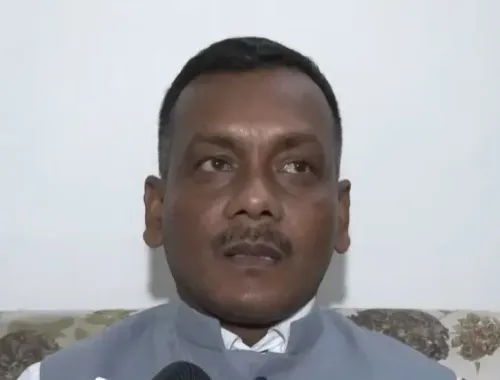
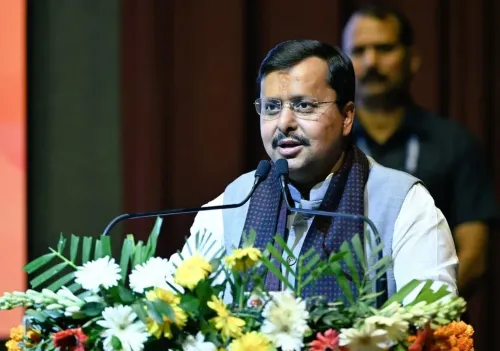
Ashok Kumar Lahiri , BJP MLA from Balurghat and former Chief Economic Adviser of India , is set to become the next Vice-Chairman of NITI Aayog .
Lahiri will succeed Suman Bery , who has served as Vice-Chairman since May 2022 .
Immunologist Govardhan Das , Director of IISER Bhopal and alumnus of Visva-Bharati University , is set to join NITI Aayog as a full member .
Both appointees have strong Bengal roots , marking an unprecedented dual Bengali representation in NITI Aayog's leadership.
Lahiri's career spans over four decades with stints at the World Bank , IMF , Asian Development Bank , and Delhi School of Economics .
Das is globally recognised for research on tuberculosis pathogenesis , with tenures at Yale University and Houston Methodist Hospital .
Kolkata, April 25 — Ashok Kumar Lahiri, a distinguished economist and outgoing West Bengal BJP MLA, is set to be appointed as the next Vice-Chairman of NITI Aayog, according to sources familiar with the development. Once formalised, the appointment will place him at the effective helm of India's premier policy think tank, with the Prime Minister holding the chairpersonship ex-officio. Simultaneously, noted immunologist and academic Govardhan Das is also expected to join NITI Aayog as a full member, marking an unprecedented dual Bengal representation in the institution's leadership.
Lahiri to Succeed Suman Bery as NITI Aayog Vice-Chairman
Ashok Lahiri will succeed Suman Bery, who has held the vice-chairman's post since May 2022. Lahiri currently represents the Balurghat constituency in the West Bengal Legislative Assembly under the Bharatiya Janata Party banner but is not contesting the ongoing state elections, signalling his transition to a national policy role.
Lahiri served as India's 12th Chief Economic Adviser to the Government of India, one of the most prestigious economic positions in the country. His career spans over four decades, with tenures at the Delhi School of Economics, the Asian Development Bank, Bandhan Bank, and the National Institute of Public Finance and Policy (NIPFP). He has also worked with global institutions including the World Bank and the International Monetary Fund (IMF), bringing rare multilateral experience to the role.
An alumnus of Presidency University, Kolkata, Lahiri is widely regarded as one of India's most senior and credible economists, respected across political and academic circles for his non-partisan analytical rigour.
Govardhan Das: The Scientist Joining India's Policy Core
Govardhan Das is a molecular science professor with nearly three decades of research experience in immunology, infectious diseases, and cell biology. He is internationally recognised for groundbreaking research on the pathogenesis of tuberculosis — a disease that continues to disproportionately burden India, which accounts for the highest TB caseload globally.
Das has led research at marquee global institutions including Yale University, Houston Methodist Hospital in the United States, the University of KwaZulu-Natal, and the National Research Foundation in South Africa. His return to India saw him join Jawaharlal Nehru University (JNU) as a professor before taking charge as Director of the Indian Institute of Science Education and Research (IISER), Bhopal.
An alumnus of Visva-Bharati University, Das contested the 2021 West Bengal Assembly elections from Purbasthali Uttar on a BJP ticket but lost. His inclusion in NITI Aayog signals that the government is drawing on scientific expertise beyond traditional economics to shape national policy — particularly relevant as India pushes for leadership in biotech, healthcare, and research-driven development.
Strategic Significance: Bengal's Intellectual Capital at the National Table
The elevation of two Bengalis to NITI Aayog carries layered political and policy significance. For the BJP, which has struggled to convert Bengal's intellectual heritage into electoral dominance against the All India Trinamool Congress (AITC), the appointments serve as a powerful counter-narrative — projecting the party as a vehicle for Bengal's brightest minds to shape national destiny.
This comes amid the ongoing West Bengal Assembly elections, where the BJP is seeking to consolidate its position. The optics of placing two prominent Bengalis at the apex of India's policy architecture could resonate with a voter base that takes immense pride in the state's academic and intellectual legacy.
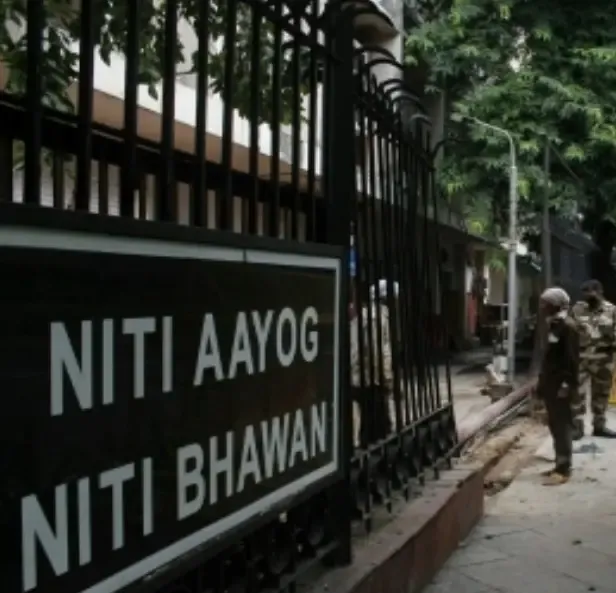
Notably, NITI Aayog replaced the Planning Commission in January 2015 under Prime Minister Narendra Modi, with a mandate to foster cooperative federalism and drive evidence-based policymaking. The institution has faced criticism from some opposition-governed states for allegedly favouring BJP-ruled states in resource allocation — a charge the Centre has consistently denied. Lahiri's credibility as an independent economist may help address some of those concerns.
What This Means for India's Policy Direction
Lahiri's deep expertise in public finance, monetary policy, and development economics aligns closely with India's current priorities — fiscal consolidation, investment-led growth, and financial inclusion. His experience with Bandhan Bank, which pioneered microfinance-to-bank conversion, also brings grassroots financial inclusion perspectives to the table.
Das's scientific background in infectious diseases and immunology could prove critical as India develops its National TB Elimination Programme targets for 2025 and strengthens its biomedical research ecosystem. His inclusion suggests NITI Aayog may be broadening its mandate to more actively integrate science and health policy.
Formal announcements from the government are still awaited, but the appointments of Ashok Lahiri and Govardhan Das are expected to meaningfully reshape NITI Aayog's intellectual composition and policy priorities in the coming years, with a distinctly Bengal-rooted imprint on India's highest planning body.
Point of View
The party simultaneously signals national recognition of Bengal's intellectual capital while building a counter-narrative to Mamata Banerjee's TMC dominance in the state. What's worth watching is whether Lahiri's fiercely independent economic reputation survives the political pressures of a government-aligned think tank — his track record suggests he won't be a rubber stamp, which could make NITI Aayog's outputs more credible, or more contentious.
NationPress
21 Sept 2026
Frequently Asked Questions
Who is the new Vice-Chairman of NITI Aayog?
Economist Ashok Kumar Lahiri is set to be appointed as the next Vice-Chairman of NITI Aayog , succeeding Suman Bery who has held the role since May 2022. The formal announcement from the government is still awaited.
Who is Ashok Lahiri and what is his background?
Ashok Lahiri is a veteran Indian economist who served as India's 12th Chief Economic Adviser to the Government of India. He has held positions at the Delhi School of Economics , Asian Development Bank , World Bank , IMF , and Bandhan Bank , and currently serves as a BJP MLA from Balurghat in West Bengal.
Who is Govardhan Das and why is he joining NITI Aayog?
Govardhan Das is a molecular immunologist and Director of IISER Bhopal , internationally recognised for his tuberculosis research. He is set to join NITI Aayog as a member , bringing scientific and biomedical expertise to the policy body.
What is the significance of two Bengalis joining NITI Aayog?
The dual appointments represent an unprecedented Bengal presence at India's top policy institution. For the BJP , it serves as a political statement recognising Bengal's intellectual leadership while countering the TMC's narrative of the party being anti-Bengal.
Who chairs NITI Aayog and what does the Vice-Chairman do?
The Prime Minister of India is the ex-officio Chairperson of NITI Aayog , making the Vice-Chairman the effective day-to-day head of the institution. The Vice-Chairman oversees policy research, coordinates with state governments, and drives the think tank's strategic agenda.