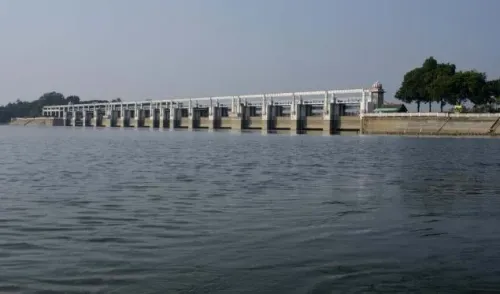
Lake Mead and Lake Powell hit record lows, Colorado River crisis deepens
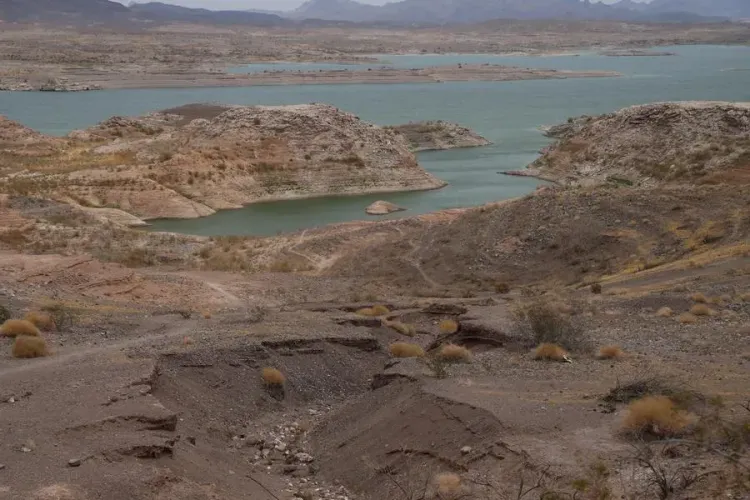
Synopsis
Lake Mead and Lake Powell have both broken their all-time low records simultaneously — a threshold experts say has never been reached since the reservoirs were filled. With Colorado River storage at just 34% of capacity and Glen Canyon Dam hovering barely 9 metres above its minimum hydropower level, the crisis is no longer a projection. It is here.
Key Takeaways
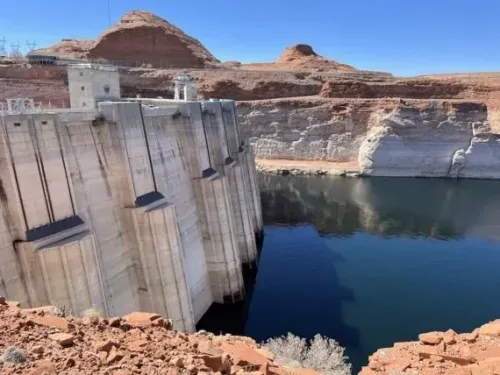
Lake Powell fell to a record low of 3,519.91 feet above sea level on Saturday, breaking the previous record of 3,519.92 feet set in April 2023 .
Lake Mead dropped to 1,039.85 feet on Sunday, surpassing the previous record low of 1,040.58 feet from July 2022 .
Colorado River system storage stands at roughly 34 per cent of capacity, according to the US Interior Department .
Lake Powell is now only about 9 metres above the minimum elevation needed for Glen Canyon Dam to generate hydropower.
The Bureau of Reclamation plans to redirect up to 1.23 billion cubic metres from Flaming Gorge Reservoir to ease the shortfall.
New federal management guidelines for the river system are being drafted to replace current rules expiring at end of 2026 , and will remain in effect through 2036 .
Lake Mead and Lake Powell, the two largest reservoirs in the United States, have both dropped to record-low levels since they were first filled, according to federal data released by the US Bureau of Reclamation. Water officials and experts warn the declines are compounding risks to water supplies, agriculture, and hydropower across the American Southwest.
Record Lows in Detail
Lake Powell fell to 3,519.91 feet (approximately 1,072.869 metres) above sea level on Saturday, according to provisional data published by the Bureau of Reclamation. The reading edged below the previous record of 3,519.92 feet set in April 2023, though the bureau noted provisional figures are subject to revision.
Downstream, Lake Mead sank to as low as 1,039.85 feet on Sunday afternoon — undercutting the previous record low of 1,040.58 feet recorded in July 2022. Together, the two reservoirs form the primary water storage and supply system for the Colorado River, serving approximately 40 million users across seven US states and Mexico.
Experts Warn of 'Uncharted Territory'
Jack Schmidt, director of the Center for Colorado River Studies at Utah State University, described the basin as being in 'uncharted territory.' Sharon Megdal, director of the Water Resources Research Center at the University of Arizona, said it is 'kind of a critical situation on the river' because the two reservoirs have not faced such conditions since they were filled.
This comes amid a prolonged regional drought. The US Interior Department told a Senate hearing in June that long-term drought had reduced Colorado River system storage to roughly 34 per cent of capacity.
Hydropower at Risk
Lake Powell, located across southern Utah and northern Arizona, now sits approximately 9 metres above the minimum power pool elevation of 1,063.75 metres — the lowest level at which the Glen Canyon Dam can currently generate hydropower. According to data from the Grand Canyon Trust, the Glen Canyon Powerplant generates around 5 billion kilowatt-hours of electricity annually, enough to power nearly half a million US households.
The Hoover Dam's powerplant, which forms Lake Mead, has a long-term average annual output of about 4 billion kilowatt-hours. The Bureau of Reclamation warned in April that continued declines in Lake Mead levels could further reduce the dam's generating capacity.
Federal Response and Emergency Measures
The Bureau of Reclamation announced plans to divert up to 1.23 billion cubic metres of additional water from Flaming Gorge Reservoir — a major Colorado River tributary reservoir — toward Lake Powell, while also cutting annual releases from Lake Powell to Lake Mead by approximately 1.83 billion cubic metres.
On 31 July, the bureau released a Final Environmental Impact Statement outlining a preferred framework for managing Lake Powell and Lake Mead, with guidelines designed to remain in effect through 2036. The federal government is separately drafting new operating rules for the river system, as current guidelines expire at the end of 2026.
What Comes Next
The Colorado River crisis is no longer a slow-moving warning — it has arrived at a threshold that federal planners did not expect to breach this soon. With hydropower margins shrinking and water allocations already under strain, the new post-2026 management framework will face immediate pressure to deliver binding conservation commitments from all seven basin states. How those negotiations unfold will determine water security for tens of millions of Americans for decades to come.
Point of View
Drought, and deferred political decisions. The Colorado River Compact of 1922 apportioned water based on flow estimates that have since proven optimistic, and every subsequent renegotiation has struggled to close that gap. The 34% storage figure is particularly alarming because it leaves almost no buffer for a second consecutive dry year. The real test now is whether the post-2026 management framework will impose enforceable cuts, or whether basin states will once again negotiate modest reductions that fall short of what hydrology demands.
NationPress
2 Oct 2026
Frequently Asked Questions
Why are Lake Mead and Lake Powell at record lows?
Both reservoirs have dropped to their lowest levels since they were filled, driven by prolonged drought across the American Southwest. The US Interior Department told a Senate hearing in June that long-term drought had reduced Colorado River system storage to roughly 34 per cent of capacity.
How many people depend on the Colorado River?
Approximately 40 million people across seven US states and Mexico rely on the Colorado River system, with Lake Mead and Lake Powell serving as its primary water storage and supply infrastructure.
Is Glen Canyon Dam at risk of losing hydropower generation?
Lake Powell currently sits about 9 metres above the minimum power pool elevation of 1,063.75 metres, the lowest level at which Glen Canyon Dam can generate hydropower. The Bureau of Reclamation has warned that further declines could curtail output from a plant that generates around 5 billion kilowatt-hours annually.
What emergency steps is the US government taking?
The Bureau of Reclamation plans to divert up to 1.23 billion cubic metres of water from Flaming Gorge Reservoir toward Lake Powell and reduce annual releases from Lake Powell to Lake Mead by about 1.83 billion cubic metres. On 31 July, it also released a Final Environmental Impact Statement with a management framework intended to govern both reservoirs through 2036.
When do the current Colorado River operating rules expire?
Current federal guidelines for operating the Colorado River system expire at the end of 2026. The federal government is preparing new rules to replace them, with the preferred framework outlined in the July 31 Environmental Impact Statement designed to remain in place through 2036.