South Korea's President Lee defends live cabinet broadcasts, rejects curtailment calls
Synopsis
South Korean President Lee Jae Myung is doubling down on live cabinet broadcasts — a transparency first in South Korean history — dismissing reported ministerial complaints as a 'false claim' and insisting that open sessions strengthen, rather than stifle, cabinet debate. The standoff tests whether Seoul's transparency experiment can survive internal friction.
Key Takeaways
President Lee Jae Myung reaffirmed on 18 October 2026 his opposition to ending live broadcasts of South Korean cabinet meetings.
Lee called a Hankook Ilbo report — claiming about 10 ministers complained about the broadcasts at a dinner with Prime Minister Han Seong-sook — a 'false claim.' The Prime Minister's office also denied the report on Thursday , saying cabinet members freely voice their opinions during sessions.
South Korea's government says it is live-broadcasting cabinet meetings for the first time in history , framing it as a public transparency measure.
Lee stated he has deliberately increased the number of cabinet meeting participants to broaden the range of opinions heard on state affairs.
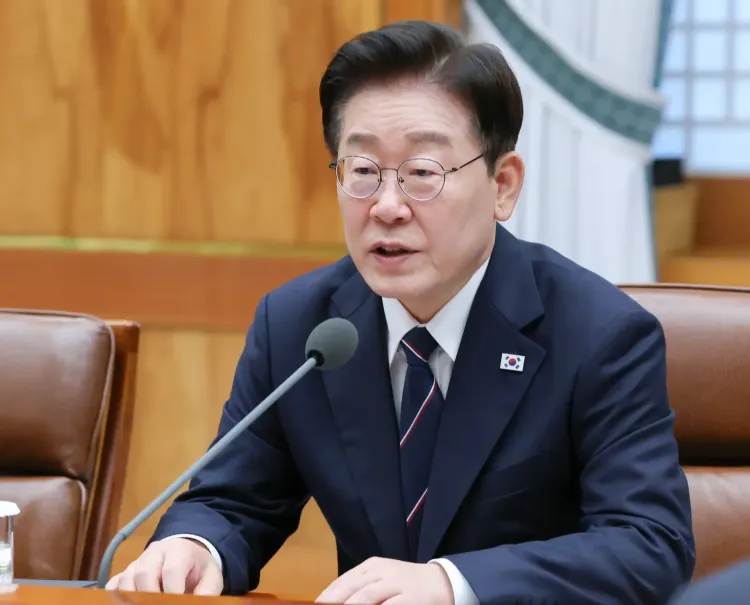
South Korean President Lee Jae Myung on Sunday, 18 October 2026, publicly reaffirmed his opposition to ending live broadcasts of cabinet meetings, asserting that he welcomes all opinions expressed during the sessions. The remarks came amid an escalating debate over transparency versus candour in South Korea's highest executive forum.
Lee's Stand on Transparency
This is at least the second time in days that President Lee has addressed the controversy directly. Days earlier, he posted on his X account that he disagreed with calls to end the livestreams, labelling a news report about alleged ministerial complaints as a 'false claim.'
'It is difficult to understand why they are pressing against disclosing part of the Cabinet meetings by even lying that Cabinet members cannot speak up because the meetings are public,' Lee wrote in a message on X.
He also shared a YouTube broadcast pushing back against such calls and showcasing instances in which Lee himself has accepted opposing views from cabinet members during live sessions.
What the President Says About Cabinet Debate
'I have intentionally increased the number of participants by a significant number to listen to various opinions regarding state affairs,' Lee said. He added that he has 'always liked debates' and 'especially respected people who propose opposing views,' emphasising the importance of dissent in preventing organisational failures.
The Report That Triggered the Controversy
The dispute traces back to a report by the Hankook Ilbo daily, which claimed that approximately 10 ministers raised concerns about the live broadcasts during a dinner meeting with Prime Minister Han Seong-sook earlier this month. According to the report, the ministers requested that live broadcasting of cabinet meetings be curtailed to allow for more candid policy debates.
Prime Minister's Office Denies the Claims
The Prime Minister's office swiftly denied the report on Thursday, stating: 'The government is live-broadcasting Cabinet meeting discussions for the first time in history, and this is aimed at transparently making the running of state affairs public and actively reflecting the opinions of the people in government policy.'
It further added that 'members of the Cabinet are freely expressing their views and the president is actively accepting them,' dismissing suggestions that the live format has chilled internal debate.
What This Means Going Forward
The episode highlights a broader tension in South Korean governance: how much transparency is owed to the public versus how much deliberative space elected officials need to govern effectively. With President Lee anchoring his administration's identity to openness, any move to roll back the broadcasts would carry significant political cost. Whether ministerial dissatisfaction — if it exists beyond what has been reported — surfaces again remains to be seen.
Point of View
And anonymous complaints from within cabinet suggest the format may be shaping what gets said rather than just who hears it. The Prime Minister's office denial was unusually swift and categorical, which itself signals the political sensitivity. If the live broadcast model is to be institutionalised, South Korea will eventually need a clearer framework for when and how cabinet deliberations can remain private — before the format becomes a constraint on good governance rather than a guarantor of it.
NationPress
18 Oct 2026
Frequently Asked Questions
Why is South Korea's President Lee opposing the end of live cabinet broadcasts?
President Lee Jae Myung says the live broadcasts promote government transparency and that cabinet members are free to voice opposing views during the sessions. He has called reports suggesting ministers feel unable to speak freely because of the cameras a 'false claim.'
What did the Hankook Ilbo report say about South Korean cabinet meetings?
The Hankook Ilbo daily reported that about 10 ministers raised complaints during a dinner with Prime Minister Han Seong-sook, asking for live broadcasts to be curtailed so that policy debates could be more candid. Both the President and the Prime Minister's office have denied the substance of this report.
Is South Korea the first country to live-broadcast cabinet meetings?
According to the South Korean Prime Minister's office, the government is live-broadcasting cabinet meeting discussions for the first time in the country's history. The administration has described the practice as a historic step toward public transparency.
What has President Lee said about dissent within his cabinet?
Lee has said he intentionally expanded cabinet meeting participation to hear a wider range of views on state affairs. He added that he has always valued people who propose opposing views and sees them as essential to preventing problems within an organisation.
What is the Prime Minister's office's position on the broadcasts?
The Prime Minister's office denied the Hankook Ilbo report and stated that cabinet members are freely expressing their views during the live sessions. It described the broadcasts as a tool for transparently running state affairs and reflecting public opinion in government policy.