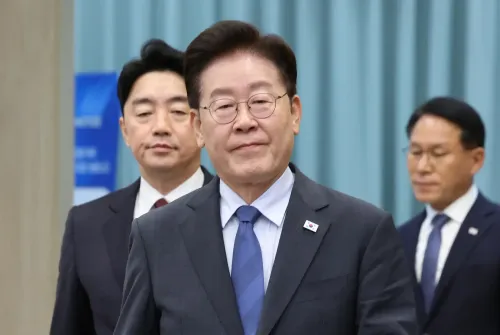
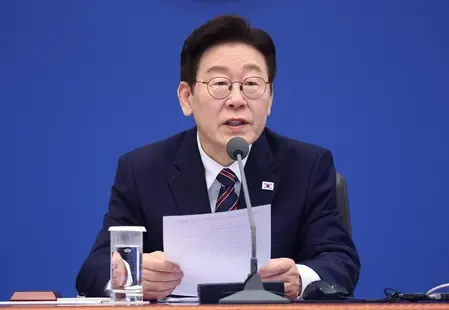
South Korea's Lee Jae Myung approval rating falls below disapproval for first time
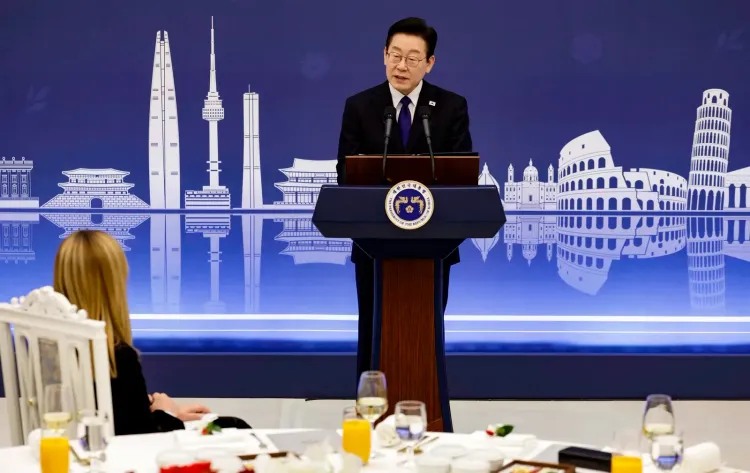
Synopsis
For the first time since taking office, South Korean President Lee Jae Myung is underwater in the polls — disapproval at 46 per cent against 44 per cent approval, driven primarily by his contentious real estate tax policies. A hastily unveiled plan to add 230,000 homes in the Seoul area has so far failed to stem the slide.
Key Takeaways
Lee Jae Myung's disapproval rating hit 46 per cent against an approval rating of 44 per cent in a Gallup Korea poll released 14 August — the first time he has trailed since taking office in June 2025 .
Approval fell 7 percentage points from the previous poll on 24 July ; disapproval rose 8 percentage points .
30 per cent of those who disapproved cited real estate policies as the main reason.
The government announced a plan to supply over 230,000 additional homes in the Seoul metropolitan area , though critics question its effectiveness.
The ruling Democratic Party fell to 41 per cent approval; the opposition People Power Party rose to 25 per cent .
Separate polls by Realmeter and the National Barometer Survey also showed approval at inauguration-era lows.
South Korean President Lee Jae Myung's disapproval rating has overtaken his approval rating for the first time since he assumed office, according to a Gallup Korea survey released on Friday, 14 August. The poll, conducted between Tuesday and Thursday on a sample of 1,000 adults aged 18 and above, signals a notable shift in public sentiment just over a year into his presidency.
Key Poll Findings
The Gallup Korea survey recorded a positive assessment of 44 per cent — a drop of 7 percentage points from the previous poll released on 24 July. Simultaneously, the negative assessment climbed 8 percentage points to 46 per cent, marking the first time disapproval has exceeded approval in a Gallup poll since Lee took office in June 2025. Separate polls by Realmeter and the National Barometer Survey also showed his approval rating at its lowest levels since inauguration.
What Is Driving Disapproval
Among those who rated Lee negatively, 30 per cent pointed to his real estate policies as the primary concern. This was followed by worries over the economy and people's livelihoods at 13 per cent and overall performance at 7 per cent. An additional 5 per cent cited what they described as an 'authoritarian' leadership style and the government's recent move to scale back prosecutorial powers.
The discontent is closely tied to the government's recent property tax revisions, which would increase the tax burden on owners of high-end homes and those who do not reside in their properties — measures that have drawn sharp criticism from property owners and market observers alike.
Government's Housing Response
On Thursday, the government unveiled a comprehensive housing plan aimed at supplying more than 230,000 additional homes in the Seoul metropolitan area. However, critics have questioned whether the plan would be effective in easing the housing shortage, and the announcement has not yet appeared to arrest the slide in public confidence.
What Is Driving Approval
Among those who still view Lee's performance positively, diplomacy was the most frequently cited reason at 19 per cent, followed by the economy and people's livelihoods at 15 per cent and overall performance at 8 per cent. This suggests that while his foreign policy record retains some public support, it is insufficient to offset domestic policy concerns.
Party Ratings and What Comes Next
The same Gallup poll showed the ruling Democratic Party's approval rating fell 3 percentage points to 41 per cent, while the main opposition People Power Party rose 2 percentage points to 25 per cent. The survey carried a margin of error of plus or minus 3.1 percentage points at a 95 per cent confidence level.
With housing affordability emerging as the dominant political flashpoint, the Lee administration faces pressure to demonstrate that its supply-side housing plan can deliver tangible relief — or risk a further erosion of public support heading into the next electoral cycle.
Point of View
And Lee's tax-heavy approach is following a familiar script. The 230,000-home supply plan announced a day before the poll results dropped looks reactive rather than strategic. More telling is the 5 per cent who cited 'authoritarian' style and prosecutorial curbs — a small but symbolically charged share, given that Lee's political identity is built on reform credentials. If that narrative gains traction, it could complicate his coalition far more than housing numbers alone.
NationPress
28 Sept 2026
Frequently Asked Questions
Why has Lee Jae Myung's approval rating fallen in South Korea?
According to a Gallup Korea poll released on 14 August, Lee's approval dropped 7 percentage points to 44 per cent, with 30 per cent of those disapproving citing his real estate policies as the primary concern. Property tax revisions that increase the burden on high-end homeowners and non-resident property owners have drawn particularly sharp criticism.
Is this the first time Lee Jae Myung's disapproval has exceeded his approval?
Yes. The Gallup Korea poll is the first since Lee took office in June 2025 to record disapproval — at 46 per cent — exceeding approval at 44 per cent. Separate polls by Realmeter and the National Barometer Survey have also shown his approval at inauguration-era lows.
What is South Korea's new housing plan?
On Thursday, the government unveiled a comprehensive housing plan targeting the supply of more than 230,000 additional homes in the Seoul metropolitan area. Critics have questioned whether the plan will be effective in easing the city's persistent housing shortage.
How have South Korean party ratings shifted in the latest poll?
The ruling Democratic Party's approval fell 3 percentage points to 41 per cent, while the main opposition People Power Party rose 2 percentage points to 25 per cent, according to the same Gallup Korea survey.
What aspects of Lee Jae Myung's leadership still draw positive ratings?
Among those who approved of Lee's performance, diplomacy was the top reason at 19 per cent, followed by the economy and people's livelihoods at 15 per cent. His foreign policy record remains a relative strength even as domestic policy concerns mount.