Kajal Baraiya murder: Gujarat court jails accused for life after 31-day trial
Synopsis
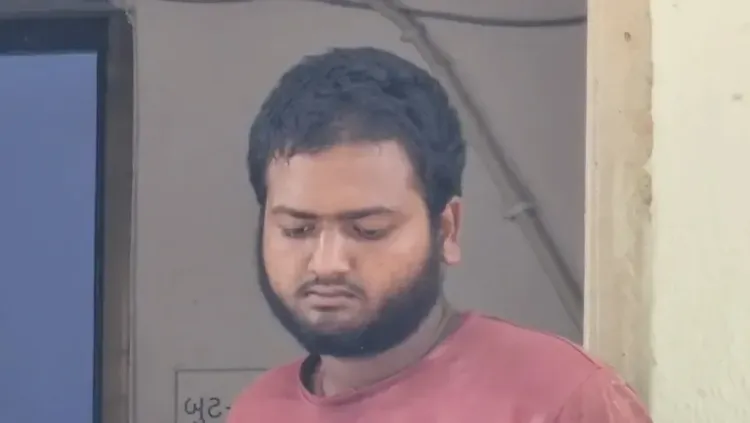
A Gujarat court convicted and sentenced a man to life imprisonment for a brutal public murder — all within 31 days of the trial beginning. The Bhavnagar case, in which the accused allegedly tried to kidnap a key witness mid-trial, is now the district's fastest concluded murder prosecution and a rare showcase of the criminal justice system moving at speed.
Key Takeaways
Faisal alias Khatki Lakhani was sentenced to life imprisonment on 5 November 2026 by a Bhavnagar district court for the murder of Kajalben Baraiya .
The murder occurred on 3 September near the Bhavnagar ST bus stand ; the chargesheet was filed within one month on 4 October .
The trial concluded in 31 days — the fastest murder trial in Bhavnagar's recorded history, according to police.
An SIT led by SP Nitesh Pandey used CCTV footage, forensic evidence, and eyewitness testimony to build the prosecution's case.
The accused allegedly orchestrated the three-day kidnapping of a key eyewitness to obstruct justice; a separate case was registered over this incident.
Senior advocate Utpal Dave was appointed as special public prosecutor by the state government.
A court in Bhavnagar district, Gujarat, sentenced Faisal alias Khatki Lakhani to imprisonment for the remainder of his natural life on 5 November 2026 for the murder of Kajalben Baraiya — with the trial completed in a record 31 days, making it the fastest concluded murder trial in the district's history, according to police.
What Happened at the Bus Stand
The crime took place on 3 September near the public entry gate of the Bhavnagar State Transport (ST) bus stand. Lakhani, a native of Vartej who was reportedly living on the footpath outside the bus stand, allegedly attacked Baraiya with the intent to assert dominance in the area. According to police, he abused her, kicked and punched her repeatedly, grabbed her by the hair, and smashed her head against a wall and the tiled floor, delivering fatal blows to her head, neck, and sides. A case was formally registered at Nilambaug police station on 4 September.
Swift Investigation by a Dedicated SIT
Given the gravity of the offence, a Special Investigation Team (SIT) was constituted on the orders of Range Inspector General of Police Rajendra Asari, under the supervision of Bhavnagar Superintendent of Police Nitesh Pandey and Deputy Superintendent of Police R R Singhal. The SIT included Nilambaug police inspector D P Undakat, Bortalav police sub-inspector A G Brind, head constable Rajeshbhai Dave, and police constables Mahendrasinh Sarvaiya, Wahidbhai Sheikh, and Rajnikant Dave, supported by a surveillance team.
Investigators recorded eyewitness statements before a magistrate under Section 183 of the Bharatiya Nagarik Suraksha Sanhita (BNSS). CCTV footage from the vicinity was analysed with forensic assistance to establish the identities of the accused and the victim. Forensic officials examined the crime scene independently, and a post-mortem conducted at Sir-T Hospital confirmed the cause of death. The chargesheet was filed before the court on 4 October — exactly one month after the murder.
Accused Allegedly Tried to Silence a Key Witness
The case carried an additional layer of intimidation. According to police, Lakhani allegedly arranged the kidnapping of a key prosecution eyewitness to prevent his testimony. The witness was reportedly held captive for three days. A separate case was registered at Nilambaug police station in connection with this incident. Police intervened to ensure the witness was produced before the court to depose, a step that proved critical to the prosecution's case.
Prosecution, Verdict and Record Timeline
The state government appointed senior advocate Utpal Dave as special public prosecutor. The prosecution's case rested on the testimonies of the complainant, eyewitnesses, and panch witnesses, corroborated by physical and forensic evidence. 'The court found the charges proved beyond reasonable doubt and sentenced Lakhani to imprisonment for the remainder of his natural life today,' officials stated. Bhavnagar police confirmed this is the first case in the district in which a murder trial was completed and a sentence pronounced within 31 days.
The speed of this trial — from crime to conviction in under two months — is being cited as a benchmark for fast-track justice in Gujarat, and comes at a time when courts across India face intense scrutiny over trial delays in serious crimes.
Point of View
But it raises a question the headlines will not ask: was speed achieved without compromising procedural safeguards? The accused allegedly kidnapped a witness mid-trial — a serious obstruction that police managed to overcome, but which also points to the pressures that fast-tracked proceedings can generate. India's courts are routinely criticised for decade-long delays in serious crimes; Bhavnagar's SIT has demonstrated that institutional will and adequate resourcing can produce a very different outcome. The harder task is replicating it systemically, not just in high-profile cases where an IGP issues direct orders.
NationPress
5 Nov 2026
Frequently Asked Questions
Who is Faisal Lakhani and what was he convicted of?
Faisal alias Khatki Lakhani is a resident of Vartej, Gujarat, convicted of murdering Kajalben Baraiya near the Bhavnagar State Transport bus stand on 3 September. A Bhavnagar district court sentenced him to imprisonment for the remainder of his natural life on 5 November, after finding the charges proved beyond reasonable doubt.
Why is the 31-day trial significant?
The trial's completion in 31 days is the fastest murder trial recorded in Bhavnagar district, according to police. It stands in stark contrast to the years — sometimes decades — that serious criminal cases routinely take to conclude in Indian courts, making it a notable example of fast-track justice.
What role did the SIT play in the case?
A Special Investigation Team was constituted on orders from Range IGP Rajendra Asari, supervised by SP Nitesh Pandey and Dy SP R R Singhal. The SIT gathered CCTV footage, conducted forensic analysis, recorded eyewitness statements before a magistrate under Section 183 of the BNSS, and filed the chargesheet within one month of the murder.
Did the accused try to interfere with the trial?
Yes. According to Bhavnagar police, the accused allegedly arranged the kidnapping of a key prosecution eyewitness to prevent him from testifying. The witness was reportedly held captive for three days. Police intervened, ensured the witness appeared in court, and registered a separate case over the kidnapping.
What was the motive behind the murder?
Police stated that Lakhani, who was living on the footpath near the Bhavnagar ST bus stand, allegedly attacked Kajalben Baraiya to establish dominance in the area. The assault involved repeated kicking, punching, and smashing her head against a wall and the tiled floor, causing fatal injuries.