Maharashtra Stamp Act amendment bars refunds on cancelled development deals

Synopsis
Maharashtra has moved to permanently shut the door on stamp duty refunds for cancelled development agreements — a practice the government says has drained state revenue and spawned administrative chaos. The amendment to Section 48 of the Stamp Act is a direct signal to the real estate sector: once a deal is stamped, the duty stays, regardless of what happens to the deal itself.
Key Takeaways
The Maharashtra government introduced a bill on 30 June to amend the Maharashtra Stamp Act .
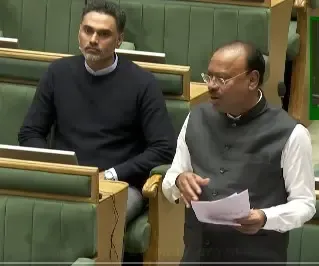
Revenue Minister Chandrashekhar Bawankule tabled the legislation in the Legislative Assembly .
The bill bars any refund or concession of stamp duty on development agreements that are cancelled, rescinded, or terminated.
An explanation is proposed to be inserted after the proviso in Section 48 of the Act.
The move is intended to plug revenue leakages and reduce the administrative burden of processing refund claims.
Stamp duty in Maharashtra is levied on the execution of a document , not on its performance or outcome.
The Maharashtra government on Tuesday, 30 June introduced a bill in the Legislative Assembly to amend the Maharashtra Stamp Act, explicitly barring any refund or concession of stamp duty on development agreements that are cancelled, rescinded, or terminated. The move is aimed at protecting state revenue and closing loopholes that had enabled misuse of concessionary provisions in the real estate sector.
What the Bill Proposes
Revenue Minister Chandrashekhar Bawankule tabled the legislation, which seeks to insert a specific explanation after the proviso in Section 48 of the Maharashtra Stamp Act. The amendment makes clear that relaxation or refund provisions will not apply to development agreements or any instruments attracting the same rate of stamp duty. According to the minister, this will close existing legal gaps and prevent selective misuse of concessions.
Why the Government Acted
In recent years, a sharp rise in the number of development agreements — each carrying substantial stamp duty liability — has been followed by a corresponding surge in cancellations, often citing commercial disagreements or mutual differences between parties. This pattern triggered a flood of refund claims that, according to the government, created significant administrative strain and opened avenues for revenue loss.
Notably, stamp duty under Maharashtra law is levied on the execution of a document, not on its eventual performance or revenue outcome. Allowing refunds upon cancellation, the government argued, distorted this foundational principle and caused measurable losses to the state exchequer.
Impact on Real Estate and Stamp Duty Administration
The amendment is expected to bring greater uniformity in how stamp duty rules are applied across Maharashtra, particularly in a real estate market where large-scale development agreements are routine. Officials indicated the change will reduce the department's verification workload and streamline administration.
Minister Bawankule stated that the reform will strengthen revenue protection while maintaining legal clarity. Industry observers note that developers who previously relied on cancellation-and-refund cycles as a financial planning tool will need to reassess agreement structures going forward.
Legislative Next Steps
The bill has been introduced in the Maharashtra Legislative Assembly and will proceed through the standard legislative process. If passed, the amendment to Section 48 will take effect across the state, applying uniformly to all development agreements and similarly rated instruments. The government has not specified a target date for enactment.
Point of View
Arguably, been gaming. The pattern of executing high-value development agreements, paying stamp duty, and then cancelling them to claim refunds was never the legislature's intent — but the law's silence made it possible. What this bill does not address is whether it will deter legitimate cancellations, where parties walk away from deals for genuine reasons and now bear a sunk cost with no recourse. The government's framing focuses entirely on misuse, but the real estate industry may push back on the bluntness of a blanket bar. The legislative debate, if substantive, should surface that tension.
NationPress
29 Sept 2026
Frequently Asked Questions
What does the Maharashtra Stamp Act amendment bill propose?
The bill proposes to amend Section 48 of the Maharashtra Stamp Act to bar any refund or concession of stamp duty on development agreements that are cancelled, rescinded, or terminated. It inserts a specific legal explanation to close existing loopholes and ensure uniform application of stamp duty rules.
Why has the Maharashtra government introduced this amendment?
The government cited a surge in refund claims following the cancellation of development agreements, which was causing revenue losses and creating administrative challenges in verification. Stamp duty is charged on the execution of a document, not on its outcome, making refunds upon cancellation inconsistent with the law's intent.
Who introduced the bill in the Maharashtra Legislative Assembly?
Revenue Minister Chandrashekhar Bawankule introduced the bill in the Maharashtra Legislative Assembly on 30 June.
How will this amendment affect the real estate sector in Maharashtra?
Developers and parties to development agreements will no longer be able to claim stamp duty refunds if an agreement is cancelled, regardless of the reason. This may prompt a reassessment of how development agreements are structured and executed in Maharashtra's real estate market.
When will the Maharashtra Stamp Act amendment come into effect?
The bill has been introduced in the Legislative Assembly and must complete the standard legislative process before it becomes law. The government has not specified a target date for enactment.