Maharashtra waives BBR flat transfer fees, caps leasehold stamp duty at 0.5%
Synopsis
Maharashtra has waived Najrana and NOC penalties on BBR flat transfers predating 2015 and slashed leasehold stamp duty from up to 8% to just 0.5% for residential properties — a move that could resolve 153 major pending cases and save homeowners hundreds of crores in charges that were calculated on today's market values.
Key Takeaways
The Maharashtra government has waived Najrana (transfer fees), penalties, and NOC-related surcharges on BBR region flat transfers executed before 2015 .
Maximum stamp duty on residential leasehold properties capped at 0.5% ; commercial properties capped at 1.5% — down from a range of 5%–8% .
Around 153 major leasehold cases are currently pending in Maharashtra and are set to benefit from the revised policy.
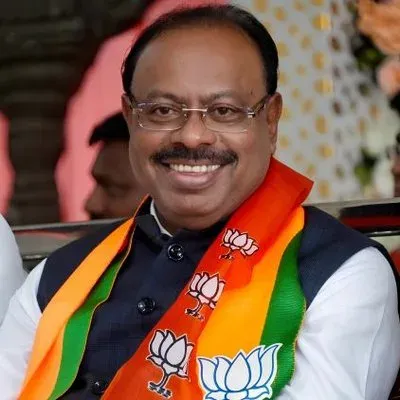
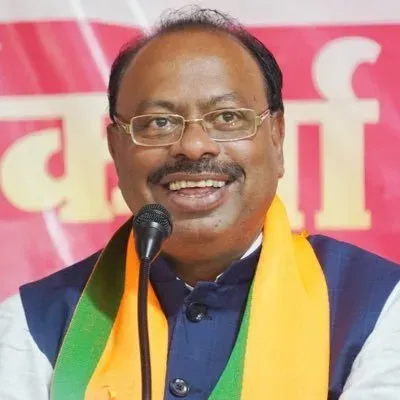
Revenue Minister Chandrashekhar Bawankule announced the decision in response to a calling attention motion by MLA Atul Bhatkhalkar .
If stamp duty formula ambiguities persist, a special meeting will be held under Assembly Speaker Rahul Narwekar to finalise the least burdensome method for citizens.
The Maharashtra government on 7 July announced a waiver of transfer fees (Najrana), penalties, and associated levies on flat transfers in the Backbay Reclamation (BBR) region for properties built before 2015 where a No Objection Certificate (NOC) was not obtained at the time of transfer. The decision is expected to clear a significant backlog of pending property cases and benefit a large number of homeowners across the region.
Key Announcements in the Assembly
Revenue Minister Chandrashekhar Bawankule made the announcement while responding to a calling attention motion moved by MLA Atul Bhatkhalkar in the Maharashtra Legislative Assembly. Bawankule stated that in line with the provisions of the Maharashtra Land Revenue Code (MLRC), transfer fees will no longer be levied on flat transfers executed up to 2015. All penalties and surcharges previously imposed for the absence of an NOC during such transfers stand waived with immediate effect.
Stamp Duty on Leasehold Properties Drastically Reduced
The government has also capped the maximum stamp duty on residential properties at 0.5 per cent and on commercial properties at 1.5 per cent. Previously, these charges ranged between 5 per cent and 8 per cent, making registration prohibitively expensive for many citizens. Around 153 major leasehold cases are currently pending resolution in the state, and the revised policy is intended to accelerate their clearance.
Bawankule cited examples where citizens would have been liable to pay hundreds of crores of rupees in stamp duty calculated on current market values under the old system. Under the new policy, fees will be computed at the significantly reduced flat rate.
Historical Context: Why Ready Reckoner Rates Do Not Apply
Addressing demands that older lease agreements be processed using Ready Reckoner (RR) rates from their respective eras, the minister offered a historical clarification. He noted that RR rates did not exist in the 1950s, 1960s, or 1970s, as the first RR system was introduced only around 1979–80. Given this gap, the government's flat 0.5 per cent levy is, according to Bawankule, more financially advantageous for citizens than attempting to reconstruct historical valuations.
What Happens If Ambiguities Remain
The minister assured the House that if any ambiguities persist regarding the stamp duty formula, a special meeting will be convened under the chairmanship of Assembly Speaker Rahul Narwekar. The government will evaluate multiple options and adopt the method imposing the least financial burden on ordinary citizens before finalising the policy. Narwekar welcomed the announcement and congratulated the government for providing relief to the common man.
Members of the House also requested that the revised policy apply not only retrospectively but also to future property transfers, a demand the government indicated it would consider. The decisions mark a significant policy shift in how Maharashtra handles long-pending leasehold and BBR property disputes.
Point of View
Calculated on present-day market values for agreements that are decades old, had rendered legitimate property transfers financially impossible for ordinary citizens. The real question is enforcement: with 153 major cases pending and a formula still subject to a potential review meeting, the policy's impact depends entirely on whether the bureaucratic machinery moves at the same pace as the political announcement. Maharashtra's property dispute backlog is a recurring problem that has survived multiple reform cycles; whether this intervention clears it or merely resets the clock will be visible in the next 12 months.
NationPress
6 Oct 2026
Frequently Asked Questions
What is the Najrana waiver announced by the Maharashtra government?
The Maharashtra government has waived Najrana — the transfer fee charged on flat sales — along with associated penalties and surcharges for properties in the Backbay Reclamation (BBR) region that were transferred before 2015 without a No Objection Certificate. The waiver is intended to resolve a large backlog of pending property cases.
How much has Maharashtra reduced stamp duty on leasehold properties?
The government has capped stamp duty on residential leasehold properties at 0.5 per cent and on commercial properties at 1.5 per cent. Previously, these charges ranged from 5 per cent to 8 per cent, calculated on current market values, which often ran into hundreds of crores of rupees for older lease agreements.
Who benefits from the BBR flat transfer fee waiver?
Homeowners in the Backbay Reclamation (BBR) region of Mumbai whose flats were built before 2015 and whose transfers were executed without an NOC stand to benefit directly. The decision is also expected to clear approximately 153 major leasehold cases currently pending in Maharashtra.
Why can't older leases use historical Ready Reckoner rates?
Revenue Minister Chandrashekhar Bawankule clarified that Ready Reckoner rates did not exist in the 1950s, 1960s, or 1970s — the system was introduced only around 1979–80. Applying historical RR rates to agreements from those decades is therefore not feasible, making the flat 0.5 per cent levy the more practical and citizen-friendly alternative.
What happens if there is still confusion about the stamp duty formula?
The minister assured the Maharashtra Legislative Assembly that a special meeting will be convened under Assembly Speaker Rahul Narwekar if ambiguities in the stamp duty formula remain. The government will study available options and adopt whichever method imposes the least financial burden on citizens before issuing a final order.