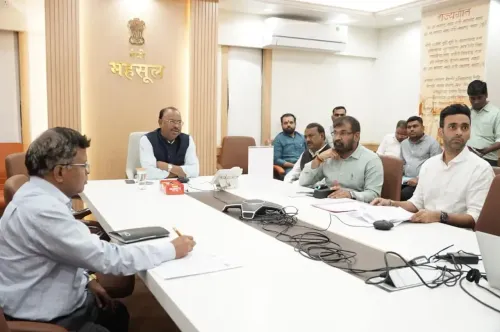
Maharashtra Government Pledges to Safeguard Farmers Amid West Asia Tension
Synopsis
In light of the escalating West Asia conflict, Maharashtra's Minister Nitesh Rane assures that the government will prioritize farmers' interests, addressing issues with stranded exports of essential commodities like onions and grapes.
Key Takeaways
Maharashtra government is focused on protecting farmers amidst rising tensions in West Asia.
Important commodities like grapes and onions are stranded, risking spoilage. **Export routes** are blocked, forcing farmers to sell at lower local market prices. **Ramadan** demand for fruits is at risk due to export disruptions.
The situation calls for ongoing monitoring and government intervention.
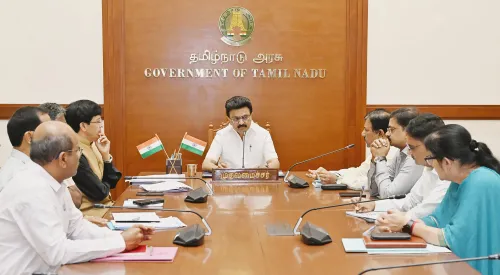
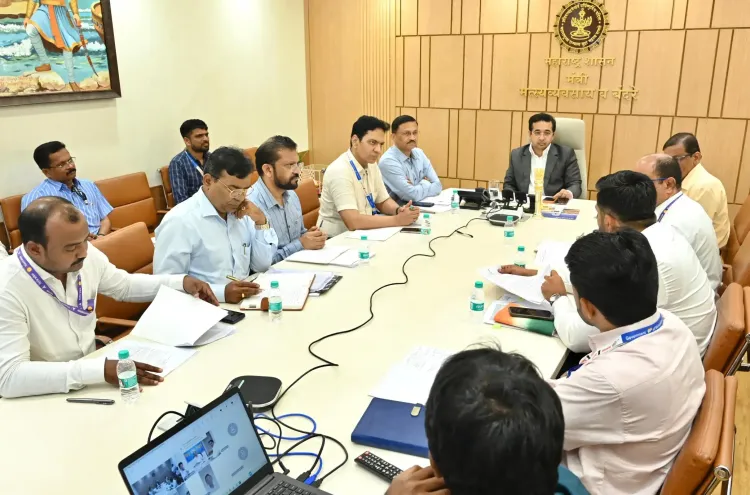
Mumbai, March 4 (NationPress) Maharashtra's Minister of Ports and Shipping, Nitesh Rane, stated on Wednesday that the government is dedicated to safeguarding the interests of farmers, particularly in light of the growing conflict in West Asia. This situation has affected the export of essential goods like sugar, onions, rice, and grapes to Gulf countries.
Rane's comments came in response to Congress MLA Nana Patole's inquiry during the state assembly regarding the substantial amount of onions and grapes currently stranded in containers at Navi Mumbai’s Jawaharlal Nehru Port Authority (JNPA), raising concerns over potential spoilage.
Patole urged the state government to intervene and protect farmers in this crisis. In his response, Minister Rane informed the assembly, “I spoke earlier today with Union Minister of Ports and Shipping Sarbanand Sonowal to address the situation caused by the events unfolding in West Asia.”
He assured that the government is monitoring the developments closely and is in constant communication with the central government. Rane emphasized that the government remains committed to protecting the interests of farmers.
During the month of Ramadan, there is typically increased demand for Indian fruits such as grapes, pomegranates, bananas, dragon fruit, and watermelons in Gulf nations.
In Sangli district, traders commonly source grapes directly from farms for export to Dubai. Currently, numerous containers of grapes that were already loaded onto vessels are being returned. A few additional containers remain in the port's cold storage. These grapes were procured from farmers at prices ranging from Rs 120 to Rs 170 per kg; however, due to the blockage of export routes, traders will now have to sell this premium produce in local markets at much lower prices. The sugar industry is also facing challenges.
Although the Central government had approved an export quota of 2 million tons for the current season, projections indicate that only about 0.5 million tons may now be exported. If the conflict persists, grape exports will likely decrease.
The ongoing conflict is also jeopardizing the export of Basmati rice, raising concerns about the availability of ingredients for Sheer Khurma—a traditional festive dish—across the Gulf during Ramadan.
“Grape exports have ceased, impacting 5,000 to 6,000 tons of produce currently at the port. With an additional 10,000 tons of export-quality grapes still in vineyards, farmers will be compelled to sell them at local market prices,” stated Maruti Chavan, Vice President of the Maharashtra Grape Growers Association.
P R Patil, Chairman of the Maharashtra State Cooperative Sugar Federation, noted that shipping routes are disrupted and air travel is limited. He added that under these conditions, the likelihood of exporting sugar to Iran and other Gulf countries is very slim.
Sunil Adsul, an onion trader at the Mumbai Agricultural Produce Market Committee (APMC), warned, “If the onions stuck at JNPA are not exported, they will return to the local market. This influx, combined with existing stocks, will lead to a glut and cause onion prices to plummet.”
Point of View
The government's commitment to safeguarding farmers' interests is crucial. However, the effectiveness of their interventions remains to be seen as the situation evolves.
NationPress
3 Oct 2026
Frequently Asked Questions
What is the impact of the West Asia conflict on Maharashtra's farmers?
The conflict has disrupted exports of essential commodities like sugar, onions, rice, and grapes, leading to concerns over spoilage and reduced market prices for farmers.
What measures is the Maharashtra government taking for farmers?
The government is in constant communication with the central authorities and is actively monitoring the situation to ensure farmers' interests are protected.
How are local markets affected by the export disruptions?
With exports halted, farmers may have to sell their produce at significantly lower prices in local markets, impacting their revenue.
What commodities are affected by the export issues?
Key commodities affected include grapes, onions, sugar, and Basmati rice, all of which are vital for both local and international markets.
Why is there a surge in demand during Ramadan?
During Ramadan, there is typically a higher demand for Indian fruits and essential ingredients, which is now threatened by export disruptions.