Maharashtra rains expose infrastructure gaps, Shiv Sena (UBT) hits out at Fadnavis
Synopsis
A monsoon-triggered crater on the Mumbai-Pune Expressway Missing Link has handed Shiv Sena (UBT) its sharpest political weapon of the season — a visible, dramatic symbol of what the party calls the gap between Maharashtra's 'world-class' infrastructure promises and monsoon-season reality. From the Samruddhi Mahamarg to metro stations collecting rainwater in buckets, the critique lands at the heart of Chief Minister Fadnavis's 'Inframan' brand.
Key Takeaways
Shiv Sena (UBT) alleged on 7 July that heavy rains exposed failures across Maharashtra's flagship infrastructure projects.
A massive crater opened at the Mumbai-Pune Expressway Missing Link on Monday, halting the corridor during its first major monsoon test.
Samruddhi Mahamarg has reportedly required a dedicated 24-hour task force to patch recurring cracks and potholes since its first monsoon.
Roof leakages on two operational metro lines forced authorities to place buckets on platforms to collect rainwater.
Open manholes and uprooted trees have claimed between six and seven lives in Mumbai this monsoon season, according to the party.
Chief Minister Devendra Fadnavis attributed the damage to unprecedented rainfall intensity, a response critics called a standard deflection.
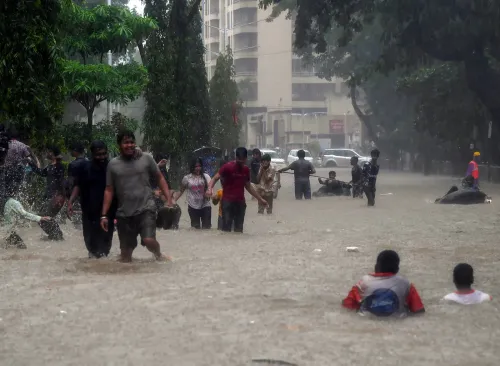
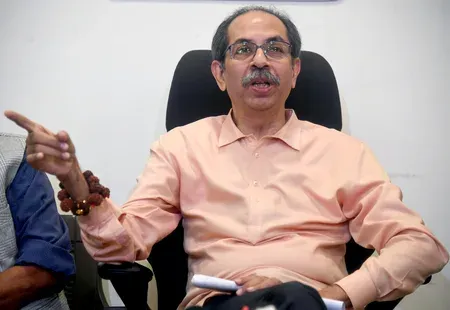
Shiv Sena (UBT) on Tuesday, 7 July alleged that the recent monsoon battering of Mumbai, the Konkan region, and other parts of Maharashtra has laid bare the shortcomings of flagship infrastructure projects championed by the state government. The party's criticism, published in its mouthpiece Saamana, directly challenged the ruling dispensation's narrative of delivering 'world-class' infrastructure.
Missing Link Crater Becomes a Symbol
The sharpest attack was aimed at the Mumbai-Pune Expressway Missing Link project, which the state government had promoted with considerable fanfare. On Monday morning, a massive crater reportedly opened up within the project area, triggering what the editorial described as an 'internal waterfall' — effectively halting the high-speed corridor during its very first serious monsoon test.
The Thackeray camp noted that this follows a recent controversy in which potholes appeared along the same stretch. Rather than offering a technical explanation, the state leadership reportedly dismissed the patches as an 'engineering technique' — a response the editorial described as inadequate for a flagship project still in its early operational phase.
What the Government Said
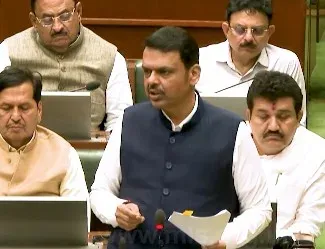
In the Maharashtra Legislative Assembly, Chief Minister Devendra Fadnavis deflected responsibility, attributing the damage to unprecedented weather intensity that, he maintained, exceeded all engineering benchmarks. According to the Saamana editorial, the administration had completed all pre-monsoon preparations, but the scale of the downpour overwhelmed them. Critics, however, argue this has become a standard deflection whenever structural failures surface.
A Pattern Across Mega-Projects
Shiv Sena (UBT) contended that the Missing Link is not an isolated case. The Samruddhi Mahamarg — aggressively marketed as a world-class highway — reportedly suffered extensive pothole and crack damage during its very first monsoon season. The situation deteriorated to the point where the government deployed a dedicated 24-hour special task force solely to patch recurring damage, according to the editorial.
On Sunday, severe roof leakages were reported across two operational metro lines, with authorities reportedly placing plastic buckets on platforms to collect rainwater. The party drew parallels with the previous monsoon, when rainwater reportedly cascaded through under-construction and operational underground metro stations, leaving commuters wading through accumulated silt.
Human Cost and Civic Failures
Beyond infrastructure symbolism, the editorial pointed to a tangible human toll. Pre-monsoon drain-cleaning drives and desilting work in Mumbai have yielded poor results, it alleged, with open manholes and uprooted trees claiming between six and seven lives this season, according to the party's account.
'Inframan' Label Under Scrutiny
The editorial took particular aim at the branding of Chief Minister Fadnavis as 'Inframan' by his supporters, referencing a portfolio of mega-projects — the Samruddhi Mahamarg, Metro Rail network, Atal Setu, Shaktipeeth Expressway, Vadhavan Port, the 'Fourth Mumbai' urban plan, Navi Mumbai International Airport, and the Missing Link. Successive monsoon seasons, the party argued, have acted as a reality check on claims of excellence.
'Monday's structural breach at the Missing Link — which effectively washed away thousands of crores of public taxpayers' money into a muddy waterfall — is the latest example,' the editorial observed. As Maharashtra's monsoon season intensifies, the state government faces mounting pressure to move beyond damage control and provide credible answers on infrastructure quality and accountability.
Point of View
But because of the timing — a flagship project, barely operational, visibly collapsing in its first serious monsoon. Fadnavis's 'Inframan' branding was always a double-edged sword: it raised the bar for accountability. The government's response — attributing damage to unprecedented weather — is structurally weak because it applies equally to every project in the portfolio. If world-class infrastructure cannot withstand India's annual monsoon, the engineering brief was wrong from the start. What is missing from the public discourse is an independent audit of whether pre-monsoon works were actually completed to specification, or merely completed on paper.
NationPress
6 Oct 2026
Frequently Asked Questions
What did Shiv Sena (UBT) allege about Maharashtra's infrastructure?
Shiv Sena (UBT) alleged that the 2025 monsoon has exposed serious quality failures across Maharashtra's flagship projects, including the Mumbai-Pune Expressway Missing Link, the Samruddhi Mahamarg, and the metro rail network. The party published its critique in its mouthpiece Saamana on 7 July.
What happened at the Mumbai-Pune Expressway Missing Link during the rains?
A massive crater reportedly opened within the Missing Link project area on Monday morning, creating what the Saamana editorial described as an internal waterfall and bringing the corridor to a standstill. The incident follows earlier reports of potholes on the same stretch.
How has the Maharashtra government responded to the infrastructure criticism?
Chief Minister Devendra Fadnavis told the Maharashtra Legislative Assembly that the administration had completed all pre-monsoon preparations, but that the intensity of the rainfall exceeded engineering expectations. Critics, including Shiv Sena (UBT), have called this a standard deflection of accountability.
What is the Samruddhi Mahamarg controversy?
The Samruddhi Mahamarg, promoted as a world-class highway, reportedly suffered extensive pothole and crack damage during its first monsoon season. The state government subsequently deployed a dedicated 24-hour special task force to manage recurring damage, according to the Saamana editorial.
Have the Mumbai metro lines also been affected by the rains?
Yes, severe roof leakages were reported across two operational metro lines on Sunday, with authorities placing plastic buckets on platforms to collect rainwater. Shiv Sena (UBT) said this mirrors similar incidents during the previous monsoon season.