BrahMos interest could cut Malaysia's reliance on US-aligned defence suppliers
Synopsis
Malaysia's potential BrahMos acquisition is less a defence procurement story and more a geopolitical signal — Kuala Lumpur quietly telling Washington and Beijing it has a third option. With India-Malaysia trade at just 79.3 billion ringgit against 900 billion with the US and China, the missile deal could be the opening move in a much larger strategic rebalancing.
Key Takeaways
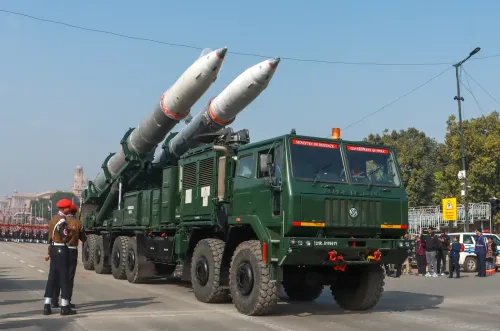
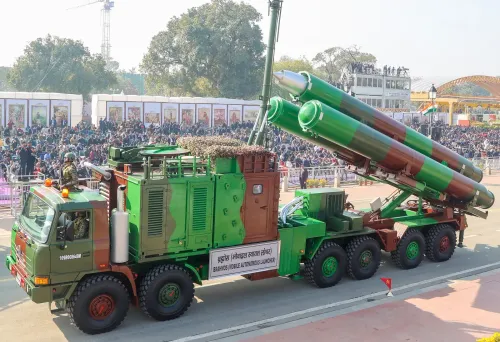
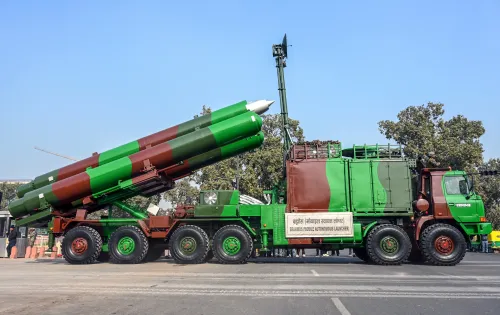
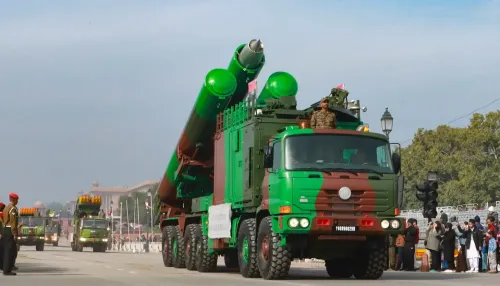
Malaysia has expressed interest in acquiring the BrahMos air-to-surface missile system, jointly developed by India and Russia .
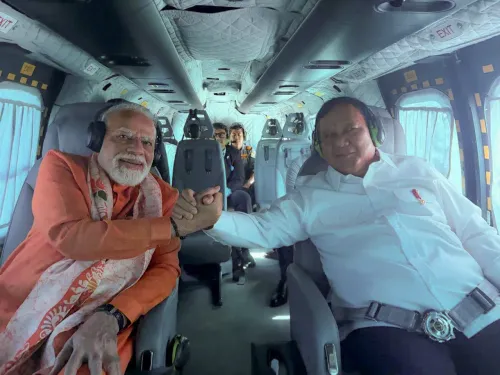
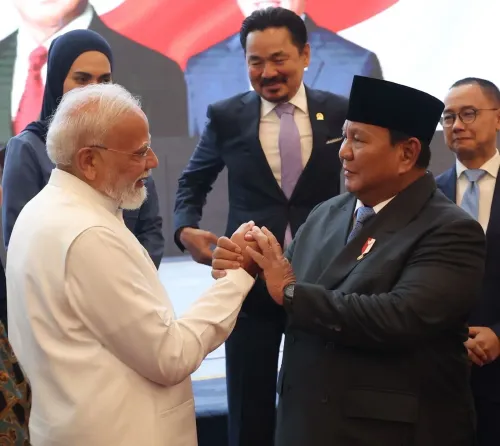
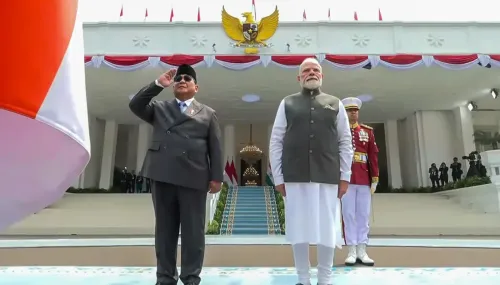
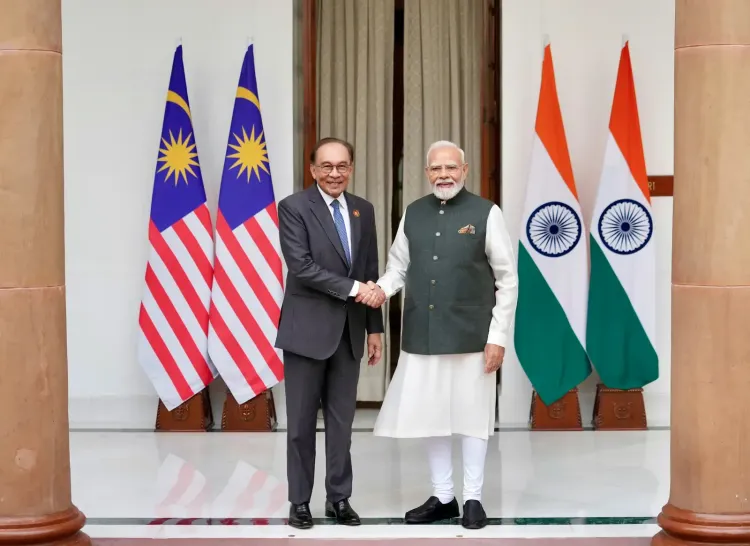
Prime Minister Anwar Ibrahim signalled the interest after meeting PM Narendra Modi in New Delhi on 12–13 September 2026 during the BRICS summit .
Analysts say the move could reduce Malaysia's reliance on US-aligned defence suppliers and preserve its strategic autonomy .
The acquisition could affect Malaysia's deterrence posture in the South China Sea , where it has overlapping claims with China .
Malaysia's trade with India was just 79.3 billion ringgit in 2025, compared to over 900 billion ringgit with the US and China each.
A successful deal would follow India's earlier BrahMos sale to the Philippines , boosting India's defence export profile in Southeast Asia .
Malaysia's interest in acquiring the BrahMos air-to-surface missile system — jointly developed by India and Russia — could meaningfully reduce Kuala Lumpur's dependence on the United States and US-aligned defence suppliers, according to a strategic analysis published by the South China Morning Post. The development follows Malaysian Prime Minister Anwar Ibrahim's expression of interest in the missile system after his meeting with Prime Minister Narendra Modi in New Delhi.
What the BrahMos interest signals
Kamles Kumar, associate director for Malaysia at strategic consultancy Asia Group Advisors, said closer cooperation with India offers Kuala Lumpur a significant economic and security partner without forcing it to align decisively with any single geopolitical bloc. 'Closer cooperation with India gives Malaysia another important economic and security partner without requiring Putrajaya to move decisively into any one camp,' he was quoted as saying.
Diversifying defence partnerships, according to Kamles, is fundamentally about preserving strategic autonomy — a priority for Malaysia as it navigates competing US and Chinese spheres of influence. However, he cautioned that any acquisition of the BrahMos system could raise concerns in Beijing, given overlapping territorial claims between China and Malaysia in the South China Sea.
South China Sea dimension
'Given the missile's range and versatility, it could also affect perceptions of Malaysia's deterrence posture in the South China Sea,' Kamles said, referring to the contested waterway over which China and Malaysia have overlapping claims. He added that Putrajaya would need to communicate clearly that any acquisition is aimed at strengthening national defence, not targeting a specific country.
The BrahMos supersonic cruise missile, with a reported strike range of over 400 km in its latest variants, has already been acquired by several nations and is considered one of the most capable systems of its class globally.
Anwar Ibrahim's New Delhi visit and BRICS backdrop
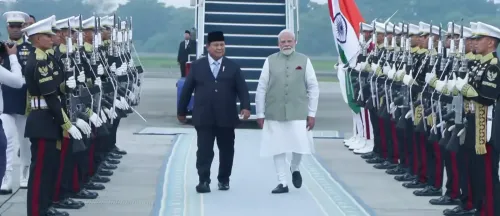
Prime Minister Anwar Ibrahim was in New Delhi on 12–13 September 2026 for the BRICS summit, where Malaysia participated as a partner country. He used the visit to press the case for greater capital flows between the two nations and met with Prime Minister Modi, during which interest in the BrahMos system was announced.
Notably, this visit came as Malaysia actively seeks to expand its economic and strategic partnerships beyond its traditional anchors of the US and China — a posture consistent with the ASEAN principle of non-alignment.
Underdeveloped economic ties — and the potential to grow
Yeah Kim Leng, an economics professor at Sunway University, described the Malaysia-India economic relationship as 'underdeveloped.' Malaysia's trade with India stood at 79.3 billion ringgit in 2025 — a fraction of the more than 900 billion ringgit it traded with both the US and China individually, despite the two countries signing a comprehensive strategic partnership in 2024.
Eric Low, a partner at Kuala Lumpur-based strategic advisory firm Densui, argued that deepening India-Malaysia ties is not about pivoting away from Beijing or Washington. 'Strengthening Malaysia-India ties in this regard is not so much about shifting away from China or the United States, but rather, expanding Malaysia's economic and strategic options and position, especially for the long term,' he said.
What this means for India's defence exports
A potential BrahMos deal with Malaysia would mark a significant milestone for India's defence export ambitions in Southeast Asia, following the earlier landmark sale of the system to the Philippines. It would also reinforce India's positioning as a credible, non-aligned defence partner for nations seeking to diversify away from traditional Western or Chinese suppliers. All eyes now turn to whether Kuala Lumpur converts expressed interest into a formal procurement process.
Point of View
Not a pivot — and that distinction matters. Kuala Lumpur is not abandoning its Western or Chinese partnerships; it is inserting India as a counterweight to avoid over-dependence on either. The real question is whether India can back this signal with the supply-chain reliability and after-sales support that defence procurement demands — areas where India's export track record is still being built. If the deal materialises, it would validate India's emerging role as a credible third-option arms supplier in Asia, a status that carries both commercial and geopolitical dividends far beyond Southeast Asia.
NationPress
20 Sept 2026
Frequently Asked Questions
What is the BrahMos missile and why is Malaysia interested in it?
The BrahMos is a supersonic cruise missile jointly developed by India and Russia, capable of air-to-surface strikes with a range exceeding 400 km in its latest variants. Malaysia's interest, expressed by Prime Minister Anwar Ibrahim after his meeting with PM Narendra Modi in New Delhi, is seen as part of a broader effort to diversify its defence partnerships and reduce reliance on US-aligned suppliers.
When did Malaysia's Prime Minister meet PM Modi to discuss BrahMos?
Prime Minister Anwar Ibrahim was in New Delhi on 12–13 September 2026 for the BRICS summit, where Malaysia participated as a partner country. He met PM Narendra Modi during this visit and announced interest in the BrahMos system.
How might a BrahMos acquisition affect Malaysia's position in the South China Sea?
Analysts warn the acquisition could alter perceptions of Malaysia's deterrence posture in the South China Sea, where China and Malaysia have overlapping territorial claims. Strategist Kamles Kumar advised Putrajaya to communicate clearly that any purchase is for national defence, not directed at a specific country, to avoid escalating tensions with Beijing.
How significant is India-Malaysia trade, and what is the potential for growth?
Malaysia's trade with India stood at 79.3 billion ringgit in 2025 — a fraction of the more than 900 billion ringgit it traded with both the US and China, despite a comprehensive strategic partnership signed in 2024. Economists and analysts describe the bilateral economic relationship as 'underdeveloped' but with significant long-term potential.
Which other country has already bought the BrahMos from India?
The Philippines signed a deal for the BrahMos coastal defence system, making it the first export customer. A potential Malaysian acquisition would be a further milestone for India's defence export ambitions in Southeast Asia.